

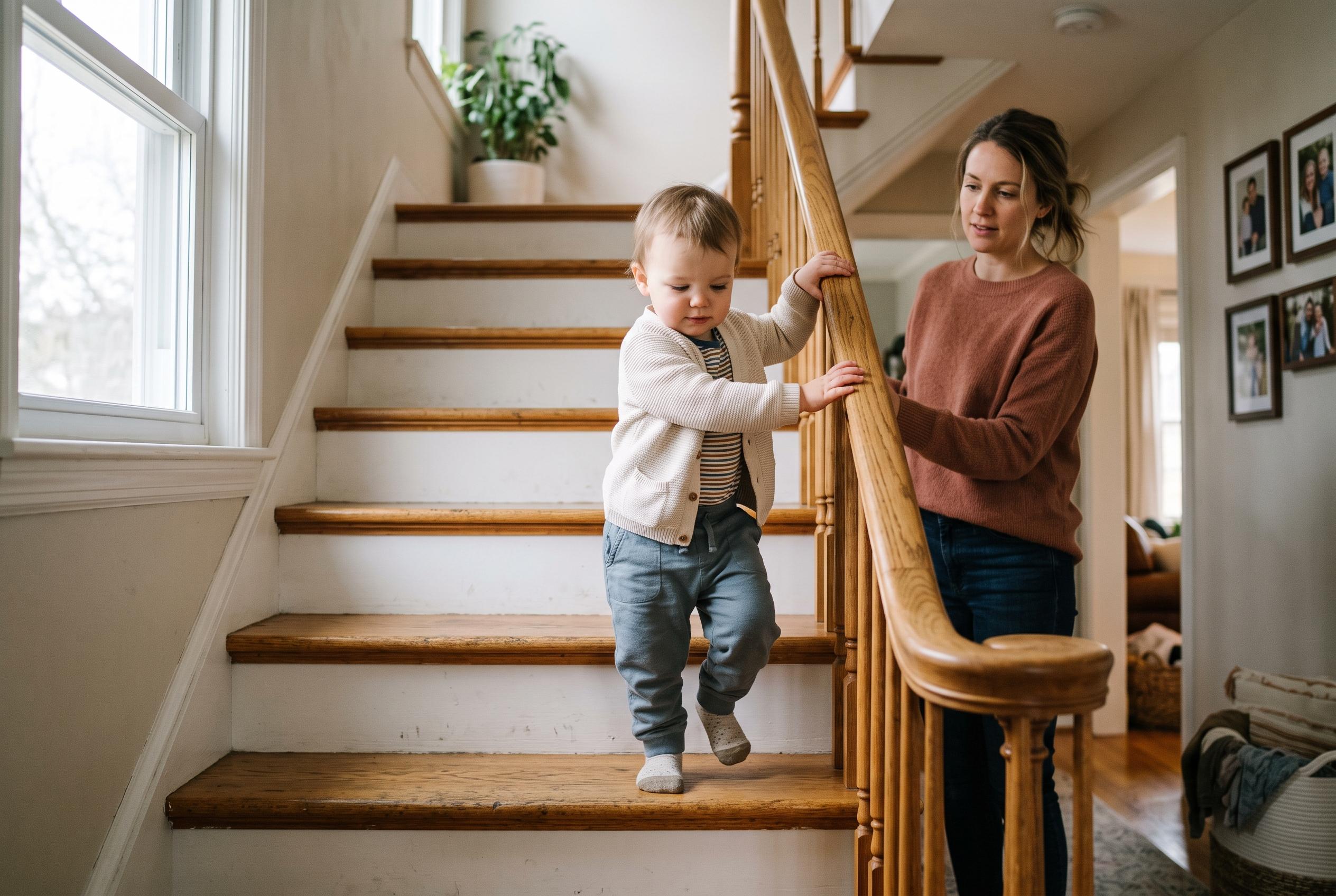

Hesitating on the stairs is often part of normal development, but persistent difficulty, pain or uneven movement may warrant a clinical assessment.
Many toddlers find stairs awkward at first, and that does not automatically point to a problem. Climbing steps asks a young child to balance, build strength, coordinate their limbs, plan the movement and feel confident enough to keep going. A staircase they have not seen before can make the task feel even harder, and a child who hesitates on the stairs may still be moving well in other everyday activities.
What matters most is the pattern you see over time. Some children cope better going up than coming down, because climbing upwards is a familiar push-and-lift movement, while descending requires more control, balance and confidence. Other toddlers seem fine on one staircase but unsure on another, which can reflect differences in step height, depth or surface rather than a broader movement issue.
Parents and carers should watch closely for how the child uses the stairs. Does the toddler wobble, pause repeatedly, reach for a handrail or an adult’s hand, or turn sideways to feel steadier? Does one leg appear to do more work than the other? These details are more useful than judging a child from a single attempt, especially because stair use can change depending on tiredness, mood and familiarity.
Safe practice can help, but it should be calm and supervised. A toddler should stay within arm’s reach on the stairs and should not be left to practise alone. Brief, unhurried opportunities during ordinary routines can build familiarity without turning the staircase into a test. Experts advise keeping the steps clear and dry, avoiding pressure and stopping if the child becomes upset, tired or unwilling.
Milestones can vary widely. Guidance from child-development sources suggests many children begin using stairs with support in the second year of life, while walking downstairs upright often comes later and may not emerge until close to age two. Some children first descend by turning round and backing down on their hands and knees, which can be a normal stage of learning rather than a sign of concern.
Clinical advice is worth seeking if stair difficulty persists, worsens or begins to affect everyday mobility. Pain, repeated loss of balance or a clear difference between the two sides of the body are also reasons to ask for an assessment. A paediatric physiotherapy review may look at balance, coordination, strength and general movement, including walking and getting up from the floor, to place stair difficulty in a wider context. That broader view can help families understand whether the issue is part of ordinary development or something that needs closer attention.
Disclaimer: This content is for informational purposes only and is not intended to be a substitute for professional medical judgment, advice, diagnosis, or treatment.



