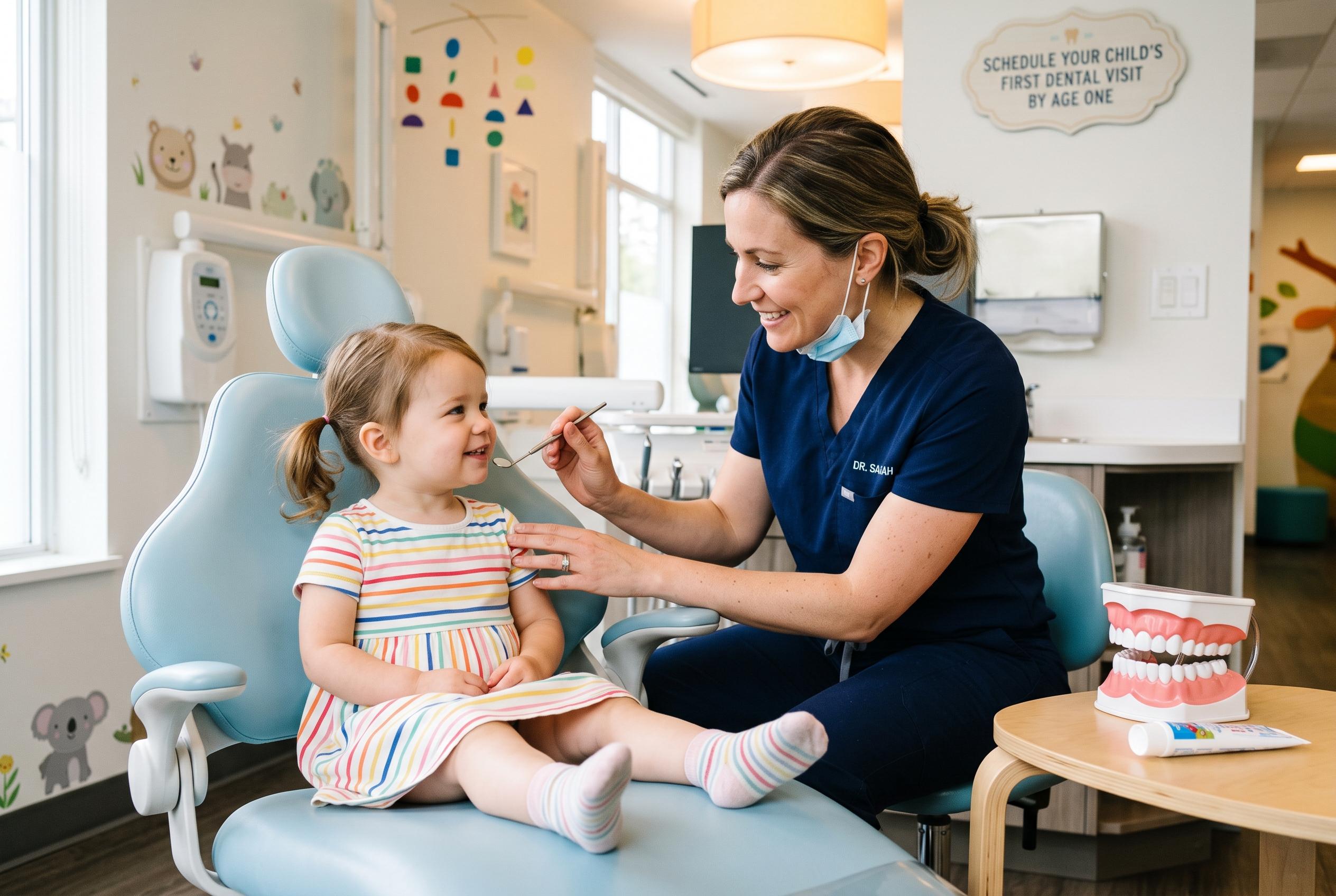

Experts emphasise the importance of scheduling a child’s first dental appointment by age one to lay the foundation for lifelong oral health and prevent decay, highlighting recent guidance for families in Mission Viejo.
A child’s first tooth is more than a cute milestone. It is the point at which oral health care should begin in earnest. For families in Mission Viejo, the practical question is not whether dental care matters, but when a child should first be seen and what that early appointment is meant to achieve.
The American Dental Association and the American Academy of Pediatric Dentistry both advise that children see a dentist by age one, or within six months of the first tooth coming through, whichever comes first. Cleveland Clinic and Nationwide Children’s Hospital say that early timing helps children become familiar with the dental setting before treatment is ever needed, while also giving parents early advice on brushing, feeding and fluoride use. The ADA also notes that first visits are a key step in reducing the risk of early childhood caries, a fast-moving form of tooth decay that can affect baby teeth soon after they erupt.
That urgency exists because baby teeth do real work. They help children chew and speak, and they keep space open for the permanent teeth that will follow. Cleveland Clinic notes that losing a baby tooth too soon can affect how later teeth come in, while the Mayo Clinic has long stressed that primary teeth play an important part in early development. Because decay can progress quickly in young children, even small white spots or dark patches deserve attention.
The first visit is usually short and gentle. According to paediatric dental guides from specialty practices and children’s hospitals, dentists typically examine the teeth, gums, jaws and bite, then ask about diet, brushing routines, thumb sucking and pacifier use. Parents should also expect practical advice on how to clean emerging teeth, when to use fluoride toothpaste and how often to return for follow-up care. The aim is as much reassurance as treatment: to establish a routine, answer questions and build trust before a problem becomes urgent.
Caregivers can make that first appointment easier by treating it as a normal part of growing up. Health experts recommend speaking positively about the dentist, avoiding scary language and choosing a time of day when a young child is rested. It also helps to start brushing as soon as the first tooth appears, as the ADA advises, using age-appropriate toothpaste and a soft brush. Once children are old enough, typically around age 7, many dentists also begin watching for orthodontic concerns such as crowding or bite problems, so early visits can help map out the next stages of care as well.
Disclaimer: This content is for informational purposes only and is not intended to be a substitute for professional medical judgment, advice, diagnosis, or treatment.