

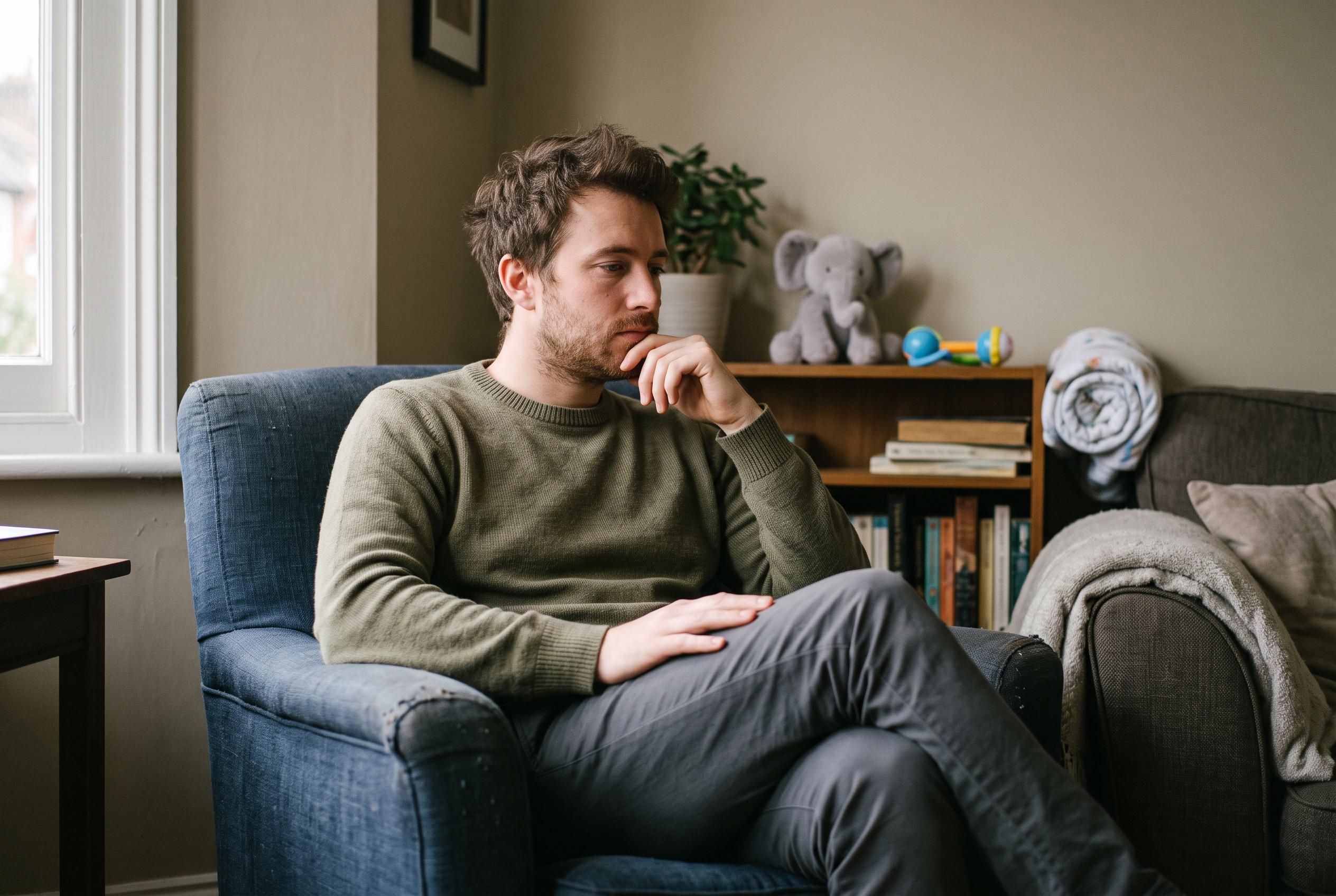

Experts warn that depression and anxiety in new fathers can be hidden by anger, withdrawal and risk-taking, leaving many without support during a major psychological transition.
For Trent Gallucci, the arrival of his first child should have been a moment of unqualified joy. Instead, after his son was born in June 2021, he was struck by a feeling he could not at first explain: emptiness. What followed was a mix of guilt, fear and emotional flatness that he now recognises as more than the usual exhaustion of early parenthood. According to ABC, the birth came after a stressful pregnancy that ended in an emergency caesarean, and the baby then spent about 10 weeks in neonatal intensive care and special care across two hospitals.
Mental health specialists say Gallucci’s experience is not unusual. Danya McStein, a psychologist and clinical team manager at Gidget Foundation Australia, told ABC that perinatal depression and anxiety in fathers is less common than in mothers, but still relatively common. Jacqui Macdonald, an associate professor at Deakin University and convener of the Australian Fatherhood Research Consortium, said large studies suggest about one in 10 fathers experience depression, anxiety or psychological distress, though that may understate the real figure because standard screening tools often miss the way mental health problems show up in men.
That gap matters because the symptoms can look different from the patterns usually associated with maternal mental health. Healthdirect’s Pregnancy, Birth and Baby service says postnatal depression can involve a low or numb mood, hopelessness, loss of interest and persistent fears or worries, while anxiety can bring irritability, tension and difficulty sleeping even when the baby is settled. McStein said men may be more likely to externalise distress through anger, aggression or risk-taking, and signs such as withdrawal from friends, intense self-criticism, excessive worry about the baby or a marked loss of interest in things that once brought pleasure should prompt concern.
Gallucci said he knew something was wrong when activities that usually helped him, including sport, music and being near water, no longer lifted his mood. He also felt guilty for struggling when he loved his son deeply. About six weeks after the birth, he rang Gidget Foundation Australia after seeing a flyer, then spoke to a therapist two weeks later. He said the idea of asking a GP for a mental health assessment felt daunting at first, and he worried that reaching out made him seem selfish or inadequate as a father.
Experts say that hesitation is common, particularly because the early parenting period is still largely structured around mothers and babies, with fathers often cast as the support person rather than a patient in their own right. Macdonald said the transition to fatherhood involves a major psychological shift, yet health systems often fail to ask men directly whether they are coping. Both experts stressed that the conditions are treatable and that the sooner support begins, the better the chance of recovery. They recommend speaking to a doctor, using an online screening tool or connecting with fathers’ groups, where social contact can make a real difference. Gallucci said attitudes are changing, but slowly, as more men speak openly about their experiences.
Disclaimer: This content is for informational purposes only and is not intended to be a substitute for professional medical judgment, advice, diagnosis, or treatment.



