

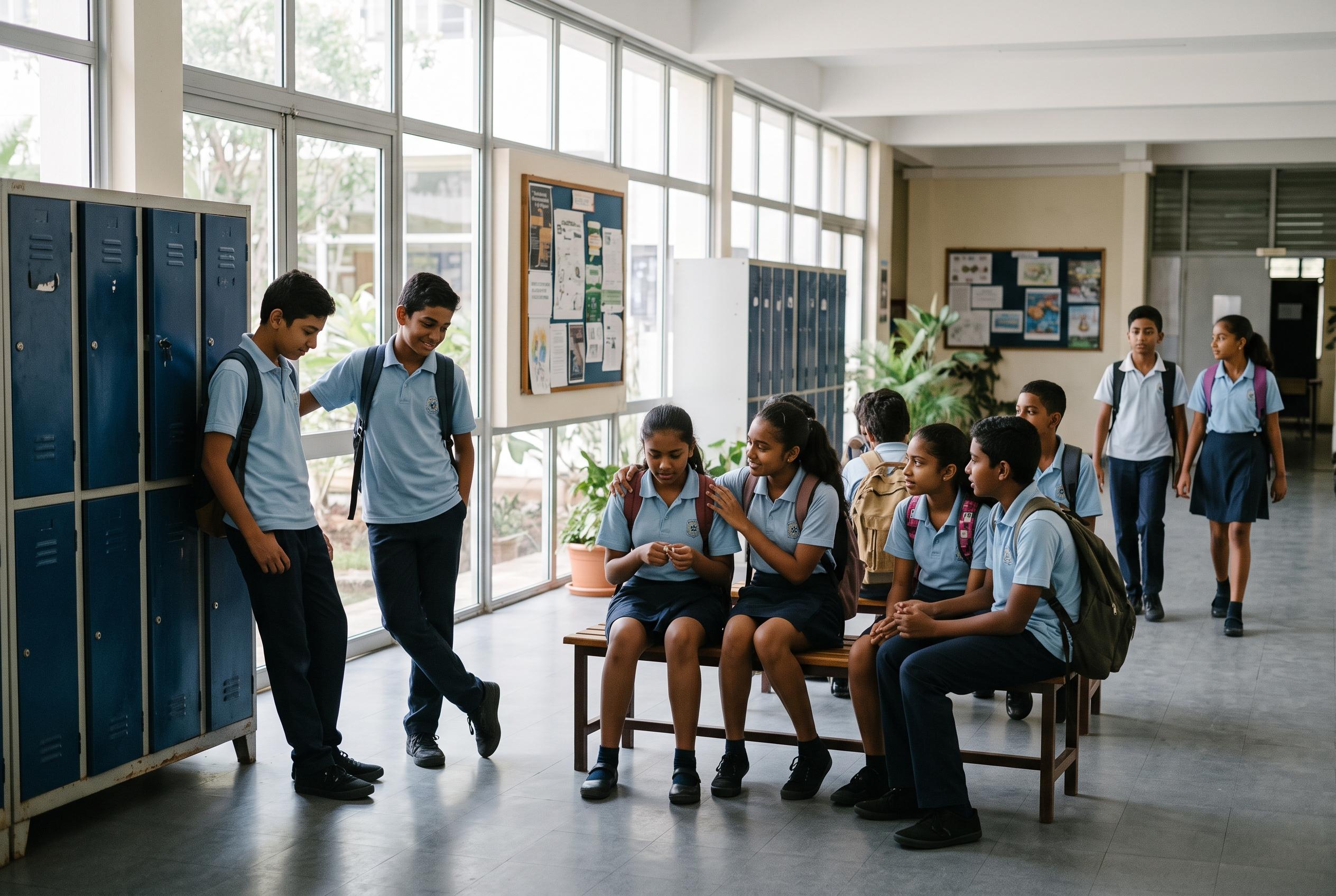

Dr Rajagopal Soondron argues that the awkwardness of entering secondary school can help young Mauritians develop resilience, confidence and a stronger understanding of others.
Many Mauritians can remember the first time they walked into a secondary school hall and felt suddenly small among strangers. Dr Rajagopal Soondron uses that familiar unease to explore a larger question: why discomfort matters, and why learning to tolerate it can shape character, confidence and social awareness. His latest column in the Mauritius Times argues that the awkwardness of unfamiliar situations is not merely an obstacle to be avoided, but a necessary part of growing up.
Soondron links that experience to the way empathy develops in childhood. Research on early development suggests that children begin responding to other people’s feelings in their earliest years, with more deliberate concern and perspective-taking emerging as they mature. By the time many children in Mauritius reach the age of 11 or 12 and move from primary to secondary school, that growing awareness of others becomes especially important. They are no longer only learning lessons from books; they are also learning how to read a room, manage embarrassment and understand how their behaviour affects those around them.
That transition is particularly significant in Mauritius, where secondary education is a major milestone. Government information shows that secondary schooling now runs from Grade 7 through Grade 13, following reforms introduced under the Nine-Year Continuous Basic Education system, and has been free since 1977. It is compulsory up to age 16. In practical terms, that means thousands of children move into larger, more demanding environments at a stage when they are still forming both their self-image and their social instincts.
Soondron’s wider point is that the so-called comfort zone is not a trivial phrase about shyness or habit. It is the mental space in which people feel secure, but remaining there too long can limit confidence and adaptability. In a society as close-knit as Mauritius, where reputation and family expectations can weigh heavily, fear of embarrassment may discourage people from speaking up, taking chances or accepting new responsibilities. His column suggests that parents, teachers and employers should treat manageable discomfort as a training ground, not a threat: a place where resilience is built, and where empathy, self-control and courage begin to take root.
Disclaimer: This content is for informational purposes only and is not intended to be a substitute for professional medical judgment, advice, diagnosis, or treatment.



