

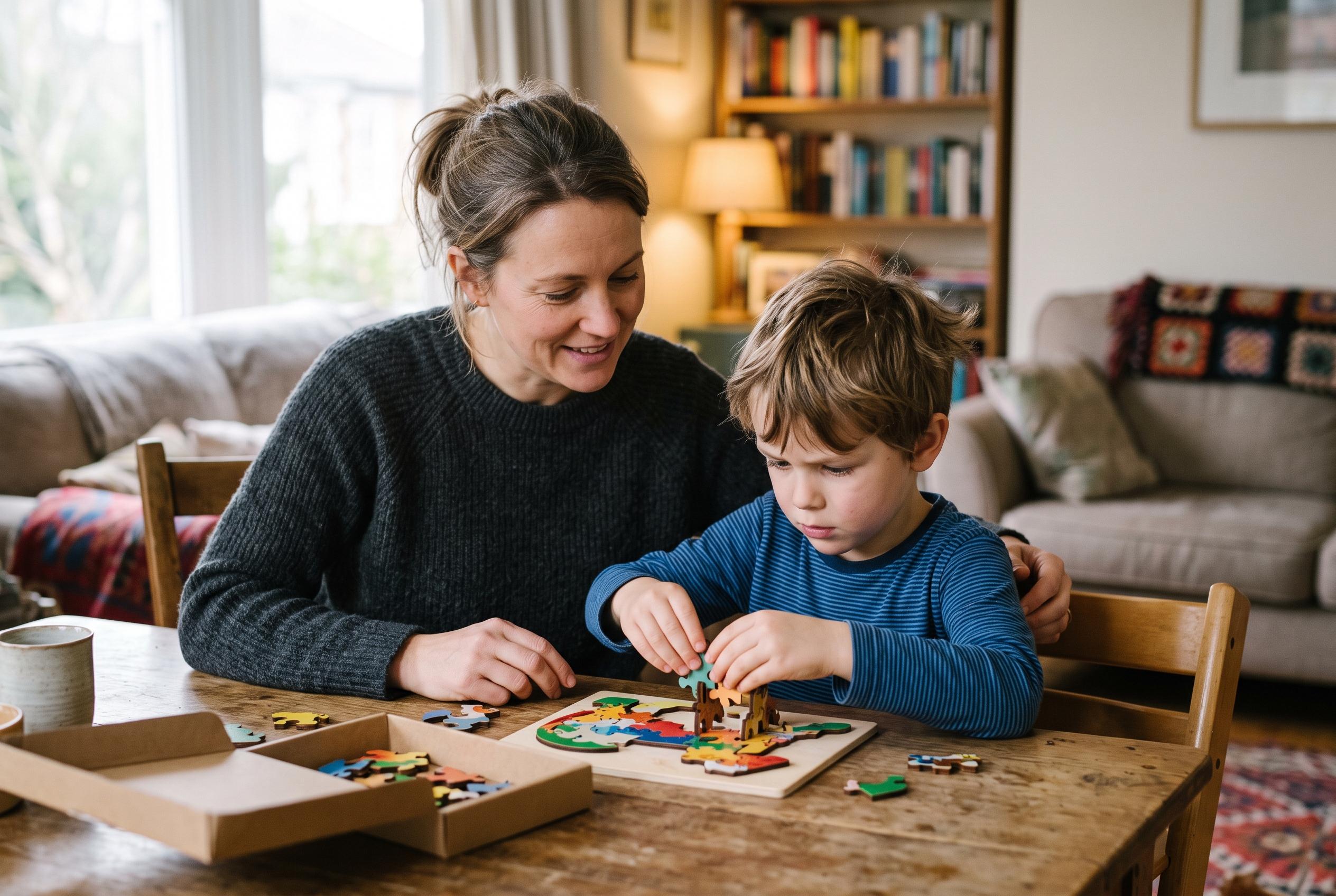

Experts say parents can nurture confidence and resilience by coaching children through everyday challenges rather than rushing to solve them.
Parents are often tempted to step in the moment a child starts to struggle, especially when the answer seems obvious to an adult. But child development experts say that pause can matter. Deborah Wood, Ph.D., writing in Chesapeake Family, argues that children learn confidence and problem-solving most effectively when adults resist the urge to fix every difficulty for them and instead offer just enough support to keep the child moving forward.
The point is not to leave young children to flounder. Rather, Wood suggests breaking a challenge into manageable steps and helping a child notice the problem, describe it in simple terms and think about possible solutions. A missing toy, for example, can become a chance to ask where it was last used; a wobbly paper sculpture can prompt questions about balance, support and whether tape might help. The idea is to coach, not take over, so the child remains the one doing the thinking and trying.
That approach aligns with guidance from HealthyChildren.org, which says children build a can-do mindset when they are allowed to work through difficulties themselves. Nationwide Children’s Hospital has made a similar case, saying that children gain confidence and adaptability when adults teach the steps of solving a problem, model the process and then let them practise. The ECE Resource Hub also notes that preschoolers learn persistence and critical thinking when adults remain available without removing the challenge.
Wood also points out that young children’s frustration can sometimes be a sign that they want help, not that they want the task done for them. If a child is tired, hungry or overwhelmed, the immediate need may be for a snack, rest or a brief reset before returning to the problem. But when a child is calm enough to keep trying, a measured response such as, “I’m here if you need me,” can reinforce independence rather than dependence.
That principle matters well beyond toy searches or art projects. PBS KIDS for Parents says children, especially around age six, are beginning to face more social conflicts and need help learning how to work through them. In that sense, everyday frustrations are not interruptions to development; they are part of it. Letting children struggle a little, within safe limits, can help them become more resilient, more capable and less reliant on adults to solve every problem for them.
Disclaimer: This content is for informational purposes only and is not intended to be a substitute for professional medical judgment, advice, diagnosis, or treatment.



