

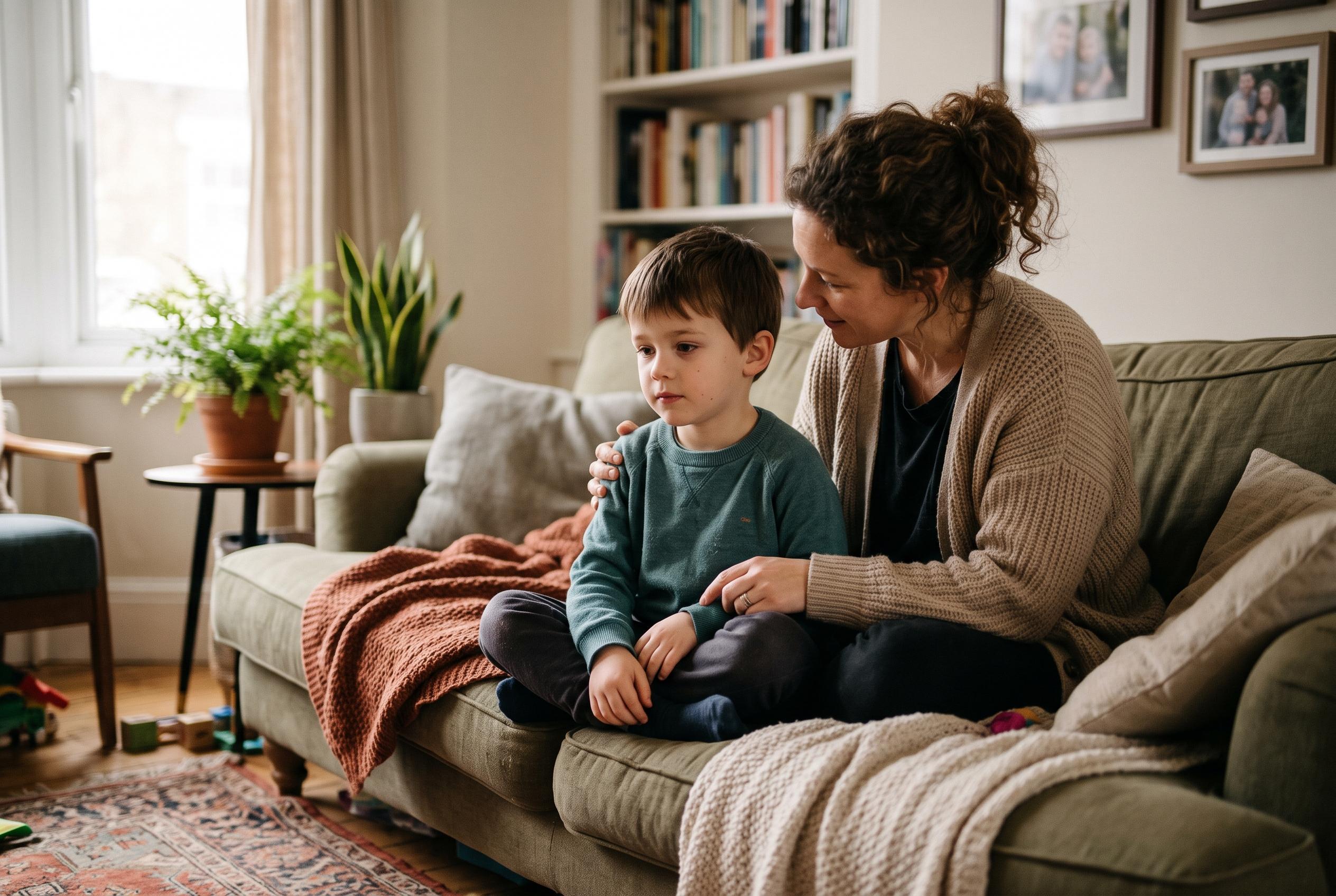

Children who become overwhelmed by noise, change or strong emotions may be showing a normal temperament trait , and the right support can help their empathy and insight flourish.
A highly sensitive child is not a child who needs fixing. It is a child whose nervous system takes in more, feels more and processes experiences more deeply than many others. For parents, that reframe can be the difference between seeing fragility and recognising a temperament that comes with both difficulties and genuine strengths. The idea is rooted in psychologist Elaine Aron’s work on sensory processing sensitivity, a trait that research suggests affects roughly 15% to 20% of people. Psychology Today notes that it is not a disorder, but a normal variation in how people respond to the world.
The trait often shows up in familiar ways. A child may be easily overwhelmed by noise, crowds or sudden change. They may notice tiny shifts in mood, routine or surroundings that other children miss. They may feel criticism sharply, recover slowly from upsetting moments, or react strongly to what they see in films, books or daily life. Psychology Today describes these patterns as part of a broader profile that includes depth of processing, overstimulation, emotional responsiveness and sensitivity to subtleties. In other words, the same child who finds a busy classroom exhausting may also be unusually thoughtful, observant and empathetic.
That is why many experts urge parents to avoid treating sensitivity as a flaw. According to Psychology Today, children with this temperament often do best when adults offer emotional security, help them regulate big feelings and keep their surroundings calm and predictable. Practical support can be simple but powerful: build in genuine downtime after a full school day or an intense social event, give advance warning before transitions, and create a quiet space at home where a child can reset. The goal is not to make a sensitive child less sensitive, but to reduce avoidable overwhelm so their strengths have room to emerge.
The same approach can help outside the home, particularly when teachers or relatives misread sensitivity as shyness, fussiness or overreaction. A short, clear explanation is usually more effective than a long defence. Parents can say that their child processes experiences deeply and needs more notice before changes, more recovery time after stimulation and, in some cases, a quieter place to work or pause. Psychology Today says these kinds of supports can make a real difference without isolating the child or making the trait feel like a problem.
There are still important distinctions to keep in mind. Sensitivity is not the same as anxiety, although the two can overlap if a child is not well supported. It is also not something children simply outgrow. The underlying temperament tends to remain, even as children learn more about how to manage it. Research and expert commentary also suggest that boys and girls show the trait at similar rates, even if sensitive boys are more likely to be pressured to toughen up. If a child’s sensitivity is beginning to affect daily life significantly, or if anxiety appears alongside it, professional advice may be helpful. Otherwise, the most useful response is often the simplest: see the child clearly, name the trait without shame and build a life that respects how they are wired.
Disclaimer: This content is for informational purposes only and is not intended to be a substitute for professional medical judgment, advice, diagnosis, or treatment.



