

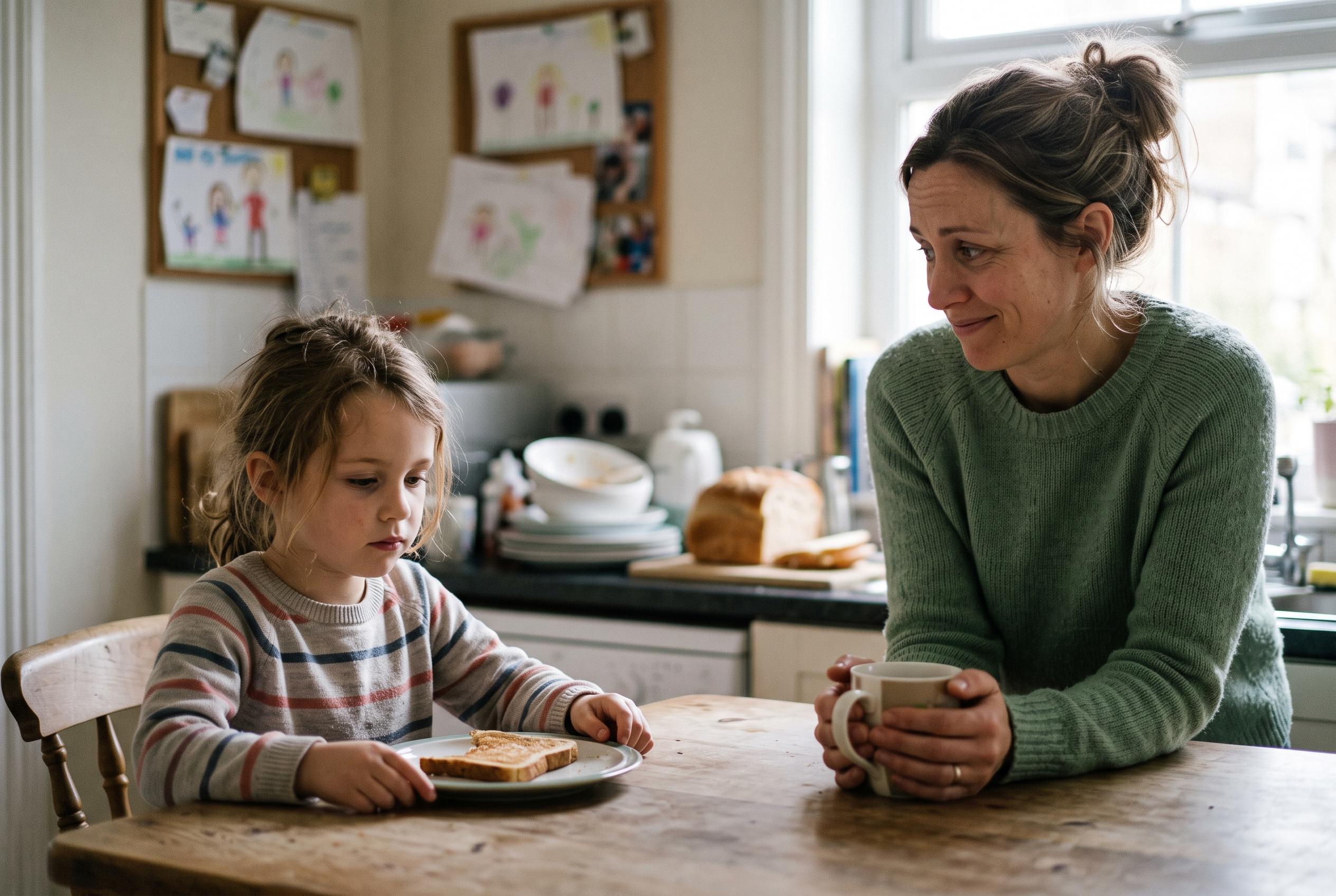

A Cardiff University study suggests conflicting emotional signals from mothers may be linked to more severe anxiety, withdrawal and behavioural problems in young children.
Researchers at Cardiff University say the emotional climate mothers create may shape how children struggle, or cope, with mental health difficulties, adding new detail to a long-running debate about how family interactions influence development. In a study published in Scientific Reports, the team examined children aged four to eight who had been referred for assessment because of emotional, behavioural or cognitive problems at school. Their findings suggest that a child’s mental health may be affected not only by what a parent says, but by how that parent says it and what their face communicates at the same time.
Ellie Mae Dorrans, a lecturer at Cardiff University’s School of Psychology, said mothers are “rich sources of emotional information” for children, and that previous work had linked childhood problems with maternal anxiety, depression, expressed emotion and facial expressivity. The new study, she said, brought those strands together by looking at mental health, verbal emotional communication and facial expression as part of the same emotional environment.
The researchers studied 134 children and looked at maternal anxiety and depression, the tone of emotional comments made about the child, and facial expressions measured with automated analysis technology. They found that higher maternal anxiety was associated with more severe internalising difficulties in children, such as anxiety, sadness and withdrawal. Higher levels of maternal depression, by contrast, were linked with more externalising problems, including aggression, opposition and conduct difficulties. Mothers who were more negative and less warm towards their child were also more likely to have children with significant behavioural problems.
One of the clearest findings concerned a mismatch between words and faces. According to the Cardiff team, children whose mothers made negative comments while showing little or no anger on their faces tended to have the most serious emotional and behavioural difficulties. The researchers said that conflicting signals may leave children without clear emotional guidance, making it harder for them to recognise feelings, respond appropriately and build the regulation skills they need for life at home and at school.
The result fits with earlier studies showing that parental negativity, irritability and family conflict are linked with child mental health problems. Research published in Scientific Reports in 2021 found that parents expressing negative emotions in front of children was associated with both internalising and externalising symptoms, while work published in Nature Communications in 2024 showed that early stress and trauma can shape later emotional and behavioural outcomes, with family resilience helping to soften some of those effects. Another recent study in Humanities and Social Sciences Communications found that family conflict can affect children’s internalising problems through parental distress and harsh parenting, underlining the importance of the wider home environment.
Dorrans said the findings should not be read as blame directed at mothers or parents who are already struggling. Instead, she said the study points to the need for support that helps adults manage their own wellbeing and communicate emotions more clearly and consistently. For parents and carers, the practical message is straightforward: children learn about feelings from the people around them, and when spoken messages and facial expressions do not match, that lesson can become confusing.
Disclaimer: This content is for informational purposes only and is not intended to be a substitute for professional medical judgment, advice, diagnosis, or treatment.



