

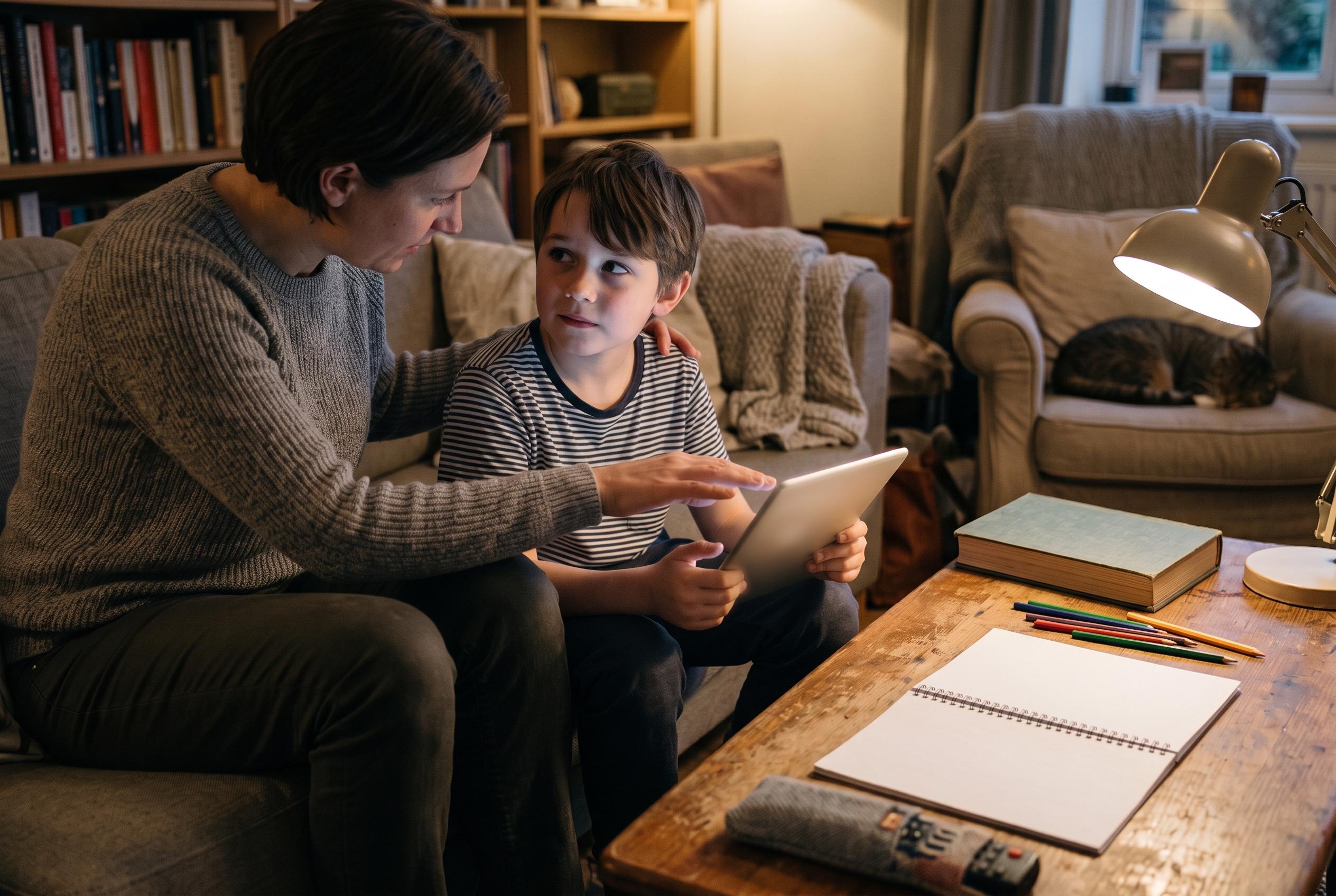

A comprehensive review led by University of Calgary researchers examines how increased screen use in childhood correlates with weaker academic performance, delayed language skills, and social-emotional difficulties, highlighting the importance of context and family habits in understanding digital media’s impact.
A large review led by University of Calgary researchers suggests that heavier screen use in childhood is linked with weaker academic performance, slower language development and more emotional and social difficulties, though the scientists caution that the evidence does not prove screens are the direct cause. The work, published in JAMA Pediatrics, drew on data from more than 2.8 million children in 64 countries and adds to a growing debate over how much digital media is too much for young people.
According to the review, the clearest association was with overall school performance rather than with single subjects. Children who spent more time on phones, televisions, video games, social media or online videos tended to do less well on broad academic measures, while the links with maths, reading and science on their own were less consistent. The authors said that some parts of learning have not yet been studied closely enough for firm conclusions, which means the picture remains incomplete.
The researchers also reported connections between higher screen exposure and reduced speech development, alongside more internalising problems such as anxiety and depression, as well as externalising behaviours including aggression and attention difficulties. They said the size of these associations was similar to that of other well-known influences on child development, including family income, parenting style and premature birth. But because the analysis was based on observational studies, it cannot show whether screens themselves caused the problems, only that the two often appeared together.
Other recent work in JAMA journals points in a similar but more nuanced direction. A JAMA Network Open study found that increased screen use was not consistently tied to poorer emotional, behavioural or social development, raising questions about guidelines that focus only on total hours spent in front of a screen. A separate JAMA Pediatrics study found that a parent’s own smartphone use was linked with slower growth in children’s receptive vocabulary, while a child’s ownership of digital devices was associated with weaker language performance at the same time. Together, the findings suggest that context, content and family habits may matter as much as duration, and that blanket advice on screen time may be too simple for a problem shaped by many different factors.
Disclaimer: This content is for informational purposes only and is not intended to be a substitute for professional medical judgment, advice, diagnosis, or treatment.



