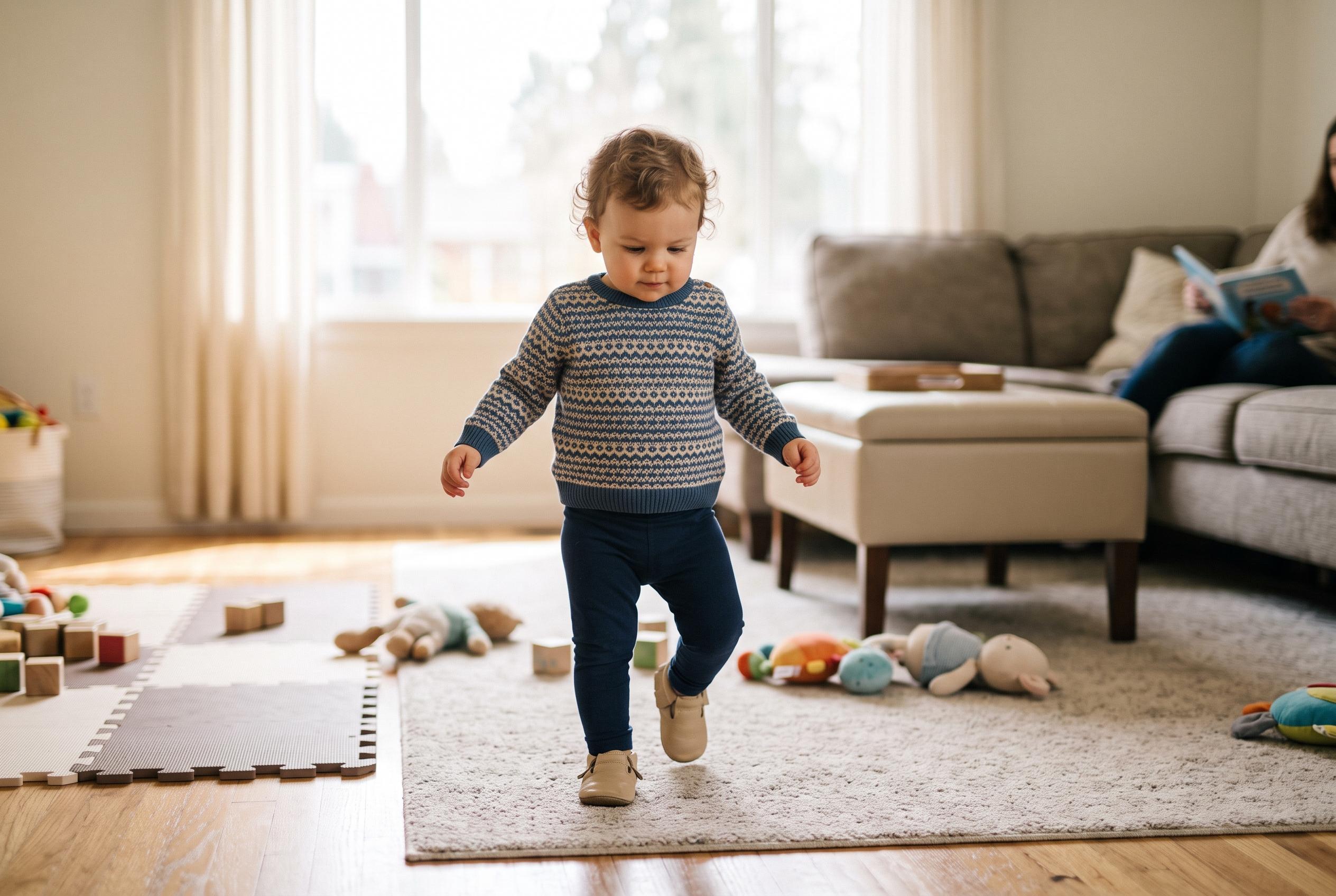

Research shows toddlers fall frequently during their first steps, offering crucial lessons in balance and recovery. Experts emphasise calm reassurance and safety measures to minimise injuries while recognising falls as an essential part of learning to walk.
A toddler’s first weeks on his feet can be unnerving for parents, but frequent tumbles are part of how walking is learned. Research summarised by the National Library of Medicine found that children aged 12 to 19 months fell, on average, 17 times an hour during free play, a reminder that wobbling and toppling are normal features of early mobility. The Centres for Disease Control and Prevention has also identified toddlers as a group with especially high fall rates, underlining how common these mishaps are in the first stage of walking.
That matters because a child is not only learning how to move but how to recover. Each fall teaches balance, coordination and how different surfaces behave underfoot, whether carpet, wood, tile, grass or sand. It also teaches something else: whether a stumble is a crisis or simply a brief interruption. Child development specialist Deborah Wood says a parent’s expression can shape that lesson, so the best response is usually calm reassurance rather than alarm.
If a child cries for longer than a moment, comfort is appropriate, and an ice pack can help with a bump. For a typical goose egg, cool compresses for 15 to 20 minutes at a time may reduce swelling, and families are often advised to repeat that after about an hour if needed. The swelling comes from broken blood vessels under the skin, which is why the head and face can puff up so easily after a collision. If the skin is cut, direct pressure with a clean cloth is the first step, and a deeper wound may need prompt medical attention.
Prevention helps, but it cannot eliminate every fall. Rearranging furniture, removing loose rugs, clearing toys and shoes from the floor and padding obvious hazards such as sharp hearths or table edges can reduce the risk of injury. Even so, a toddler’s proportions make wipe-outs hard to avoid: the head is large and heavy compared with the rest of the body, and that makes early walking especially precarious. Bare feet are often best for indoor balance, while shoes can sometimes make turning more awkward.
Parents should watch for signs that suggest something more serious than a routine bump. The NHS and the British Red Cross both advise seeking medical help if a child becomes unusually sleepy, vomits repeatedly, has persistent crying, behaves abnormally or seems otherwise unwell after a head injury. Those symptoms can appear in the hours after a fall, so close observation matters. For many families, a basic first-aid course can provide extra confidence, but most head bumps in young walkers are minor and settle with care.
Disclaimer: This content is for informational purposes only and is not intended to be a substitute for professional medical judgment, advice, diagnosis, or treatment.