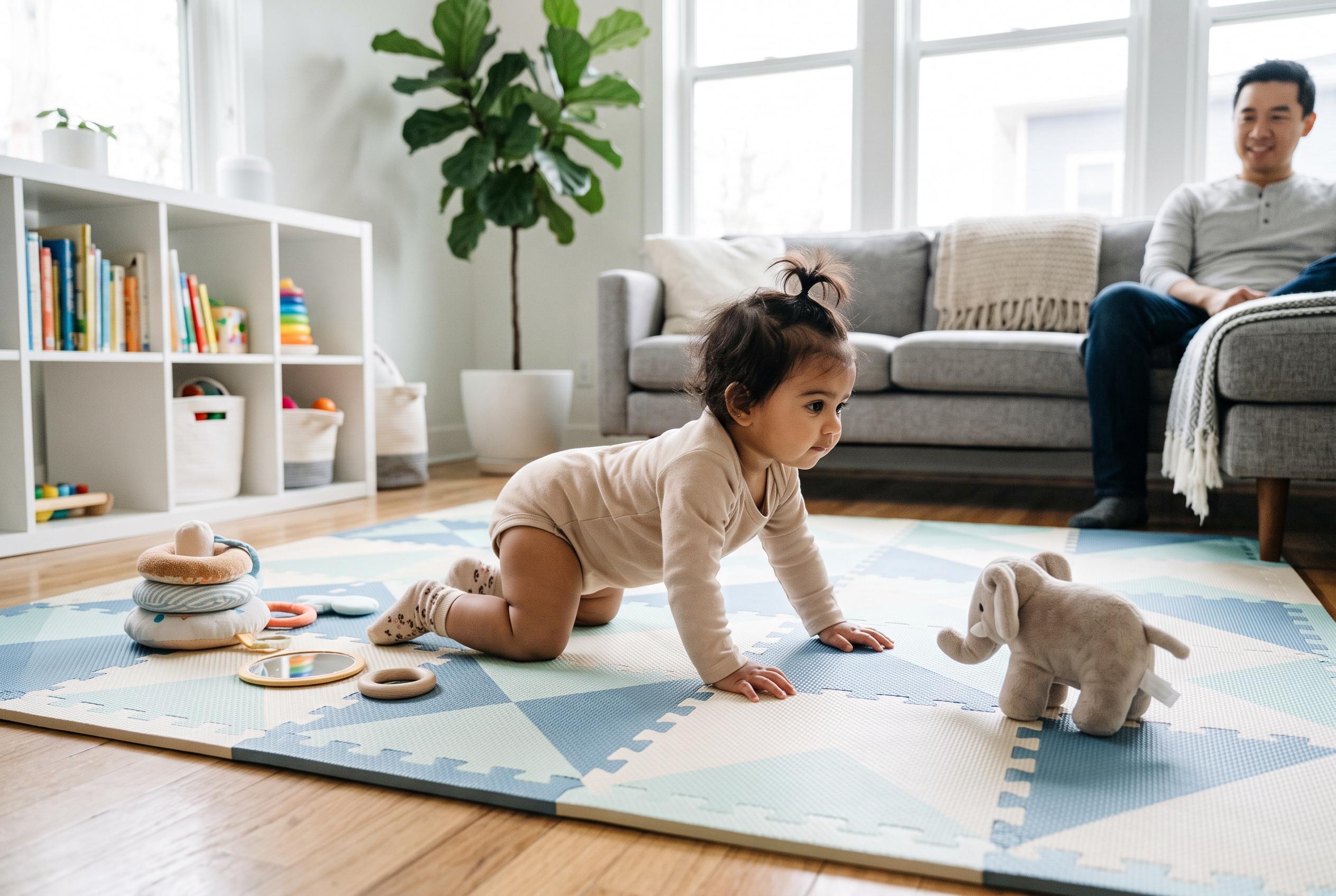

Babies reach the crawling stage within a broad age range through various styles, with parents encouraged to support their little ones’ natural progress and ensure a safe environment as mobility develops.
Watching a baby start to move independently is one of the earliest signs that development is gathering pace, but crawling does not follow a single timetable. According to Cleveland Clinic, most babies begin crawling between 7 and 10 months, while other parenting and health guides place the usual window anywhere from 6 to 12 months. That broad span is normal, and some babies move straight on to standing and walking without ever using a classic crawl.
Crawling is usually the result of several smaller skills arriving in sequence. Babies often first gain stronger head and neck control through tummy time, then roll, sit upright and push up onto their hands and knees before they begin to travel forward. Medical News Today says those pre-crawling movements are often a clearer sign of progress than the exact month a baby starts to move.
There is also no single right way to crawl. The familiar hands-and-knees version is only one option. Healthline, Cleveland Clinic and Pampers all note that babies may use an army-style belly crawl, a bear crawl, a crab crawl, bottom scooting or rolling to get around. These variations are all considered normal, and an unusual style does not automatically point to a problem.
Parents can support the process without trying to force it. The most useful steps are plenty of supervised tummy time, regular floor play and placing a favourite toy just out of reach so the baby has a reason to move. Keeping a safe, open space matters too, because too much time in seats, bouncers and other containers can limit the practice babies need to build strength and coordination, according to the sources reviewed.
Once a baby begins to move, home safety becomes urgent. Cleveland Clinic and Pampers both stress the importance of babyproofing cabinets, outlets, furniture and stairs before mobility takes off. Parents should also speak to a paediatrician if a baby shows little interest in moving, is not bearing weight on the legs by around 12 months, is missing other milestones or seems to favour one side of the body. In most cases, though, crawling is just one stage in a wide and varied range of normal development.
Disclaimer: This content is for informational purposes only and is not intended to be a substitute for professional medical judgment, advice, diagnosis, or treatment.