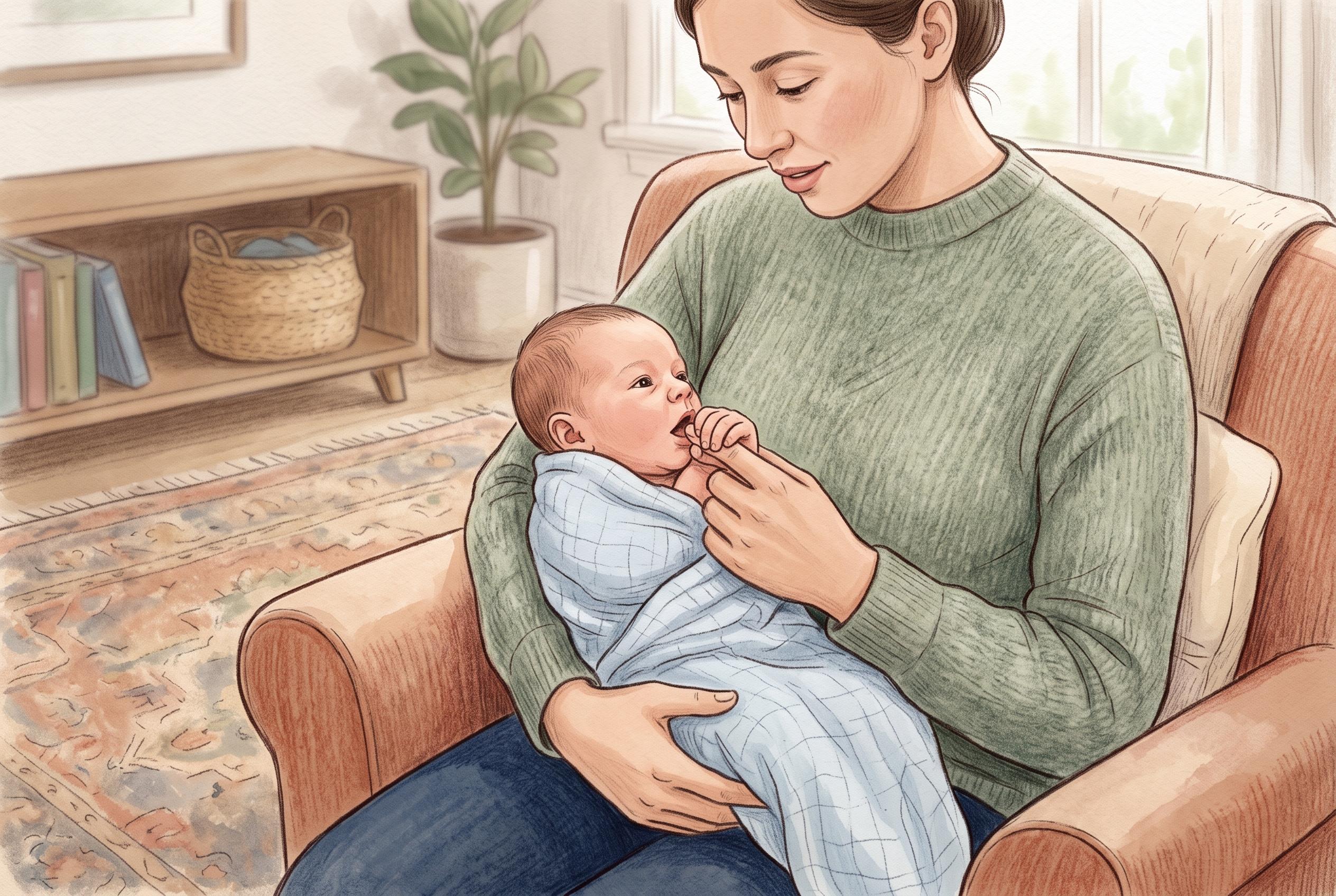

Newborn reflexes, such as rooting, Moro, and grasping, serve essential roles in early feeding, protection, and motor control, with their timing offering critical insights into infant health and development.
Many parents first notice newborn reflexes by accident: a sudden flail of the arms, a tight fist around a finger, or a baby turning towards a touch on the cheek. Those automatic responses can look surprising, but they are part of normal early development. Paediatric sources including Cleveland Clinic, HealthyChildren.org and Nationwide Children’s Hospital describe these reflexes as involuntary actions that help infants feed, protect themselves and begin building early motor control.
The most familiar reflexes include rooting, sucking, Moro, grasping, stepping, tonic neck and Babinski. Rooting and sucking help a baby find food and feed; the Moro reflex is the classic startle response; the palmar grasp encourages a strong hand hold; stepping can make a newborn seem as if they are walking; tonic neck creates the “fencing” posture; and Babinski causes the toes to fan when the sole is stroked. Medical references from MedlinePlus and the Cleveland Clinic say these responses are expected in healthy infants and are useful markers of nervous system development.
Timing matters as much as the reflex itself. According to HealthyChildren.org, Cleveland Clinic and Nationwide Children’s Hospital, many primitive reflexes begin to fade between about two and six months as voluntary movement takes over, though Babinski can last much longer, often into the second year of life. That gradual disappearance is one reason paediatricians check reflexes at well-baby visits: persistence, weakness or asymmetry can point to a problem worth closer attention.
Parents can observe several reflexes safely at home, but gentle handling is essential. Baby’s cheek can be softly stroked to watch for rooting, a finger placed in the palm to see the grasp reflex, or the infant held upright with feet touching a flat surface to look for stepping. Cleveland Clinic and WebMD both stress that symmetry matters, and that any testing should stop if the baby becomes upset. The Moro reflex should never be triggered by shaking or any rough movement.
These reflexes also explain two of the biggest early parenting challenges: feeding and sleep. The rooting and sucking reflexes underpin breastfeeding and bottle-feeding in the first weeks, while the Moro reflex can cause babies to wake themselves suddenly. Paediatric guidance from HealthyChildren.org and Cleveland Clinic says swaddling may help some infants feel more secure by reducing the startle response, although it should be used safely and stopped once a baby begins rolling.
Most newborn reflexes are reassuring when they appear on time, work on both sides of the body and fade in line with expected developmental windows. That is especially true for premature babies, whose timelines may need to be judged by corrected age rather than birth date, according to common paediatric guidance. If a reflex seems absent, unusually strong, or present far longer than expected, clinicians advise mentioning it promptly at the next appointment.
Disclaimer: This content is for informational purposes only and is not intended to be a substitute for professional medical judgment, advice, diagnosis, or treatment.