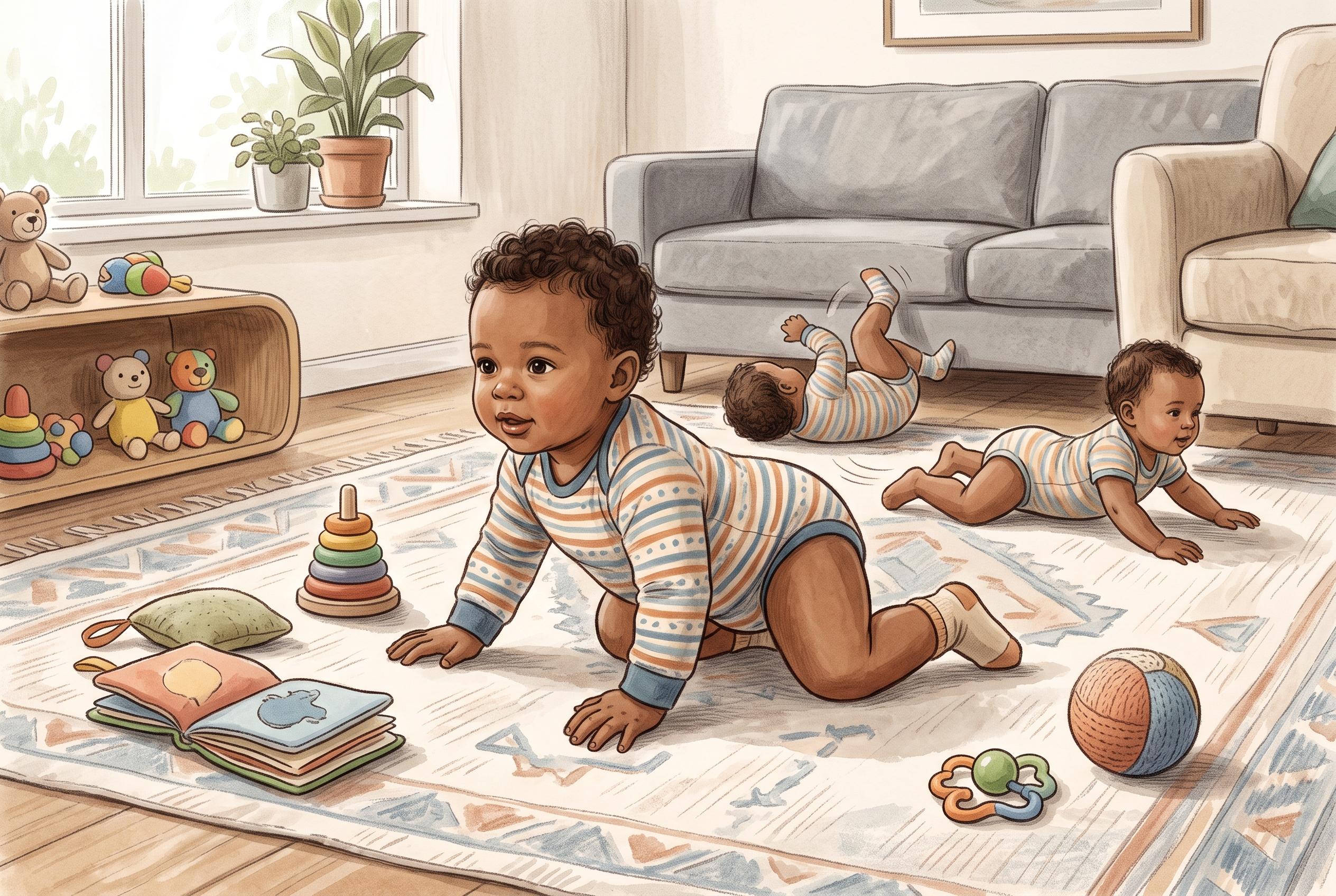

Babies reach crawling milestones at varied times, with many paths to mobility. Experts emphasise that movement style and timing are less important than overall development and safety, offering reassurance to parents navigating this stage.
Most babies begin crawling somewhere between 6 and 10 months, though the broader normal range can stretch from about 5 months to 13 months. Research cited by the World Health Organization suggests that roughly half of babies show some form of crawling by 8 months, while most master hands-and-knees movement between 9 and 11 months. The important point for parents is simple: crawling does not follow one fixed timetable, and variation is expected.
Some babies begin with a belly crawl or commando shuffle, pulling themselves forward with their arms before they have the strength or balance for a classic crawl. Others pivot, rock on hands and knees, or spend weeks practising before they move in a clear forward line. Premature babies are often measured by corrected age, not their birth date, which can shift expectations by weeks or even months. A baby’s season of birth, amount of floor time, and overall opportunities for movement may also shape when crawling appears.
Not every baby crawls at all. The CDC no longer treats crawling as an essential milestone, and many children move from sitting to cruising furniture and then to walking without ever spending much time on all fours. Some bottom-shuffle, some crab-walk, and some simply roll themselves across the floor. These are all legitimate ways of getting around, and they do not, by themselves, signal a problem.
Crawling can still matter because it helps build strength, balance, coordination and body awareness. The movement works the core, arms and legs at the same time, while also encouraging the brain to coordinate both sides of the body. That said, babies who skip crawling often develop the same abilities through other activities such as climbing, cruising and active play on the floor. By school age, research has not shown meaningful long-term differences between crawlers and non-crawlers in general development.
Parents often look for warning signs that crawling is coming soon. Rocking on hands and knees, pushing up during tummy time, pivoting in circles, reaching for toys while sitting and showing more interest in the floor are all common signs of progress. Health organisations and paediatric guidance also suggest simple ways to encourage movement: plenty of tummy time, toys placed just out of reach, time on the floor rather than in containers, and a safe space to explore. Mirror play, play tunnels and even a parent crawling alongside a baby can all add motivation.
What matters most is the bigger picture. A baby who is moving in some way, using both sides of the body, gaining strength and reaching other milestones is usually developing normally, even if crawling arrives early, late or not at all. But if a baby shows no interest in mobility by 12 months, moves asymmetrically, cannot sit independently by 9 months or loses skills they once had, it is worth speaking with a paediatrician. For most families, though, the message is reassuring: there is more than one path to mobility, and all of them can be normal.
Disclaimer: This content is for informational purposes only and is not intended to be a substitute for professional medical judgment, advice, diagnosis, or treatment.