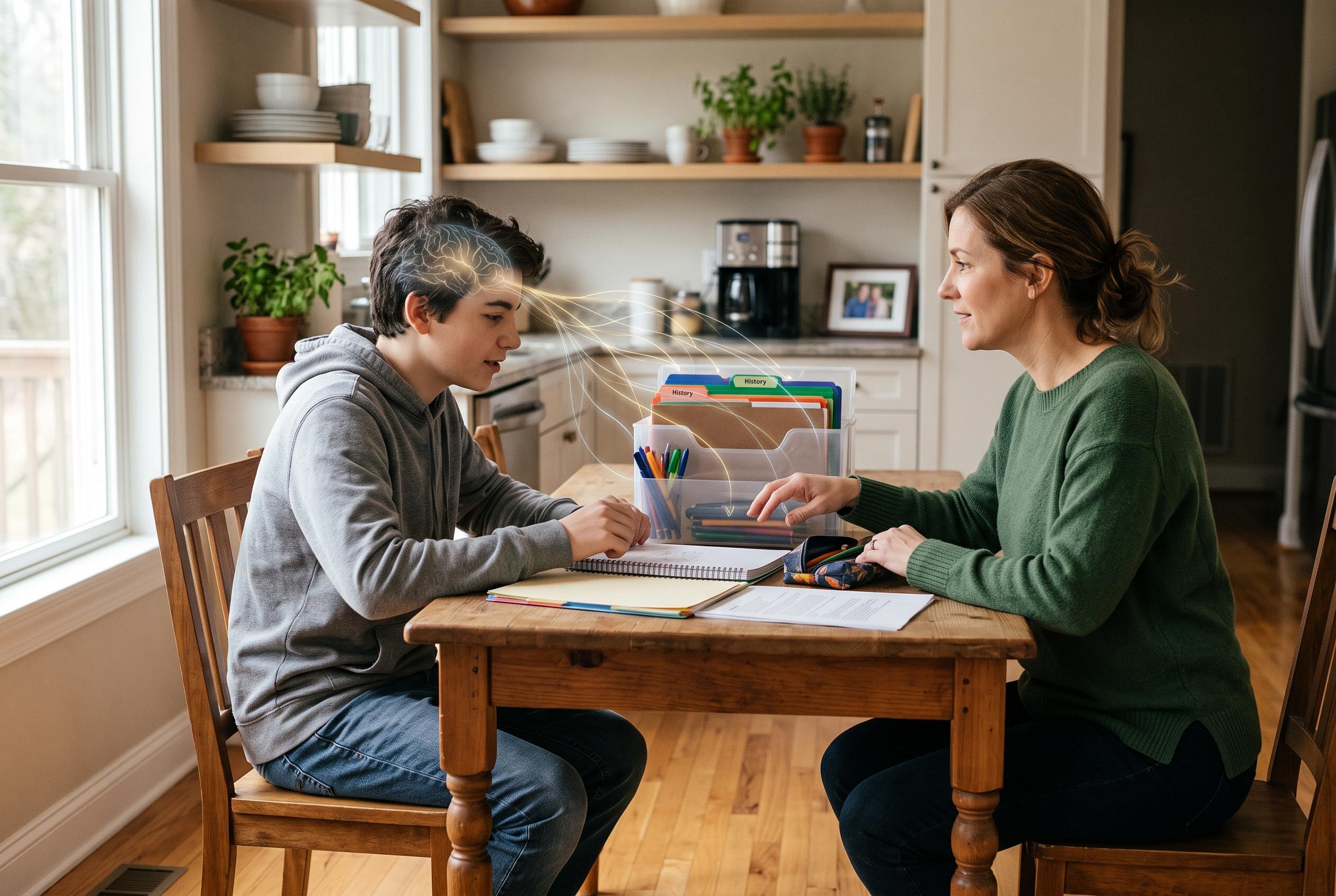

Research on adolescent brain growth suggests patience and coaching, not punishment, are key to helping teens build organisational skills during their ongoing developmental processes.
The daily scramble to get teenagers out the door can feel less like parenting than a test of patience. A backpack left by the front door, a forgotten lunch and a chore completed only to be immediately forgotten are the kind of small failures that can trigger outsized frustration at home. But Kristi Kraychy argues that this pattern is usually not about defiance or carelessness. It is, she says, part of a normal stage of development as the adolescent brain is still learning how to manage planning, memory, impulse control and emotion.
That view is broadly consistent with research on adolescent brain development. Studies published in Nature and ScienceDirect describe a period in which the prefrontal cortex, which supports judgement, organisation and working memory, is still maturing well into the twenties, while emotional reactivity remains strong in the amygdala and related limbic circuits. Researchers say those systems do not develop in lockstep. Instead, the brain gradually strengthens the connections that help young people regulate emotions and hold tasks in mind, which helps explain why a teenager can excel academically or athletically and still forget the shoes, bottle or homework needed for the day.
Kraychy says the practical answer is not more lecturing but more coaching. Rather than repeating instructions, she recommends asking questions that prompt adolescents to check their own plans, read calendars and think one step ahead. That approach mirrors the idea of metacognition, or thinking about one’s thinking, and gives young people repeated practice in building the internal scripts they will eventually use on their own. In her family, that has meant letting children use packing lists, make choices about lunches and, at times, experience the discomfort of a missed item rather than having adults quietly fix the problem.
Her larger point is that executive function is not an on-off trait but a set of skills that develops over time. The mismatch between a teenager’s growing ambitions and uneven daily organisation can be maddening for parents, but researchers and educators alike suggest that the answer lies in scaffolding, modelling and patience. The goal, Kraychy writes, is not perfection. It is helping young people gradually learn how to manage the practical demands of an increasingly independent life.
Disclaimer: This content is for informational purposes only and is not intended to be a substitute for professional medical judgment, advice, diagnosis, or treatment.