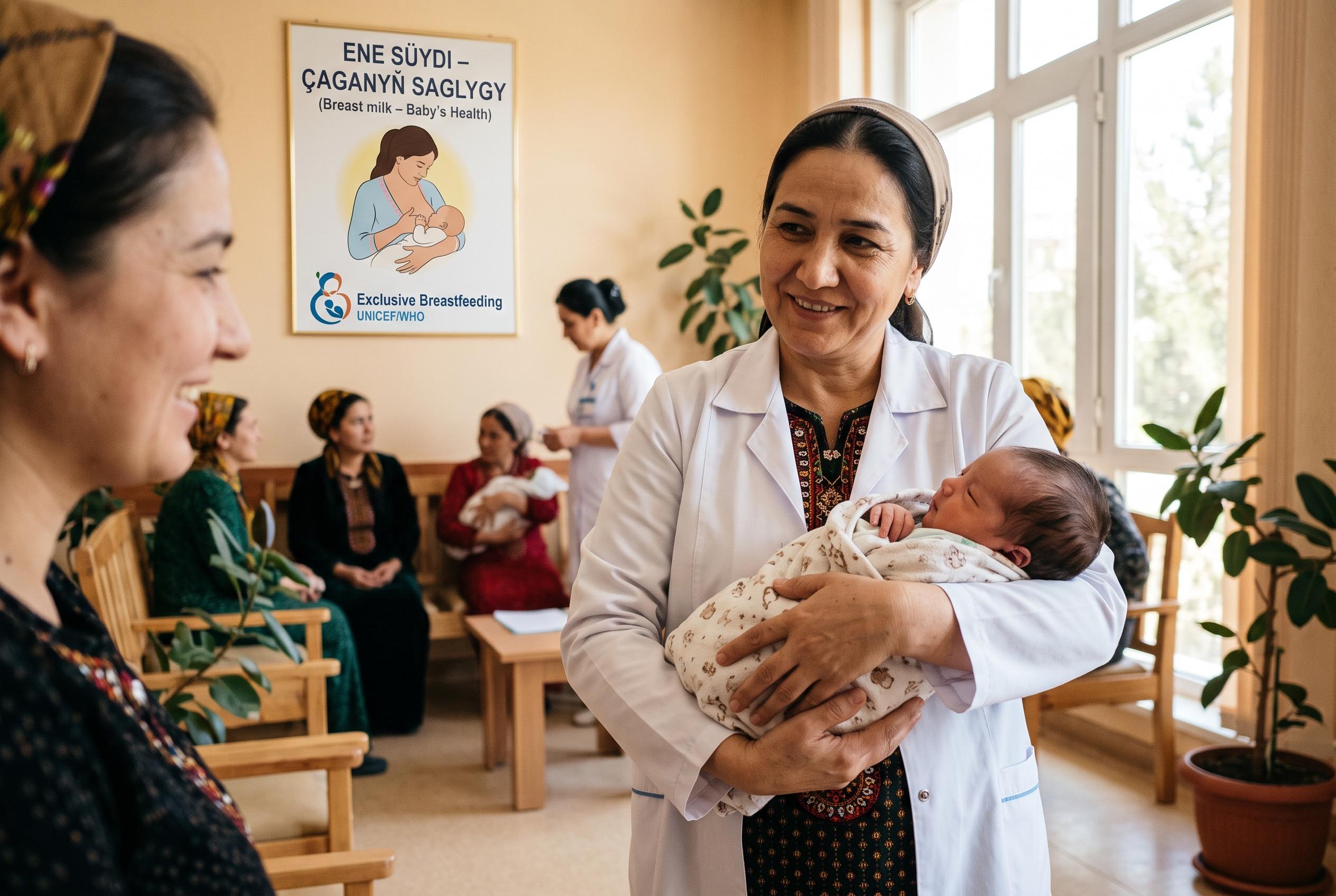

Turkmenistan advances its campaign to promote exclusive breastfeeding, tackling social, medical, and policy hurdles through enhanced public messaging, legal reforms, and community engagement, aiming to reverse declining rates and foster healthier futures for children.
Turkmenistan has stepped up its efforts to protect exclusive breastfeeding, with a national roundtable in Ashgabat bringing together ministers, health workers, UNICEF and civil society figures to examine how policy, services and public messaging can better support mothers. The discussion formed part of a wider campaign launched by the Ministry of Health and Medical Industry, the Gurbanguly Berdimuhamedov Charitable Foundation for Assistance to Children in Need of Care and UNICEF, which has run through the summer and culminated around World Breastfeeding Week. According to UNICEF, the initiative is intended to improve access to reliable advice, widen counselling support and encourage breastfeeding-friendly workplaces and community norms.
At the event, UNICEF’s representative in Turkmenistan, Jalpa Ratna, said exclusive breastfeeding in the first six months is one of the most effective investments in a child’s future, while Oguljahan Atabayeva, vice-president of the charitable foundation, stressed the nutritional and emotional value of breast milk. Azat Ovezov, the deputy health minister, said the government is working on legal reform and tighter oversight of breastfeeding standards in health facilities, and the Women’s Union of Turkmenistan said it is helping to build public awareness among young families.
The latest survey data discussed at the roundtable point to a mixed picture. Turkmenistan has made notable gains over the past two decades: UNICEF says breastfeeding rates rose from 11% in 2006 to 59%, helped by Baby-Friendly Hospital standards and laws protecting breastfeeding rights. But the newer Multiple Indicator Cluster Survey shows exclusive breastfeeding during the first six months has slipped from more than 60% in 2019 to 35.5% in 2024, even as early initiation after birth climbed to 84.7%. UNICEF also says almost 90% of women give birth in baby-friendly hospitals, although caesarean deliveries can still delay breastfeeding start times.
Speakers said the reasons mothers stop exclusive breastfeeding are as much social and psychological as medical. Concerns about low milk supply, exhaustion and post-partum depression were cited alongside mixed advice from relatives, limited time for one-to-one counselling, weak breastfeeding provision in workplaces and public spaces, and marketing that treats formula as a near-equivalent substitute. The government said it is preparing an updated breastfeeding law and discussing a national code for the marketing of breast-milk substitutes, while continuing to certify hospitals and train health staff.
UNICEF said the first weeks of the national campaign reached more than 15,000 people through television and social media, with most engagement coming from women and men aged 25 to 34. More than half of the views came from people who had not previously shown interest in breastfeeding content, suggesting the messaging is reaching beyond the usual audience. UNICEF and its partners now want to build on that momentum by expanding media outreach, strengthening counselling skills, involving employers and giving mothers more practical support at home and in the workplace.
Disclaimer: This content is for informational purposes only and is not intended to be a substitute for professional medical judgment, advice, diagnosis, or treatment.