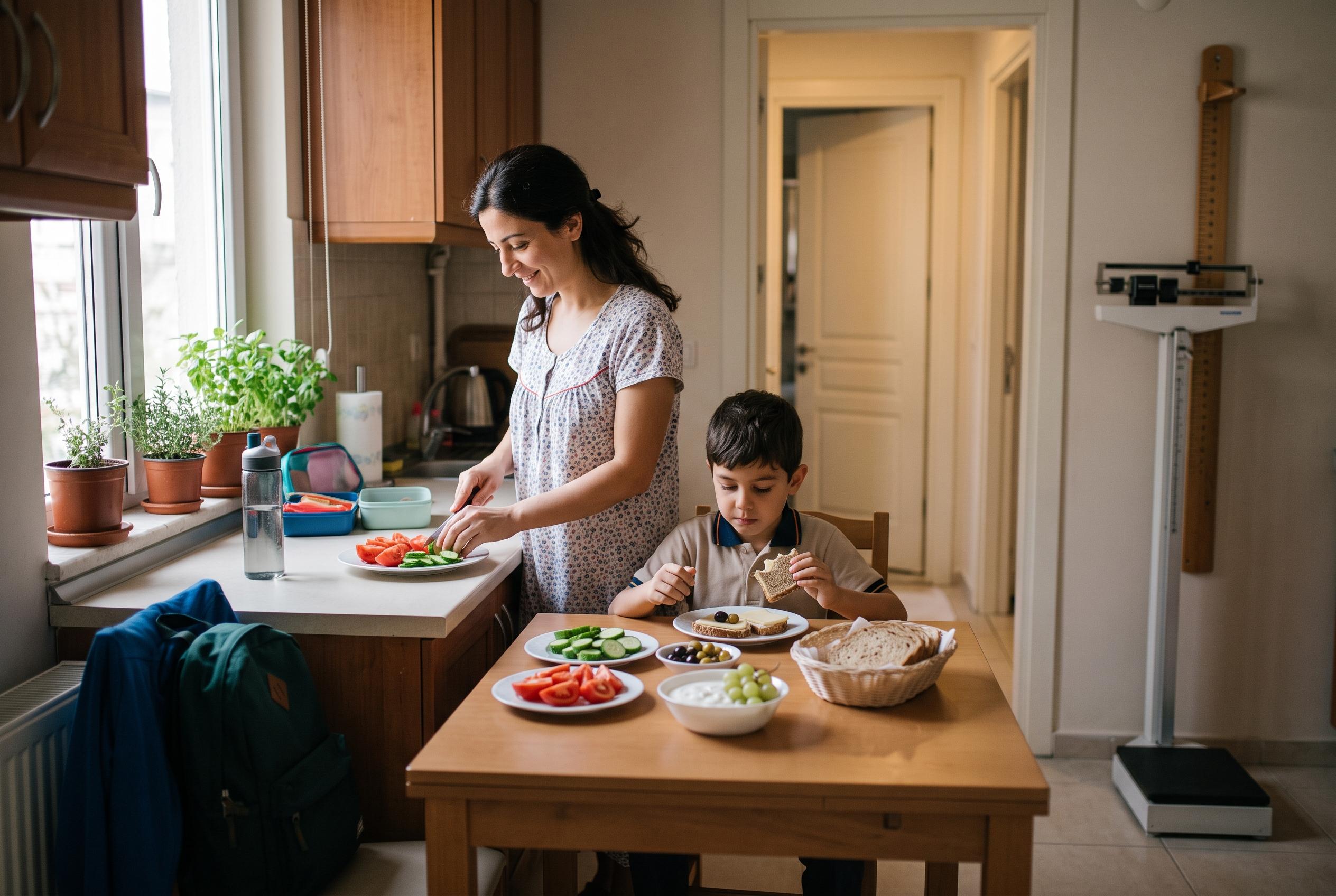

Paediatric specialists in Turkey stress the importance of regular growth checks, balanced nutrition, and healthy routines to support children’s development as schools reopen, embedding health advice into the national back-to-school agenda.
As families in Turkey prepare for the new school term, paediatric specialists are urging them to treat a child’s growth pattern, sleep routine and lunchbox with the same seriousness as books and uniforms. In an Anadolu Agency report filed from Ankara on 8 September by Dilhan Türker Yıldız and distributed as a photo-and-video package, Prof Fatih Gürbüz of Ankara Bilkent City Hospital said children who have not yet entered puberty would generally be expected to grow by at least five to six centimetres a year, and that parents should have height and weight checked every three to six months.
Gürbüz’s central warning was that growth should be judged over time, not from a single appointment or one comparison with classmates. A child with shorter parents should not automatically be assumed to be following an inevitable path, he said, arguing that the more useful question is whether the child is continuing to grow at a healthy rate. The advice was carried as part of Anadolu Agency’s national news agenda for 8 September, underlining how closely back-to-school health and child development are linked in the days before lessons resume.
The doctors also tied physical growth to daily habits that often deteriorate during school breaks and become harder to repair once term begins. A republished version of the agency copy on Haberler stressed Gürbüz’s view that early bedtimes matter because staying up late can interfere with growth-hormone release, and that every child should be involved in at least one sport. That message fits with guidance published by Ankara Bilkent City Hospital last September, when Gürbüz warned that calorie-dense canteen food, inactivity and long periods in front of screens were pushing up obesity risk, and advised families to make breakfast at home, prepare lunchboxes themselves and steer children away from fizzy drinks and sugary snacks sold at school.
On food, Metin Yiğit, a paediatrics specialist at the same hospital, argued against turning the lunchbox into a maths exercise. Parents do not need to weigh every ingredient, he said; a child’s own hand can be used as a rough guide to portion size. The examples carried in the Anadolu Agency package included a palm-sized serving of protein, a hand-sized portion of wholegrain bread, a handful of raw almonds, hazelnuts or walnuts, and a fist-sized piece of fruit. For children staying at school all day, he said, fruit and nuts can also serve as practical snacks between meals.
Yiğit was equally direct about what should be left out. The wire versions reproduced by Kanal F, Gündem Grafik and Haberler all highlighted his warning that foods high in free sugar, especially ready-made fruit juice, cola, packaged products, cakes and biscuits, should be kept out of both school bags and children’s everyday diets. He also linked breakfast skipping to poor choices later in the day, saying hungry children are more likely to reach for quick sugary foods if they arrive at school without eating first. In that sense, breakfast was presented not simply as a healthy ritual but as a way to reduce reliance on ultra-processed snacks.
That concern is echoed in adjacent reporting from Yeni Mesaj Gazetesi, which approached the same school-season theme from the classroom rather than the clinic. Its 7 September article said healthy eating in school-age children affects not only physical growth but attention, memory, learning capacity and school performance. It warned that prolonged inadequate or unbalanced nutrition can lead to tiredness, inattention and weaker cognitive performance, and said breakfast quality matters as much as the fact of eating it. A balanced morning meal, it said, should combine a protein source with whole grains, fruit or vegetables and dairy.
An earlier Anayurt Gazetesi report, surfaced on the Duyuru feed, made a similar point through a broader lifestyle lens. Citing Hatice Nurseda Hatunoğlu, it said children should not miss breakfast and that the balance of carbohydrate, protein and fat is important for concentration and energy. The piece described breakfast as the foundation of healthy development and argued that eating routines during term time can shape both academic results and general wellbeing. Taken together with the Ankara doctors’ advice, that suggests the back-to-school breakfast debate is no longer just about stopping hunger before first lesson, but about supporting stamina, focus and steadier habits across the day.
The combined message from this week’s agency report and the earlier supporting coverage is that parents are being asked to think beyond whether a child simply looks well. Doctors want growth tracked regularly, not guessed at; they want bedtime brought forward rather than screens stretched later; and they want school food planned around ordinary, recognisable meals instead of sugary convenience products. The fact that Anadolu Agency’s item appeared in wider national agenda round-ups, including Haberler’s daily bundle, shows how firmly these warnings have become part of Turkey’s annual back-to-school public health script.
Disclaimer: This content is for informational purposes only and is not intended to be a substitute for professional medical judgment, advice, diagnosis, or treatment.