

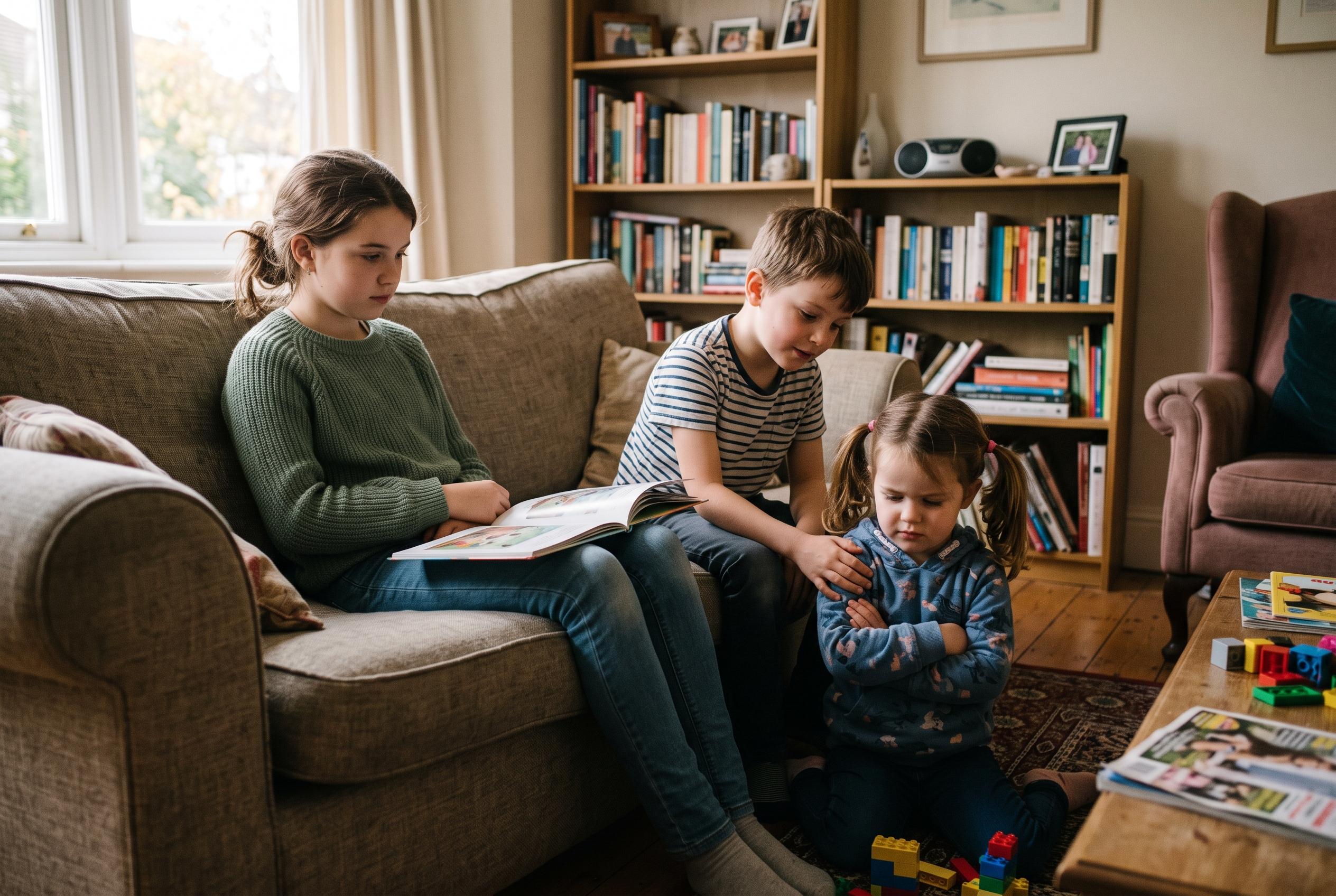

Therapists warn that casting children as the responsible one, peacekeeper or troublemaker can shape self-esteem, fuel sibling resentment and persist long after childhood.
Children often learn far more than manners and homework habits from home; they also absorb roles that can shape how they see themselves for years. One parent may praise the eldest for being “so responsible”, while another leans on a younger child to smooth over conflict or play the family peacekeeper. Over time, those labels can harden into expectations that feel permanent, even when they began as simple reactions to a busy household.
That is the warning from therapists quoted by HuffPost in a report about family roles that can quietly take root in childhood. Rod Mitchell, a registered psychologist and clinical director at Emotions Therapy Calgary, recalled being blamed as a boy when a younger sibling cried after a toy incident, leaving him with the sense that his version of events mattered less than hers. Emily Witt, clinical director at the KinCof mental health and wellness centre, said such patterns often emerge from personality differences, birth order, family strain and the way parents respond to each child.
Experts say the most familiar family scripts include the responsible one, the caretaker, the mediator, the rebel and the child who seems “fine” and therefore gets less attention. The National Centre for Biotechnology Information describes these roles as recurring patterns that help a family meet its own needs, but notes that they can affect self-esteem and development. Research published in PubMed also suggests that the stories families tell about themselves can shape a preadolescent’s emerging sense of self, while other studies link early family integration with stronger self-esteem later in life.
The problem grows when parents reinforce the roles through language that sounds harmless on the surface. Telling one child to back down because they are “more mature” can imply that their feelings matter less, Witt said. Mitchell said phrases such as “we expect more from you” or “your sister is watching” can make a child feel as though every action is being judged not for what it is, but for what it supposedly teaches a sibling. In some families, one child is given responsibility for keeping order, checking on homework or making sure a brother or sister is ready for school, which can slide from helpfulness into a parent-like burden.
Therapists say those habits can leave lasting resentment. Ravi Beliek, a family therapist and director of the Baltimore Therapy Centre, told HuffPost that when one child is cast as the favourite or the reliable one and another is painted as the troublemaker, rivalry can become part of the family structure. The result may be jealousy, anger and a sense of unfairness that does not disappear when children grow up. Adult siblings may continue to fall back into the same patterns at reunions and other family gatherings.
The encouraging part, Mitchell said, is that families can change the script. That starts with parents naming the pattern aloud, admitting when one child has been treated as the “responsible” one and another as the “difficult” one, and saying plainly that it was not fair. It also means redistributing responsibilities, praising effort rather than fixed traits, and correcting behaviour without tying it to identity. Instead of telling a child they are the “good” or “bad” one, parents can focus on the act itself and explain the rule. In other words, responsibility can be taught without loading the oldest child with an extra share simply because they were born first.
Disclaimer: This content is for informational purposes only and is not intended to be a substitute for professional medical judgment, advice, diagnosis, or treatment.



