

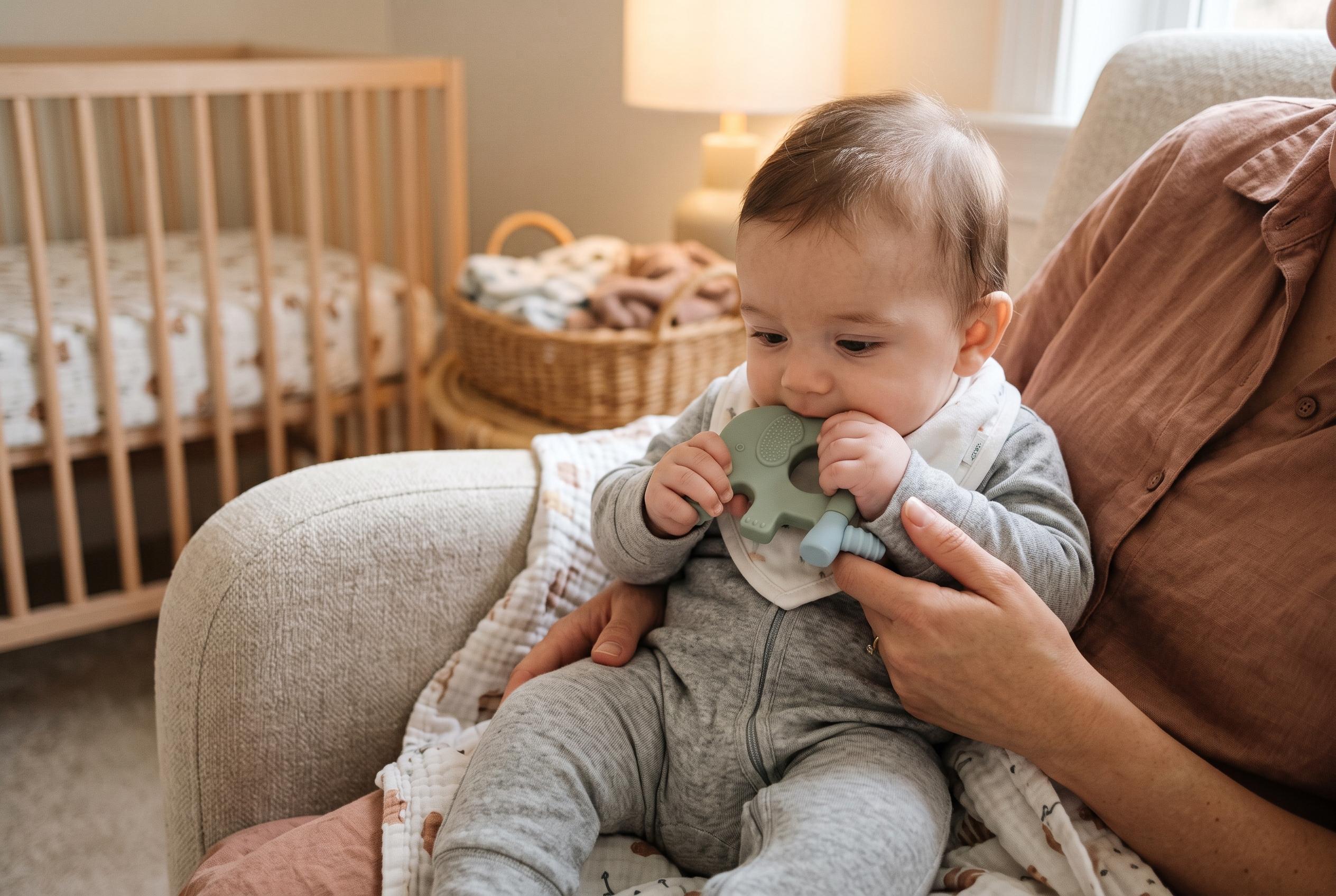

Teething can begin before six months, but parents should avoid frozen teethers, amber jewellery and unsafe foods while seeking medical advice for fever or other symptoms not usually linked to teething.
Teething usually begins around six months of age, although the first signs can appear earlier, and the timing varies widely from child to child. Some babies start showing changes at about 13 weeks, while others do not cut their first tooth until later. According to guidance cited by Jurnalul and corroborated by paediatric sources including WebMD and Johns Hopkins Medicine, the process can be uncomfortable but is generally a normal part of development.
Parents can often ease sore gums with simple measures. Gentle rubbing of the gums with a clean finger or a soft, damp cloth may help, as can a teething ring or toy designed for infants. Cleveland Clinic and Mayo Clinic both recommend using chilled, not frozen, items; freezing can make them too hard and may injure delicate gums. A cold, wet washcloth can also offer relief when chewed under supervision.
Once a baby has started solids, age-appropriate cold foods may help as well, provided they are prepared safely and cannot break into choking hazards. The Romanian report warns that raw carrot is not a safe option for unsupervised chewing, and paediatric advice from Johns Hopkins Medicine and Cleveland Clinic similarly stresses avoiding frozen teethers, liquid-filled rings and teething necklaces because of safety risks. Keeping the child well hydrated and wiping away excess saliva can also reduce irritation around the mouth and neck.
If basic comfort measures are not enough, parents are advised to speak with a pharmacist or doctor before using any medicine. Cleveland Clinic and Mayo Clinic say pain relief for teething should only be given in products suitable for the child’s age and weight, and only with professional guidance. Some teething gels are sold for babies, but not every product is appropriate, so ingredients should be checked carefully before use.
Several symptoms are often blamed on teething but should not be dismissed automatically. WebMD, Cleveland Clinic and Johns Hopkins Medicine all note that fever, diarrhoea and widespread rashes are not typical teething symptoms and may signal another illness. The Jurnalul report also highlights that nappy rash, drooling-related skin irritation and mild redness around the mouth can occur, but a fever of 38C or above in a young infant, persistent diarrhoea, poor feeding, unusual sleepiness or worsening symptoms should prompt medical review. Amber jewellery marketed for teething should also be avoided because, according to the Health Service Executive, it carries a risk of choking and strangulation.
Disclaimer: This content is for informational purposes only and is not intended to be a substitute for professional medical judgment, advice, diagnosis, or treatment.



