

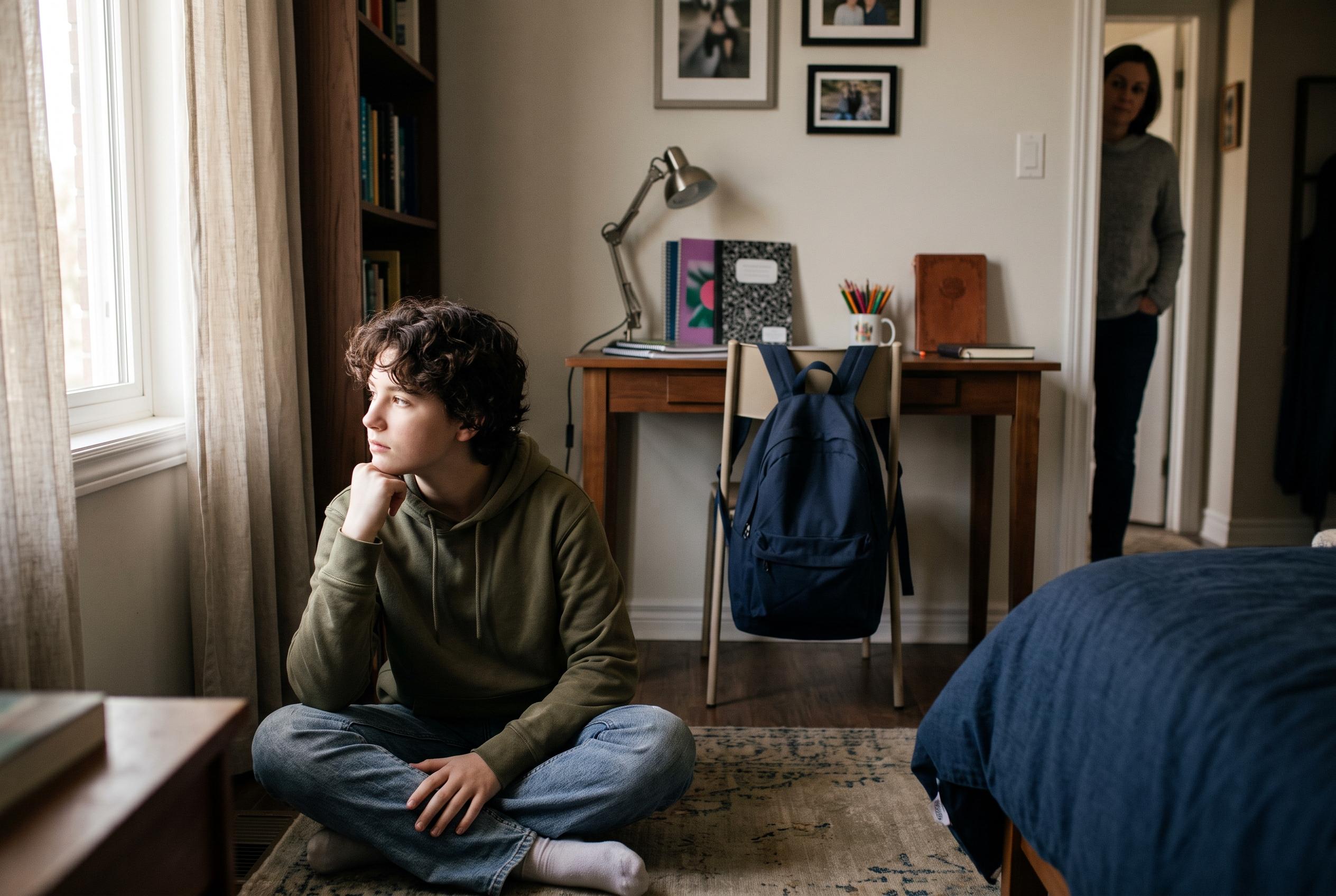

A new analysis challenges the perception that teenagers’ privacy and selective social interactions with friends indicate concealment, highlighting instead their natural quest for independence and self-identity during adolescence.
Teenagers who keep their friends at arm’s length from their parents are not necessarily being secretive. In many cases, the behaviour reflects a normal shift in adolescence: friendships become more central, privacy matters more, and young people begin to separate parts of their social lives from family life. The Arabic report in Al Ittihad says that what may look like evasion can simply be a sign that a teenager is trying to claim a small but important space of independence.
One reason is that friendships start to feel personal in a way that earlier childhood relationships did not. As teenagers grow older, they are often less willing to discuss every detail of their friendships with parents, because those relationships can seem like part of their own private world. Research on adolescent development supports that view, showing that peer relationships become more stable, more intimate and more closely tied to loyalty, shared interests and values.
There is also the question of identity. Many teenagers act one way at home and another with friends, using different humour, language and social habits in each setting. Bringing parents into that circle can feel awkward, especially if a teenager worries that a parent will comment on their manner of speaking or behaviour in front of peers. The Al Ittihad article argues that for some teenagers, the discomfort is less about hiding something than about protecting the distinct “worlds” they have built at home and with friends. Research on anonymous and online interactions suggests that young people often use different social settings strategically as part of managing how they present themselves.
Some teenagers may also avoid introductions because they are thinking several steps ahead. They may fear that once parents know a friend, they will start asking about that person repeatedly, inviting them over too often or later using details from the meeting during arguments. The article says studies involving mothers and adolescents have found that supporting a teenager’s independence is linked with a greater willingness to share information about friendships voluntarily, suggesting that trust and space can encourage openness rather than reduce it.
A further factor is that privacy can belong to the friend as much as to the teenager. A young person may be entrusted with personal or family matters by a close friend and feel responsible for respecting that confidence. That is consistent with research showing that adolescents sometimes share more with close friends than with parents, and that the quality of friendship, self-esteem and loneliness can shape how much they reveal or conceal. In a digital age, where online conflict can quickly affect real relationships, the boundaries around friendship can feel even more important. Pew Research has found that online groups and school-based friendships are major parts of teenagers’ social lives, reinforcing the idea that these relationships are often central, varied and deeply felt.
For parents, the message is not necessarily that a teenager is concealing something troubling. More often, the reluctance to make introductions reflects a need for privacy, a developing sense of self and the natural complexity of adolescent friendships. A patient approach, rather than immediate suspicion, may do more to keep communication open.
Disclaimer: This content is for informational purposes only and is not intended to be a substitute for professional medical judgment, advice, diagnosis, or treatment.



