

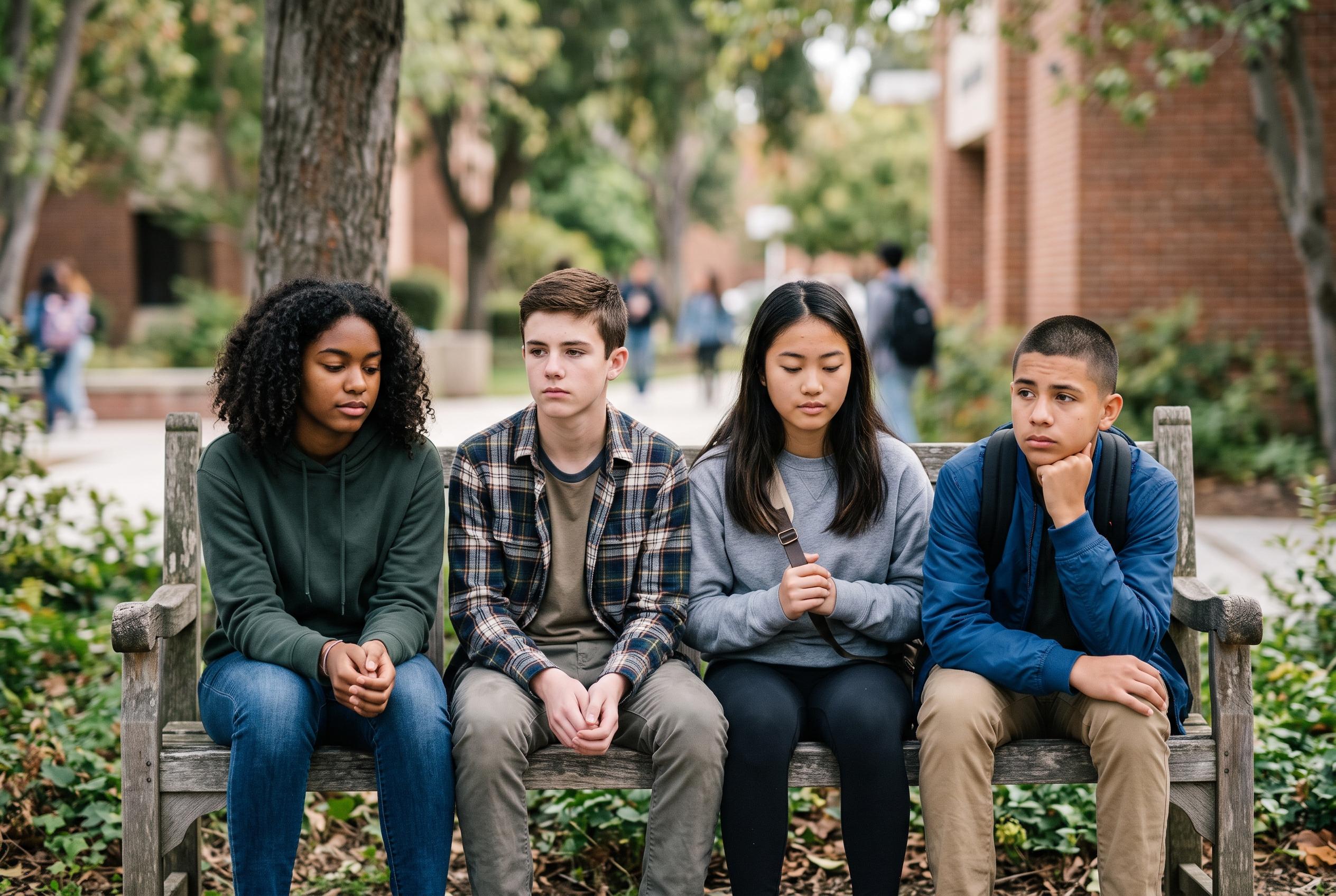

More than 41% of Spanish adolescents say they have had, or believe they have had, a mental health problem in the past year, while girls and teenagers from poorer households report the steepest decline in wellbeing.
More than 41% of adolescents aged 12 to 18 say they have had, or believe they have had, a mental health problem in the past year, according to UNICEF Spain’s latest Barómetro de Opinión de la Infancia y la Adolescencia, presented in Seville. The survey, produced with researchers from the University of Seville, draws on responses from about 15,000 teenagers across Spain and combines that quantitative work with additional interviews and discussion groups involving young people, families and specialists.
The findings point to a clear deterioration in emotional wellbeing. UNICEF says the overall wellbeing score among young people, which had remained relatively stable for years, fell from 3.78 out of 5 to 3.47. The decline has been sharper among girls than boys, and teenagers from lower-income households report weaker wellbeing than their more advantaged peers. The report also records a rise in frequent sadness and loneliness, reinforcing concerns that the pressures facing adolescents are broadening rather than easing.
Pilar Ramos, the University of Seville researcher who helped present the study, said the gap between boys and girls has widened significantly, with girls showing markedly worse results across several indicators. María Ángeles Espinosa, president of UNICEF Spain, linked part of the strain to financial pressure in families, saying that insecurity is not only material but also emotional. The organisation argues that the issue cannot be reduced to one cause alone. Pandemic disruption, social media, bullying, academic pressure and economic uncertainty all appear to be contributing to the decline.
The study also highlights stigma as one of the biggest barriers to seeking help. While some teenagers recognise that they have experienced a mental health difficulty, more than half did not ask for support. Ramos said the reluctance is driven less by ignorance about where to go than by fear of being judged or exposed. Young people interviewed for the report described a preference for speaking to friends rather than family, alongside a worry that adults may still treat mental health as a taboo subject. At the same time, some said they now feel better informed than previous generations.
UNICEF is urging schools, families and public authorities to respond more quickly and more carefully to early signs of distress. Espinosa said that supportive environments can reduce risk and help teenagers feel listened to, while warning against dismissing serious distress as nothing more than a passing phase. The organisation argues that schools need systems that protect privacy, provide access to guidance and make wellbeing a priority for both pupils and staff. For families, the message is to listen, accompany and avoid minimising what young people are saying, with community support stepping in where home life is unable to provide it.
Disclaimer: This content is for informational purposes only and is not intended to be a substitute for professional medical judgment, advice, diagnosis, or treatment.



