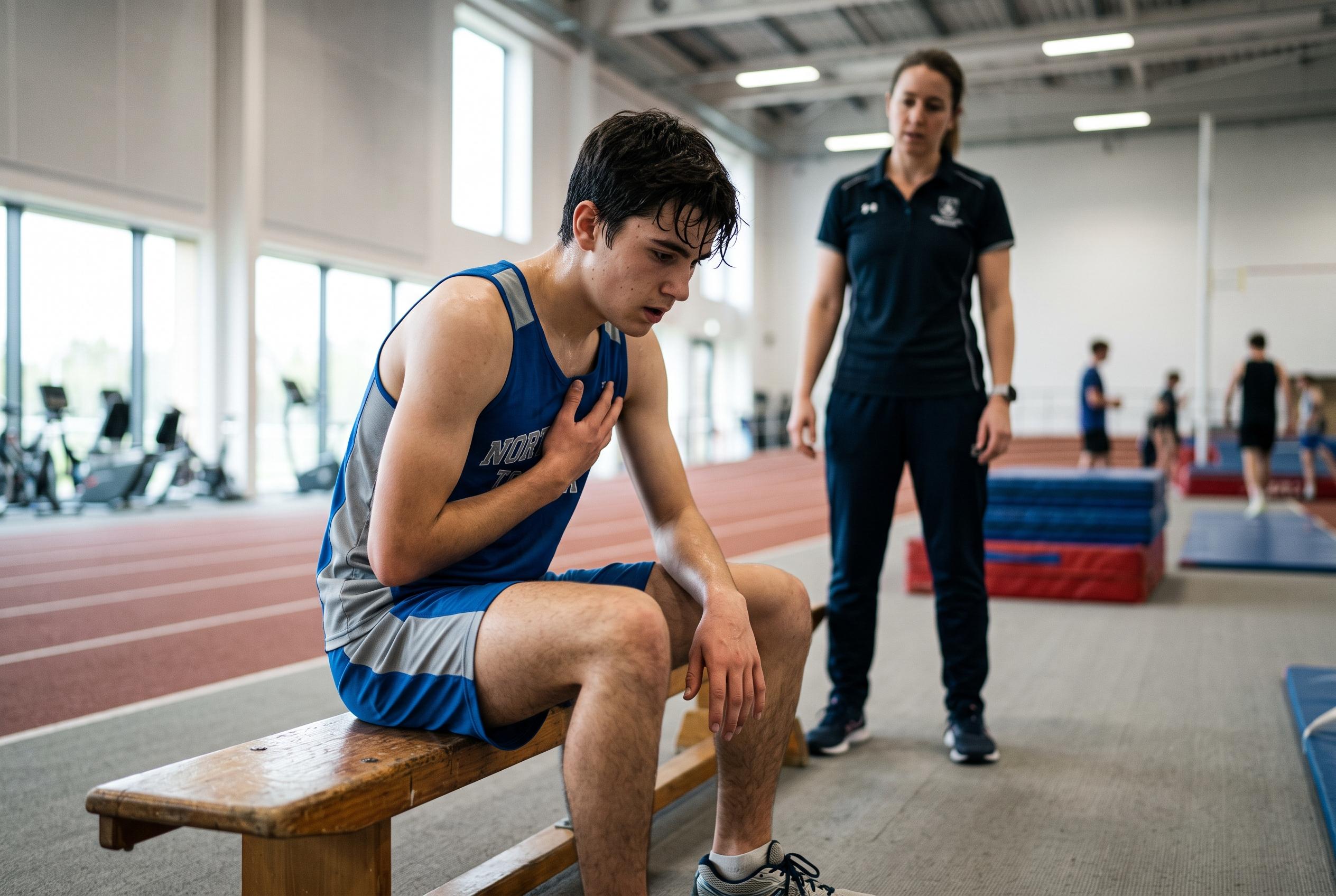

A slow heart rate in teenage athletes can mask serious health issues like Relative Energy Deficiency in Sport (RED-S), which can affect growth, bone health, and heart function. Experts warn that early detection through family awareness and medical vigilance is vital to safeguard the future well-being of young competitors.
A low resting pulse in a teenage runner can look like a mark of supreme fitness. Doctors say it can also mean the opposite. In a growing athlete who is eating too little for the demands of training, school and puberty, that slowed heart rate may be one sign that the body is conserving energy rather than thriving. Guidance from the American Academy of Pediatrics and analysis published by the American College of Cardiology say Relative Energy Deficiency in Sport, or RED-S, can affect athletes of any gender, age or level, and is seen particularly often in endurance, aesthetic and weight-category sports. (healthychildren.org) University of Rochester Medicine adds that the risk is easy to miss as children take on multiple sports, year-round competition, travel tournaments and extra strength work. (urmc.rochester.edu)
Deepika Parmar, an adolescent medicine specialist writing for Kansas City Mom Collective, illustrated the point with a boy who arrived in clinic after his paediatrician noticed bradycardia on an ECG and an anxious nurse pushed for a same-day review. The teenager had not set out to lose weight or chase a certain look; he wanted to run faster, had absorbed online advice about calorie deficits, high-protein eating and avoiding carbohydrates, and thought he was doing sport properly. As Parmar described it, he was more tired, recovering more slowly and failing to hold muscle or improve, until a structured refuelling plan and family support helped his energy and heart rate recover. (kansascitymomcollective.com)
That pattern is common enough to have its own clinical framework. The paediatrics guidance says low energy availability may happen accidentally, through missed meals, busy schedules or simply underestimating how much food a training adolescent needs, as well as deliberately through efforts to change body weight or shape. (healthychildren.org) Rochester’s Susan Wiener says many young athletes with RED-S are not intentionally restricting food at all, but are caught out by the collision between rapid growth and rising training loads. (urmc.rochester.edu) Boston Children’s Hospital has also warned that the condition affects boys as well as girls, even if reported rates remain higher in female athletes. (answers.childrenshospital.org)
The warning signs can be easy to dismiss as the ordinary wear and tear of ambition. Families are urged to watch for falling performance, slower recovery, unusual tiredness, trouble concentrating, repeated illness, poor sleep, mood changes, stress fractures and weight loss or poor weight gain, according to the American Academy of Pediatrics and Rochester’s latest advice. (healthychildren.org) Bridget Quinn of Boston Children’s says clinicians should pay close attention to growth as well as training history: if an athlete is slipping off their growth chart, or turning up with recurrent injuries and delayed healing, she said, doctors should “dig deeper”. She also treats menstrual disruption as a warning signal, saying, “Any disruption , whether the cycle becomes irregular, lighter, or stops altogether , is a red flag for energy deficiency.” (answers.childrenshospital.org)
Why this matters in adolescence is not just today’s performance but tomorrow’s body. “Puberty is one of the most metabolically active periods of life,” Wiener said, noting that only infancy brings faster growth. (urmc.rochester.edu) The paediatrics guidance says low energy availability can slow growth and delay development, while Quinn has warned that it can blunt the normal gains in bone mass that should occur during adolescence. (healthychildren.org) Rochester goes further, warning that teenagers who miss this window may face more bone-stress injuries now and a higher risk of osteoporosis and major orthopaedic surgery later in life. (urmc.rochester.edu)
The heart findings are one reason doctors do not want parents or coaches to shrug this off as dedication. The American Heart Association reported in 2024 that malnutrition and electrolyte disturbance from eating disorders can damage the heart, with cardiologist Riti Patel saying complications can range from “a slowed heart rate to heart failure”. (heart.org) The same report said warning signs of cardiac involvement can include light-headedness, chest pain, shortness of breath and profound lack of energy. (heart.org) The cardiology review on RED-S adds that sports cardiologists may see these athletes because of declining performance, bradyarrhythmias or autonomic symptoms, and that the condition can shape risk assessments about when it is safe to return to play. (acc.org)
What seems to help is structure, not blame. Parmar wrote that hunger itself may become unreliable in a heavily under-fuelled teenager, with appetite dulled and fullness arriving early, which is one reason treatment often starts with planned meals, snacks and practical fuelling before and after exercise. (kansascitymomcollective.com) The paediatrics guidance likewise says early treatment focuses on restoring energy balance by increasing intake, improving the timing of meals and snacks, and sometimes adjusting training intensity or volume. (healthychildren.org) A long-standing National Athletic Trainers’ Association position statement argues that care works best when medicine, nutrition, mental health, athletic training and athletics administration are involved together, and says coaches should not be handing out weight-loss advice, imposing weekly weigh-ins or assigning target weights. (pmc.ncbi.nlm.nih.gov)
The broader message for parents is that they do not need to wait for dramatic weight loss or a formal eating-disorder diagnosis before acting. The family-facing medical guidance is clear that RED-S can show up in any body, and Parmar’s account argues that a teenager can be medically compromised even while looking committed, successful and outwardly healthy. (healthychildren.org) Early assessment matters for the heart, bones, hormones, growth and the athlete’s future relationship with food and exercise; what parents can do, the clinicians agree, is notice the change, start the conversation and get experienced help. (healthychildren.org)
Disclaimer: This content is for informational purposes only and is not intended to be a substitute for professional medical judgment, advice, diagnosis, or treatment.