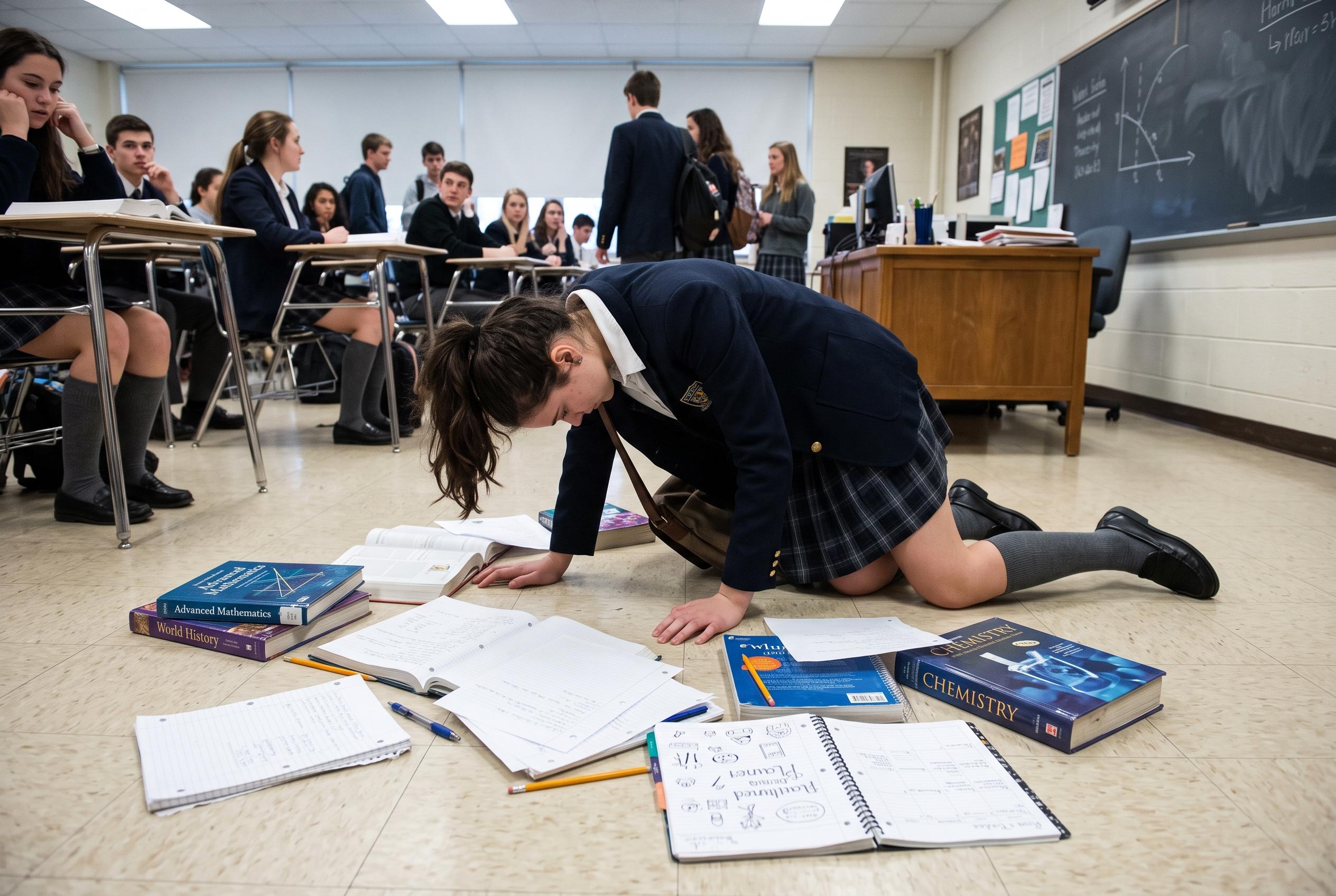

A 16-year-old student’s collapse from anxiety sheds light on how intense academic demands can trigger physical and psychological health issues in teenagers, highlighting the need for proactive mental health support.
A 16-year-old schoolgirl’s collapse into anxiety at a top secondary school has exposed how academic pressure can tip from stress into illness, according to the Institute of Mental Health at Bach Mai Hospital. What began as the experience of a high-achieving pupil who had secured a place at her dream school developed into sleepless nights, palpitations, persistent fear of being rejected by her peers and mounting worry about her family’s finances, even though her home life was stable. Her condition only became clear after specialist checks, including an MRI scan and a gynaecological examination, ruled out physical disease and doctors diagnosed an anxiety disorder.
Doctors at the institute said the case shows how mental strain in teenagers is often expressed through the body. Nguyễn Kim Anh, a specialist there, said adolescents may not yet have the language or experience to describe inner distress, so long-term stress can surface as headaches, dizziness, sweating, digestive problems, fatigue and disturbances to the menstrual cycle. In this case, the girl’s missed periods and nausea proved to be part of a wider psychological picture. After 6 months of treatment combining medication with cognitive behavioural therapy, or CBT, she was sleeping normally again, her cycle had returned and her school performance improved.
According to Nguyễn Ngọc Trang, anxiety is a normal survival response, but it becomes a disorder when fear is excessive, out of proportion to reality and lasts for weeks or months while disrupting study, social life and daily routines. The World Health Organisation estimates that about 1 in 7 people aged 10 to 19 is living with a mental disorder, with anxiety among the most common. Other reporting on children’s anxiety has pointed to similar symptoms, including stomach pain, headaches, sleep problems and reluctance to attend school, as well as triggers ranging from genetics and personality traits to family conflict and academic strain.
Nguyễn Văn Tuấn, head of the Institute of Mental Health, said parents often mistake such signs for laziness, bad temper or ordinary teenage behaviour, which can shut down a child’s willingness to talk. He argued that taking a child for psychological or psychiatric care should be seen as responsible, not stigmatising. Doctors say prevention depends on a three-way partnership between families, schools and health services, with parents listening carefully, praising effort as well as results, encouraging regular sleep, limiting screens before bed and making exercise part of daily life. Mental health, they said, is not secondary to schooling but central to a child’s development and resilience.
Disclaimer: This content is for informational purposes only and is not intended to be a substitute for professional medical judgment, advice, diagnosis, or treatment.