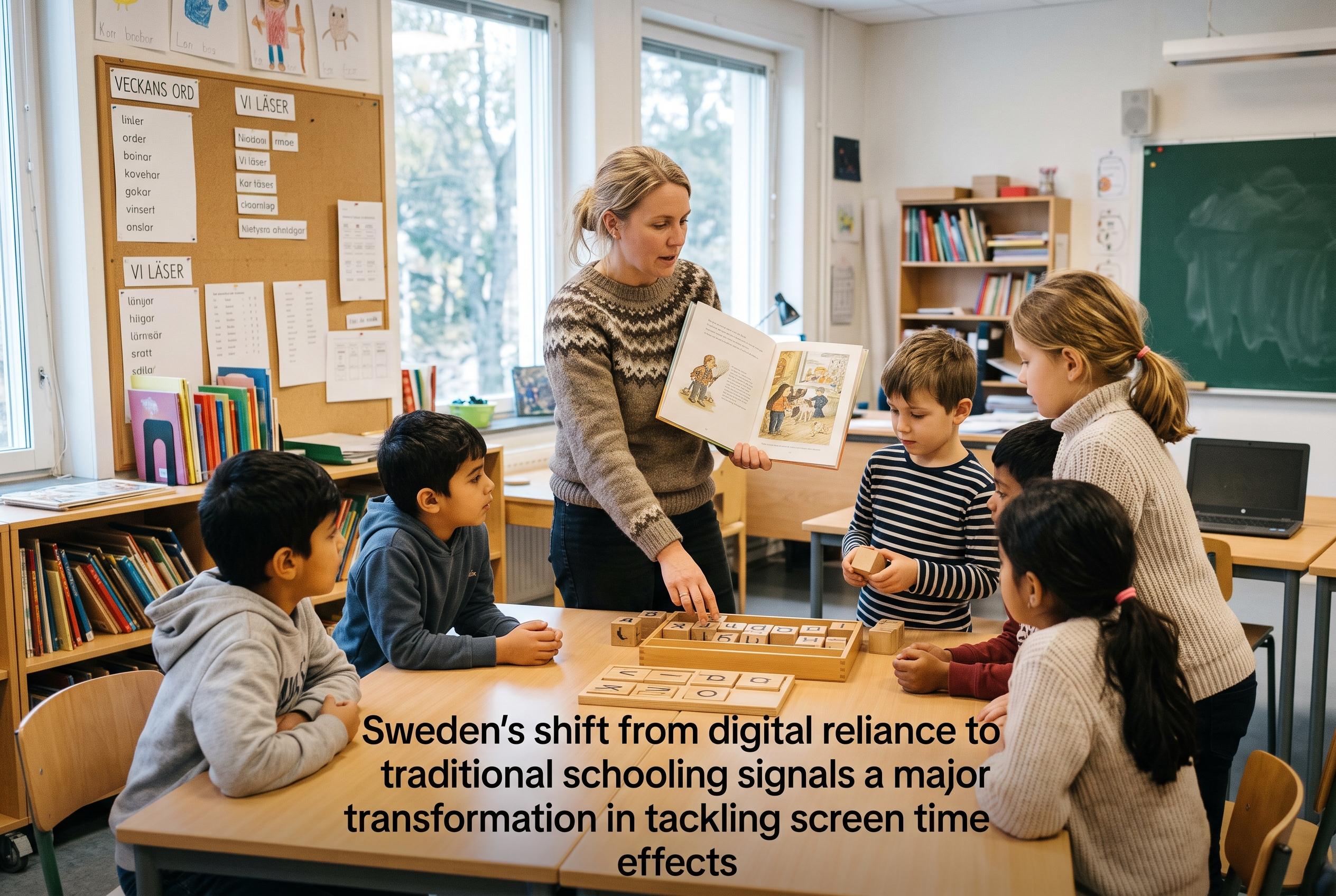

Swedish authorities are urging adults to curb their own device use to influence children’s behaviour and are reversing their long-standing embrace of technology in schools, signalling a significant shift in national policy on digital media.
Sweden has moved further than many countries in trying to curb the effects of screens on children, and now parents are being told to look at their own habits as well. In June, the Public Health Agency issued new advice urging adults to put away phones and other devices when they are with their children, using them only when necessary or together with the child, according to a US Library of Congress summary of the guidance. The recommendations stop short of legal restrictions, but officials say parental screen use can shape children’s own behaviour.
The guidance builds on earlier advice from September 2024, when the agency recommended age-based daily limits for children, including no screen time for those under 2 and up to 3 hours a day for teenagers. Swedish and European coverage at the time said the public health authority linked heavy use of digital media with poorer sleep and wider physical and mental health concerns.
The shift reflects a broader rethink in Swedish education, where the government is now pulling back from the device-heavy classroom model it embraced for years. In June, AP reported that Sweden plans to ban mobile phones in schools from the autumn, while also funding textbooks and teacher guides as part of a return to more traditional teaching methods. The move follows concern about weakening reading and writing skills, especially among younger pupils.
That reversal sits awkwardly alongside the country’s long-standing investment in school technology. OECD data show that more than 90% of 15-year-olds in Sweden have access to desktop or laptop computers, smartphones, internet, educational software and learning platforms, underlining how deeply digital tools have been embedded in classrooms. Yet the same broad access is now being questioned as ministers and health officials try to rebalance screen use at home and at school, with the public health agency’s advice signalling that the issue is no longer just what children see on a device, but who is modelling the behaviour in the first place.
Disclaimer: This content is for informational purposes only and is not intended to be a substitute for professional medical judgment, advice, diagnosis, or treatment.