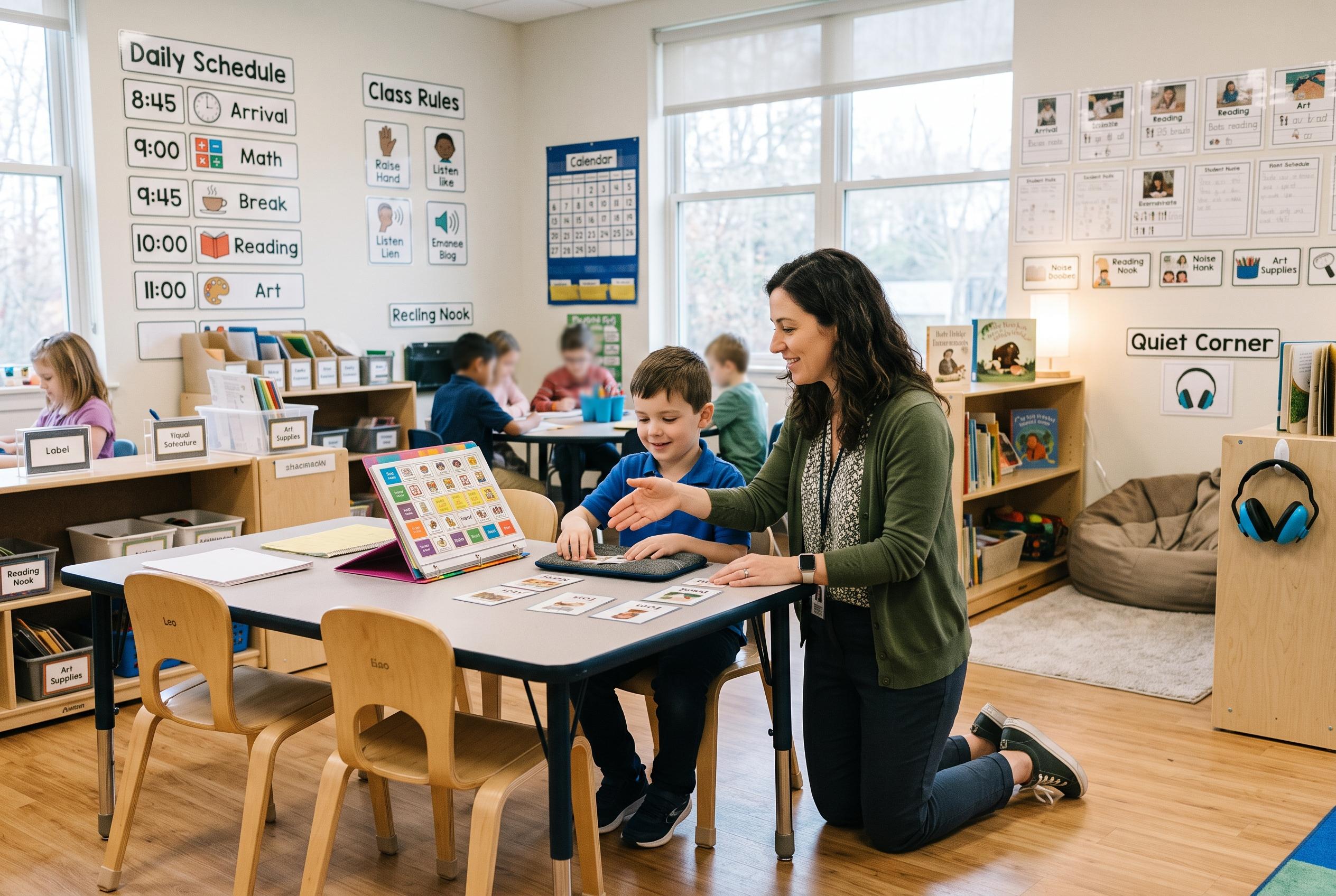

A closer look at how small, informed modifications and clear routines can transform the educational experience for pupils with invisible disabilities, making learning more accessible and less stressful.
Invisible disabilities in the classroom are often missed not because they are rare, but because they appear in the ordinary moments of the school day: a copied instruction that never quite makes it into the notebook, a sudden timetable change, a noisy lunch hall, or a reading task that turns into public humiliation. The point made by the lead article is simple and important: behaviour that looks like laziness, defiance or distraction may instead be a sign that the environment is overwhelming a child’s ability to cope.
Teachers and support staff are often asked to respond in real time, with no extra materials and no chance to consult a file. That is where small adjustments matter most. Penn State’s materials on auditory processing disorder, for example, stress the value of pairing spoken directions with written ones, pausing after questions and summarising key points in more than one format. TeachHUB likewise notes that flexible seating, quiet corners, visual schedules, shorter tasks and extra time can make a classroom more workable for pupils with ADHD, anxiety, learning disorders and other hidden difficulties.
The practical lesson is that accommodation should not be treated as a reward or a favour. It is a way of restoring access. A pupil who cannot keep up with board work may need the lesson photocopied or photographed rather than pushed to copy faster. A child who cannot sit still may need movement built into the lesson, not repeated public correction. A student whose working memory is overloaded may need one instruction at a time, with the steps written out and checked calmly.
Predictability is just as important. Head Start’s guidance on “invisible support” and Understood’s advice on classroom routines both point in the same direction: many pupils do better when expectations, schedules and transitions are made explicit. A visual timetable, advance warning of changes and a clear place to regroup can prevent distress from becoming a crisis. That is especially true for autistic pupils and others for whom sudden change can feel not merely inconvenient but threatening.
The lead article also makes a strong case for writing things down. Informal understandings vanish when a substitute teacher arrives, a specialist class starts or the main teacher is absent. Formal plans such as a PAP, PPS or PAI are not bureaucratic extras; they are what keep support alive when the usual adult is not in the room. In the same spirit, notes should describe what is observable , interrupted copying, fatigue in the afternoon, distress after noise , rather than attaching labels that do not help the next adult respond.
Just as important is the relationship with families. When parents say they fear nothing is being done, the answer should not be defensiveness. It should be a plan, a meeting and a shared record of what is working and what is not. The child’s needs are best met when school staff, families and medical or psychological professionals work from the same information, using the same language and aiming for the same outcome: a school day that is less painful, more predictable and more teachable.
Disclaimer: This content is for informational purposes only and is not intended to be a substitute for professional medical judgment, advice, diagnosis, or treatment.