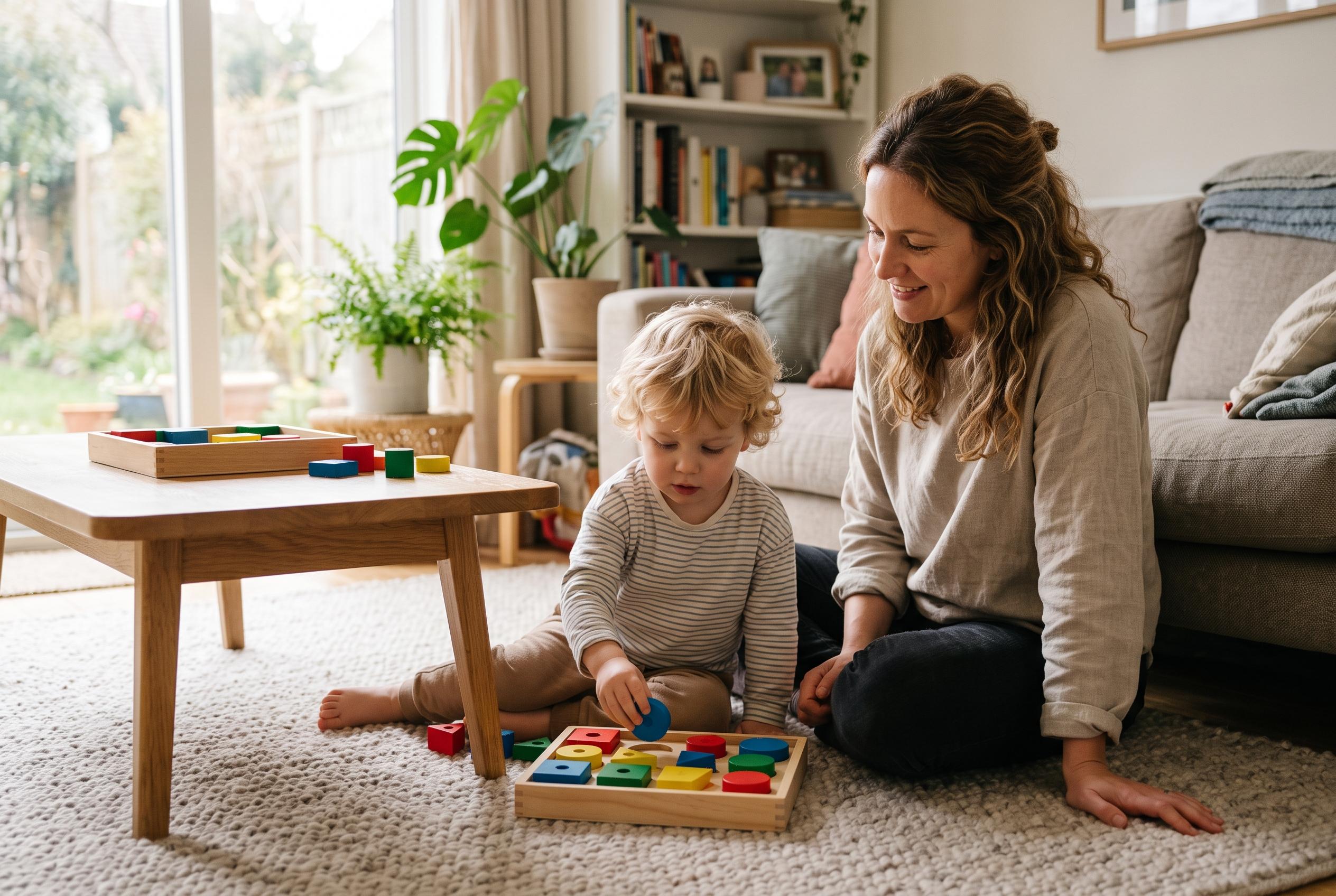

Experts emphasise that recognising shapes is a gradual process rooted in understanding and exploration, not ticking off a learning deadline, parents can foster growth through playful, everyday activities and patience.
Parents often worry that a child who can slot a circle into a puzzle but cannot yet name it is somehow behind. In practice, shape learning has no single deadline. Child development experts do not set a birthday by which every child must recite a list of shapes, and progress often looks uneven from one child to the next.
What matters first is not rote naming but understanding. Children learn shapes in stages: they notice form, match like with like, sort objects, find shapes in books and rooms, and only later describe sides, corners and curves with confidence. A toddler who can place the right piece into an opening may know more than a quick quiz suggests.
During infancy, shape learning is mostly sensory. Babies explore balls, blocks, cups and rings by looking, grasping, dropping and mouthing them. Adults can support that early learning simply by narrating what is happening: “That is a round ball,” or “That block has corners.” There is no need to test a baby on labels.
For many children, the toddler years bring the first real shape play. Inset puzzles, nesting cups and basic sorters invite trial and error, and that process is useful. A child turning a triangle several times before it fits is practising comparison, hand control and problem-solving. PBS notes that by age two, parents can begin reinforcing shape words and simple attributes such as sides and corners, but recognition usually matters more than perfect naming at this stage.
By the preschool years, children are often ready for more than labels. They can compare shapes, notice whether an outline is curved or straight, and recognise that a triangle is still a triangle when turned sideways. The CDC treats drawing a circle after an adult demonstration as one of many broad developmental milestones around age three, but that is a general guide, not a requirement that every child draw neatly or name every basic shape on cue.
That wider approach is important because shape learning supports several other skills. It helps children classify objects, build spatial reasoning and use words such as inside, beside, above, longer and shorter. Begin Learning and other parent resources emphasise that shapes should be part of everyday life, not just worksheets, because the real value lies in helping children recognise patterns, solve small problems and notice the world around them.
Ordinary play is usually the best classroom. Children can spot circles on wheels, lids and clocks; compare rectangular books and doors; build with blocks; or make shapes from dough and craft sticks. Activities work best when they are short, hands-on and playful. Shape games from home, school and preschool settings can build familiarity without making the child feel tested.
It also helps to keep the starting point simple. A small set of clearly different shapes is more useful than a long vocabulary list. Repeatedly asking “What shape is this?” can turn play into a drill, while prompts such as “Find the piece with a curved edge” or “Which one has three corners?” invite observation instead of guessing. Children who enjoy art, vehicles or pretend cooking can often learn shapes more easily when activities are tied to those interests.
Parents should be reassured if naming comes later than matching or pointing. A child may recognise a shape but use the wrong word, or describe it in a less precise way, such as saying a rectangle is like a square because both have four sides. That is still a meaningful step. The goal is not speed but steady understanding, backed by clear language and enough time to explore.
If shape learning feels difficult, the problem is not always the child. Too many shapes at once, reliance on screens, or correcting before listening can make the task harder. The better approach is to keep the activity concrete, varied and calm. And if a child shows broader concerns, such as losing skills, struggling with movement or language, or having trouble with simple matching even after repeated practice, parents should speak with a paediatrician or another qualified professional.
For most families, the answer to when children should learn shapes is simple: early, but gently. Start with a few basic forms, weave them into daily play, and let recognition, language and confidence grow together.
Disclaimer: This content is for informational purposes only and is not intended to be a substitute for professional medical judgment, advice, diagnosis, or treatment.