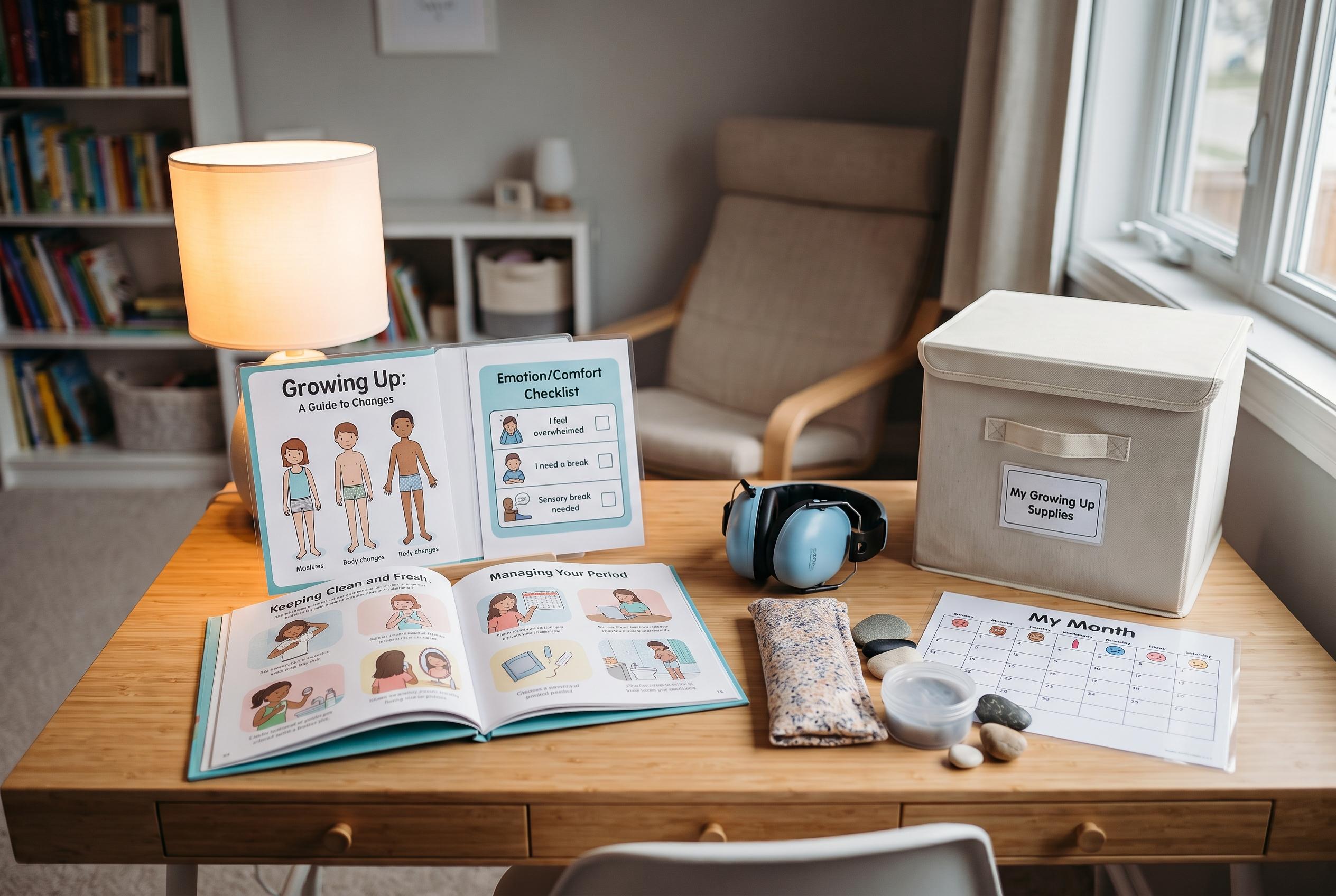

Autistic girls face unique challenges during puberty, with research suggesting earlier onset and heightened sensory sensitivities. Experts emphasise the importance of specialised preparation to ensure a smoother transition, highlighting practical, emotional, and safety considerations for parents and carers.
For many parents, puberty is difficult to navigate at the best of times. For autistic girls, the changes can arrive as a rush of new sensations, emotions and practical demands all at once. Breast development, body hair, body odour and periods may be especially hard to process if a child relies on routine, struggles with uncertainty or is sensitive to touch, smell or pain.
Some research suggests autistic girls may begin puberty earlier than their neurotypical peers, by about nine and a half months on average, according to the Autism Research Institute. Harvard Medical School’s Adult Autism Program also notes that autism itself does not alter the usual timing of a first period, which commonly begins between ages 11 and 13. Together, those findings underline a simple point: preparation matters, and it may need to start before the first signs appear.
Clear, repeated conversations can make a major difference. The American Autism Association recommends plain language, visual supports and repeated explanations to reduce confusion, while the National Autistic Society says menstrual blood, smells and bodily changes can heighten sensory stress and affect emotional self-regulation. That means practical rehearsal helps: show menstrual products in advance, practise routines for changing them and keep instructions short, concrete and predictable.
Parents should also watch for distress that may be easy to miss. Withdrawal, irritability, shutdowns, school refusal or a sudden drop in coping can all be signs that puberty is overwhelming. Food restriction or new control over eating can sometimes reflect anxiety about bodily change rather than appearance alone. If a girl is losing weight, avoiding meals or becoming visibly distressed around food, it is sensible to speak to a GP promptly.
Privacy, consent and safety need direct teaching as well. The Autism Research Institute and the National Autistic Society both stress that puberty can be especially challenging when social communication is harder and routines are disrupted. Using direct scripts, calm repetition and visual prompts can help a teenager learn how to say no, ask for help and understand which body parts and conversations are private. If periods are very painful, very heavy or unusually disruptive, medical advice is also important.
At its best, puberty support is not about fixing autistic girls but helping them feel prepared. That means normalising change, planning for sensory discomfort and making room for individual preferences, including gender identity and the language a teenager wants to use for herself. With the right support, a frightening transition can become something more manageable, and less lonely.
Disclaimer: This content is for informational purposes only and is not intended to be a substitute for professional medical judgment, advice, diagnosis, or treatment.