

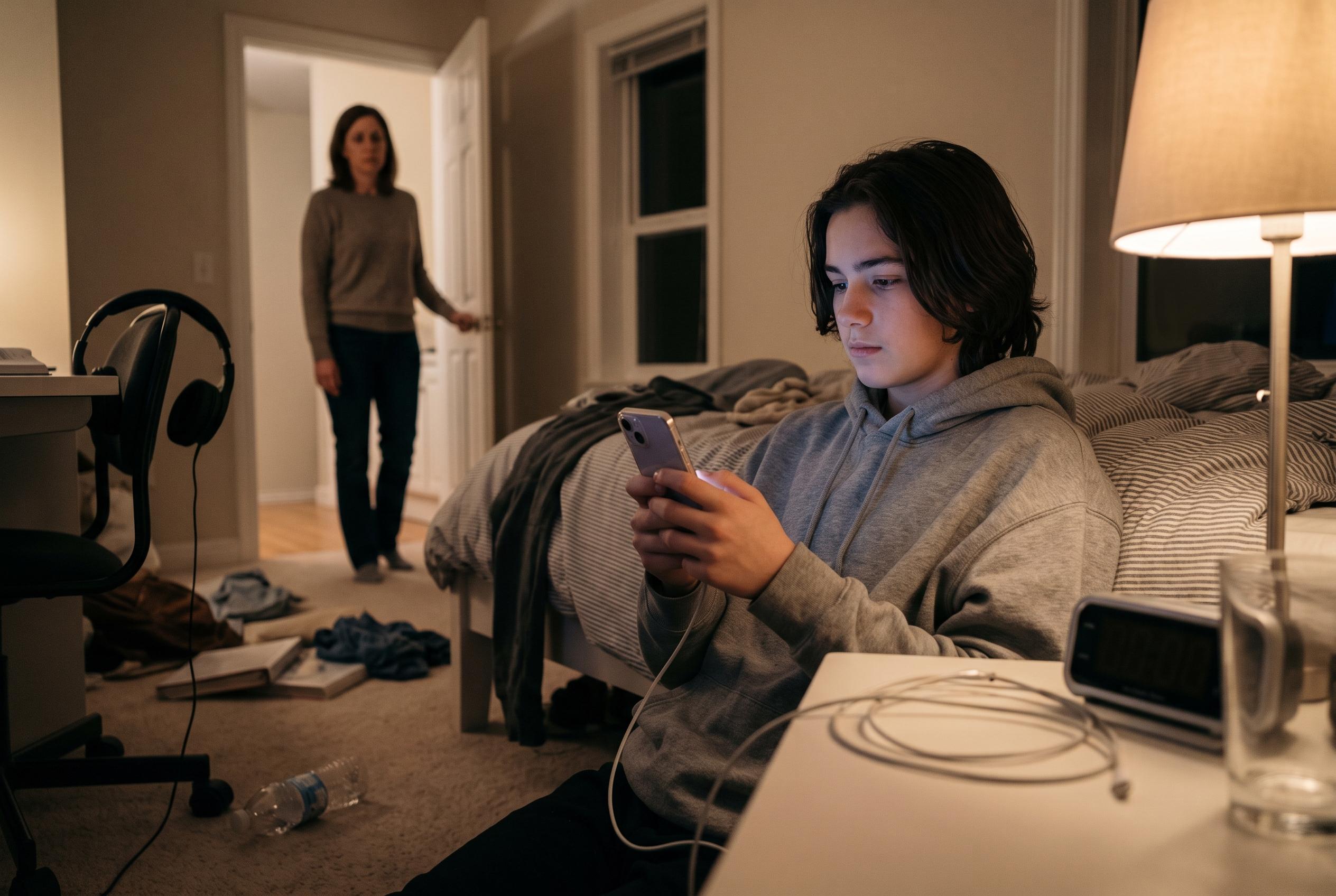

A new US study highlights how Instagram and TikTok contribute to negative teenage experiences, including feelings of worse life quality and sleep disruption, revealing platform-specific risks beyond general online harassment.
A new study in JAMA Pediatrics suggests that negative online experiences are a routine part of teenage life, but the risks vary sharply by platform. The research found that harassment is common both on and offline, yet teens are much more likely to come across violent images, unwanted sexual content and self-harm material on digital platforms than in everyday life. The findings also point to Instagram and TikTok as the places where many adolescents are most likely to feel worse about their own lives after seeing what others post.
The study surveyed 472 adolescents in the US aged 13 to 17 between February and December 2025, using a nationally representative sample. Researchers asked them about experiences across 20 communication platforms, including Instagram, TikTok, Snapchat, YouTube and Facebook, as well as about harms they had encountered away from screens. Angela Y. Lee, who led the work and is now an assistant professor at the University of Wisconsin-Madison, said the project was designed to provide clearer, more detailed measurement of young people’s online experiences and to help inform debates over youth safety, platform design and policy responses.
The results show that harmful experiences are widespread. Nearly half of the teenagers surveyed said they had seen someone else being harassed, while just under a third reported direct harassment in the previous four weeks. Direct harassment appeared at similar levels online and offline, suggesting that this kind of conflict is not confined to social media. But for other forms of exposure, the internet stood out: teens were far more likely to report seeing violent imagery or unwanted sexual images online than in person, and more than half said technology use had disrupted their sleep.
The differences between platforms were particularly striking. Instagram users were more likely than YouTube users to report seeing violent imagery, while the feeling that life was worse because of other people’s posts was most common on Instagram and TikTok. Sleep disruption also clustered around the same apps, with a large share of TikTok and Instagram users linking those platforms to poor sleep. By contrast, text messaging was far less often blamed for those effects.
The study adds to a wider body of research suggesting that the platform matters, not just the amount of time spent online. Pew Research Center has found that TikTok, Instagram and Snapchat are central to how many teenagers socialise and entertain themselves, while also drawing concern from parents who say social media can affect sleep and productivity. That context matters because the latest findings do not show that any one app causes harm. Instead, they indicate that different services are associated with different kinds of negative experiences, which may reflect both platform design and the kinds of users each service attracts.
Researchers caution that the study has limits. It was based on a relatively small sample for a national survey, and it relied on teenagers’ recollections over a four-week period, which can be shaped by memory, embarrassment or the tendency to blame the app they use most. The work was also cross-sectional, meaning it cannot establish causation. Even so, Lee said the goal is to build a more precise evidence base, and the team is now preparing a larger study that will include parents and examine a broader range of platforms, including AI chatbots and companion apps.
Disclaimer: This content is for informational purposes only and is not intended to be a substitute for professional medical judgment, advice, diagnosis, or treatment.



