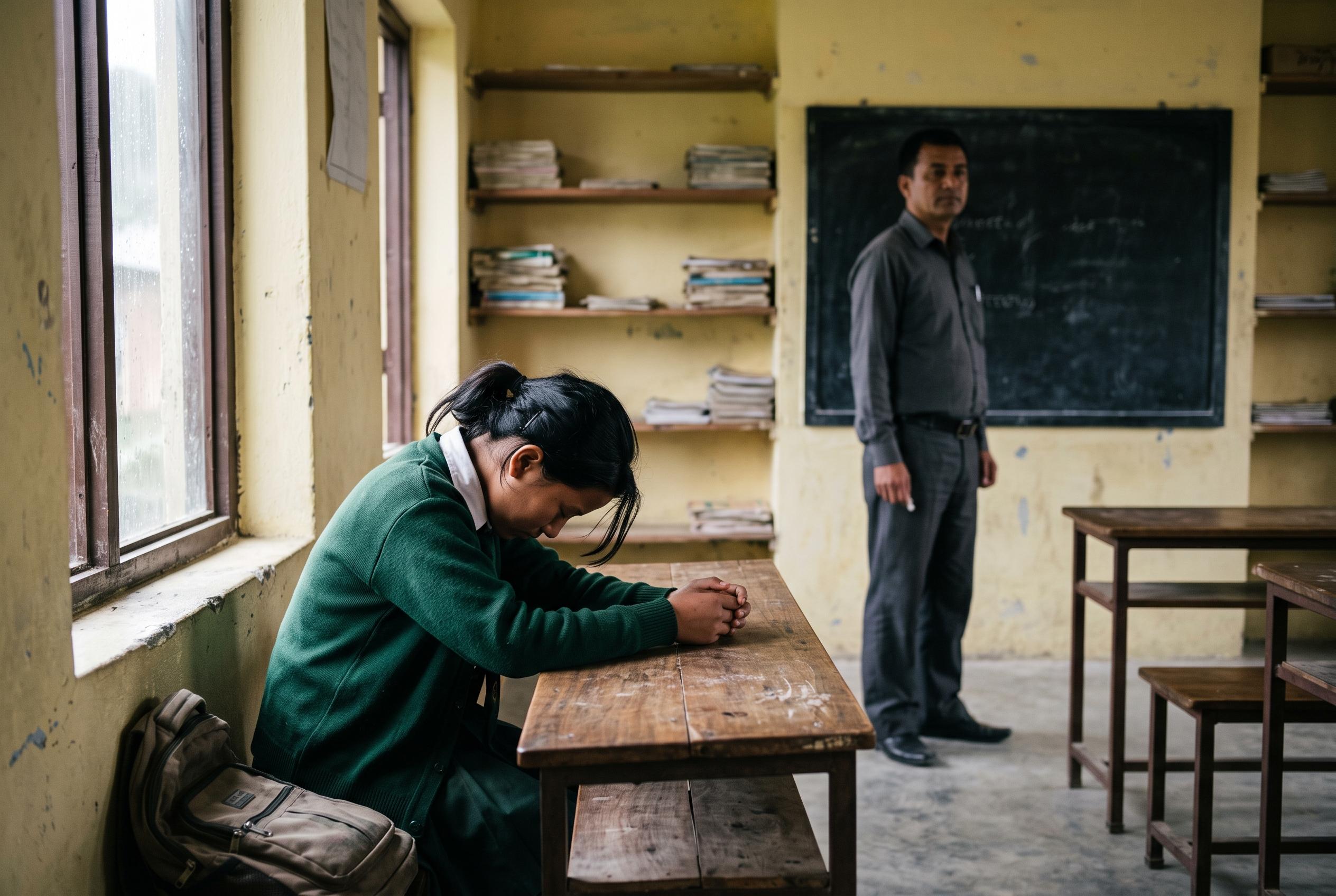

A new study in Kathmandu uncovers the ongoing use of physical punishment in schools, correlating it with increased depression and anxiety among students, despite legal prohibitions in Nepal.
A new study from Chandragiri Municipality in Kathmandu district suggests that corporal punishment remains deeply embedded in school life, with more than four in five adolescents saying they had experienced it during the academic year. The research, published in a Wiley journal, found that pulling and pinching were the most commonly reported forms, followed by beating, while most students said punishment left them in pain and a smaller share described physical injury. The findings add to a wider body of evidence from Nepal showing that, despite legal bans, violent discipline is still widely used in homes and schools.
Researchers surveyed 404 students in grades 6 to 10 at both public and private schools using a self-completed questionnaire. Among those who reported corporal punishment, 43.5% screened positive for depression, 60.3% for anxiety and 14.7% for stress on the DASS-21, a standard mental health scale. The study also found that students in private schools were more likely than those in government schools to report corporal punishment, depression, anxiety and stress. Lower and middle academic performers were also more likely to say they had been punished and, among those affected, more likely to report physical harm.
The pattern is troubling in a country where the Constitution and child-protection laws prohibit corporal punishment, yet national surveys have continued to show widespread violent discipline. UNICEF’s 2018 reporting and the Nepal Multiple Indicator Cluster Survey have both pointed to high levels of physical punishment and psychological aggression among children. The Chandragiri study suggests that school culture, academic pressure and disciplinary habits may be interacting in ways that leave younger people vulnerable to both physical and psychological harm.
The authors called for teacher training in positive discipline, along with academic support for struggling pupils and age-appropriate mental health services. They also urged gender-sensitive counselling and broader community awareness so that schools and families move away from punitive discipline and towards approaches that support learning without violence. The study’s authors noted, however, that their analysis was cross-sectional and based on self-reporting, so it cannot prove cause and effect.
Disclaimer: This content is for informational purposes only and is not intended to be a substitute for professional medical judgment, advice, diagnosis, or treatment.