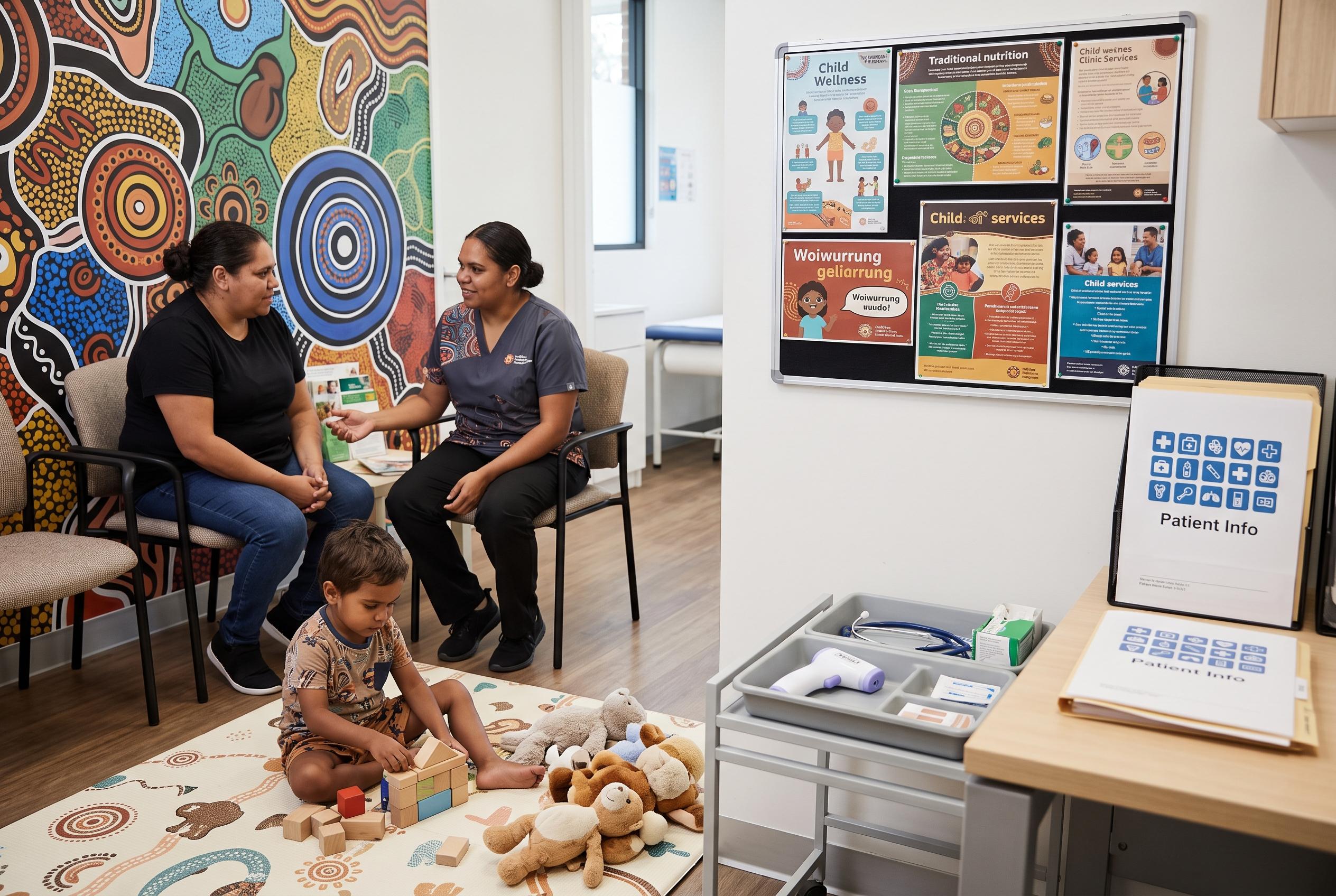

A recent review of patient records at Melbourne’s Wadja Health Clinic uncovers high levels of medical and social complexity among Aboriginal children, highlighting gaps in culturally safe care and the importance of tailored health services.
A review of records from Aboriginal children attending the Wadja Health Clinic at The Royal Children’s Hospital in Melbourne has found high levels of clinical and social complexity, alongside gaps in the documentation of culturally safe care. The study, published in the Journal of Paediatrics and Child Health, examined 208 patient files from March 2018 to March 2020 and found that 68% of children met the researchers’ definition of complexity, meaning they had issues across at least three areas of need.
The findings paint a picture of children living with overlapping medical, developmental, mental health and social pressures. More than a third had experience of out-of-home care, and four in five had at least one adverse childhood experience, a term used to describe events such as abuse, neglect or household instability that can have long-term effects on health and wellbeing. The clinic’s Aboriginal case managers had a median of seven contacts per child over two years, compared with a median of four paediatrician visits, suggesting that much of the work centred on ongoing coordination rather than one-off treatment.
The Wadja Health Clinic is designed as a weekly general medical service for Aboriginal and Torres Strait Islander children, with a collaborative model that brings together medical, social, cultural and emotional support. The Royal Children’s Hospital says the clinic is intended for children with specialist needs and is part of a broader Aboriginal family service that aims to create a culturally safe environment and help families navigate hospital care. The hospital’s family place has been operating since 2009 and is described as a space where families can access practical help alongside advocacy and liaison support.
The study also found that referrals were often used to strengthen relationships with Aboriginal services, including the Victorian Aboriginal Child Care Agency and Aboriginal Community Controlled Health Organisations. But it also highlighted a weakness in the record-keeping around connection to culture and cultural practice, which was poorly documented. That matters because cultural safety is widely regarded in Indigenous health as more than a courtesy or add-on: it depends on services understanding power imbalances, listening to families and creating care that aligns with patients’ values and lived experience. The authors say the findings should help shape future service delivery for children with complex needs.
Disclaimer: This content is for informational purposes only and is not intended to be a substitute for professional medical judgment, advice, diagnosis, or treatment.