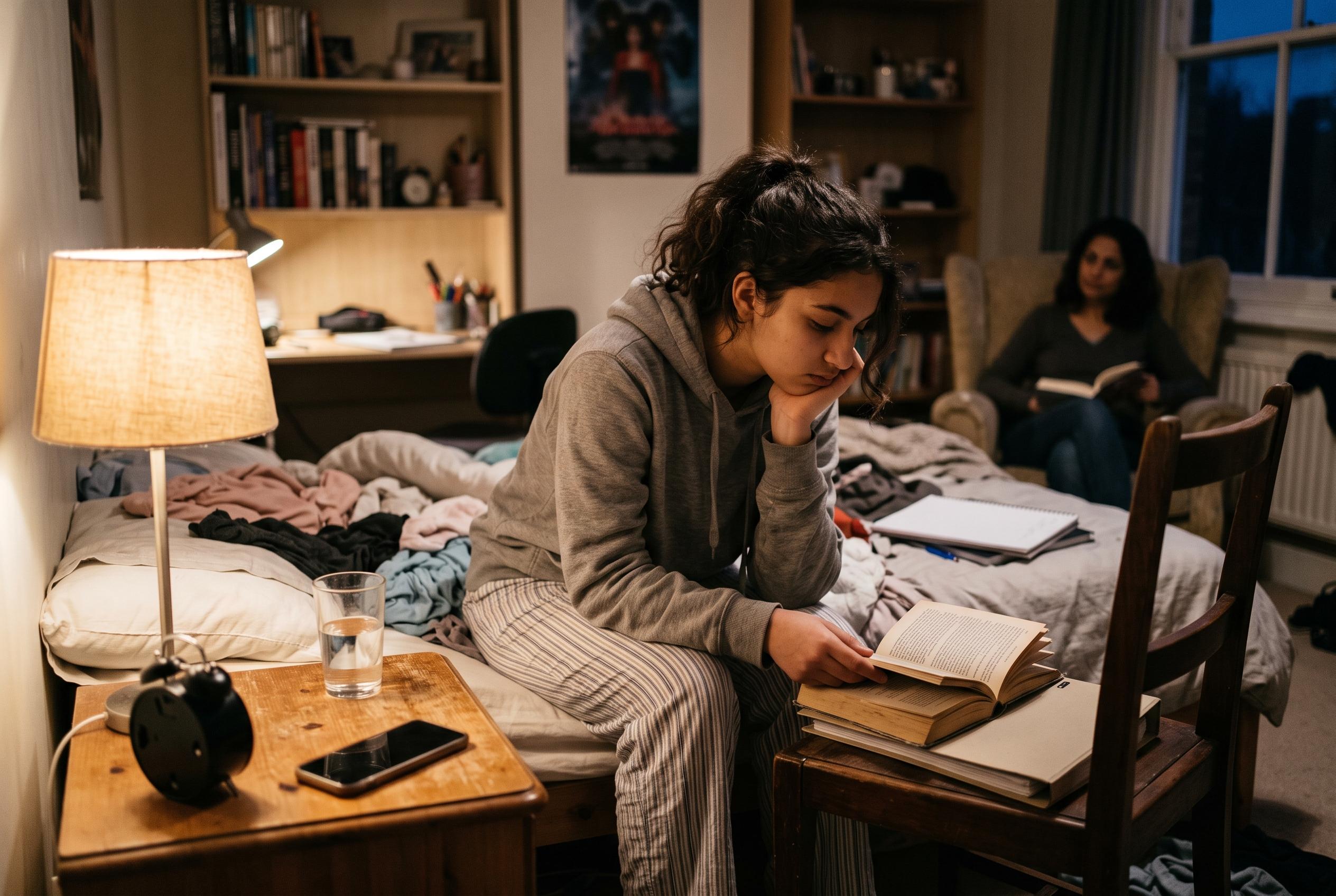

Research from Slovakia reveals that teenagers who delay bedtime are influenced by biological and emotional factors, highlighting sleep hygiene as a key intervention point to promote healthier sleep routines.
Teenagers who put off going to bed may be doing more than stalling sleep. A study of Slovak secondary school students suggests that bedtime procrastination is tied to a later body clock, weaker emotion regulation and poorer sleep habits, with sleep hygiene acting as an important bridge between those factors and the decision to stay up. The findings add to a growing body of research indicating that bedtime delay is not just a matter of poor discipline, but a pattern shaped by biology, behaviour and emotional strain.
The study, published in a peer-reviewed journal by Dovepress, analysed 486 adolescents aged 15 to 21 from the Nitra region of Slovakia. The researchers set out to test whether evening-type students and those with greater difficulty managing emotions were more likely to procrastinate at bedtime, and whether sleep hygiene, meaning the habits and routines that support healthy sleep, helped explain that link. Their results showed that both a later chronotype and greater emotion-regulation difficulties were associated with more bedtime procrastination, while better sleep hygiene was linked with less of it.
The paper places those findings in the context of adolescence, a stage marked by rising independence, heavier academic demands and a natural shift towards later sleep timing. That combination can create a mismatch between what teenagers want to do and what their bodies are ready for. Research cited by the authors and related work indexed on PubMed has shown that bedtime procrastination and chronotype can affect adolescent sleep in different ways across school and non-school nights, with procrastination especially shortening sleep on school nights while chronotype plays a larger role when schedules are looser. That helps explain why delaying bedtime can become a persistent habit rather than an isolated lapse.
Emotion regulation emerged as another key part of the picture. The Slovak study found that teenagers reporting greater difficulty managing emotions were more likely to delay bed and also had poorer sleep hygiene. That fits with earlier research in young adults showing that weaker executive functioning and poorer behavioural regulation are associated with more bedtime procrastination, while later chronotype also raises the risk. Other studies have linked lower self-control and eveningness with procrastination and sleep problems, suggesting a wider pattern in which self-regulation and circadian preference interact to shape night-time behaviour.
Sleep hygiene appeared to be especially important in tying those strands together. In the Slovak sample, it partly explained the relationship between chronotype and bedtime procrastination and also helped account for the link between emotion-regulation difficulties and delayed bedtimes. In plain terms, adolescents who were more evening-oriented or less able to manage emotions tended to have worse sleep habits, and those habits were associated with more procrastination at night. The authors argue that this makes sleep hygiene a practical target for prevention efforts, because routines such as keeping a steady bedtime, reducing late-night stimulation and limiting screen use are behaviours that can be changed more readily than chronotype.
The study also found that the associations were not explained away by sex and that the model accounted for a meaningful share of variation in both sleep hygiene and bedtime procrastination. The researchers note that the strongest effect of chronotype was direct, while sleep hygiene played a smaller but still significant mediating role. That distinction matters because it suggests eveningness is not simply a matter of bad habits; biological timing still exerts a powerful influence, even when behaviour is taken into account.
There are important limits. The research used a cross-sectional design, which means it can show associations but not prove cause and effect. It relied on self-reported questionnaires, and some of the sleep-hygiene subscales showed weaker reliability than the overall scale. The sample also came from one region and one age band, so the findings may not generalise neatly to younger children, older students or teenagers in other countries. Even so, the results add weight to the idea that bedtime procrastination is best understood as a developmental issue shaped by both emotion and circadian timing, not simply a willpower problem.
For parents and caregivers, the practical message is straightforward: helping teenagers build steadier evening routines may matter even when a young person naturally prefers late nights. The study suggests that support for emotion regulation, combined with healthier pre-sleep habits, could reduce the tendency to keep putting off bed. That is especially relevant at a life stage when sleep loss can affect mood, learning and day-to-day functioning.
Disclaimer: This content is for informational purposes only and is not intended to be a substitute for professional medical judgment, advice, diagnosis, or treatment.