

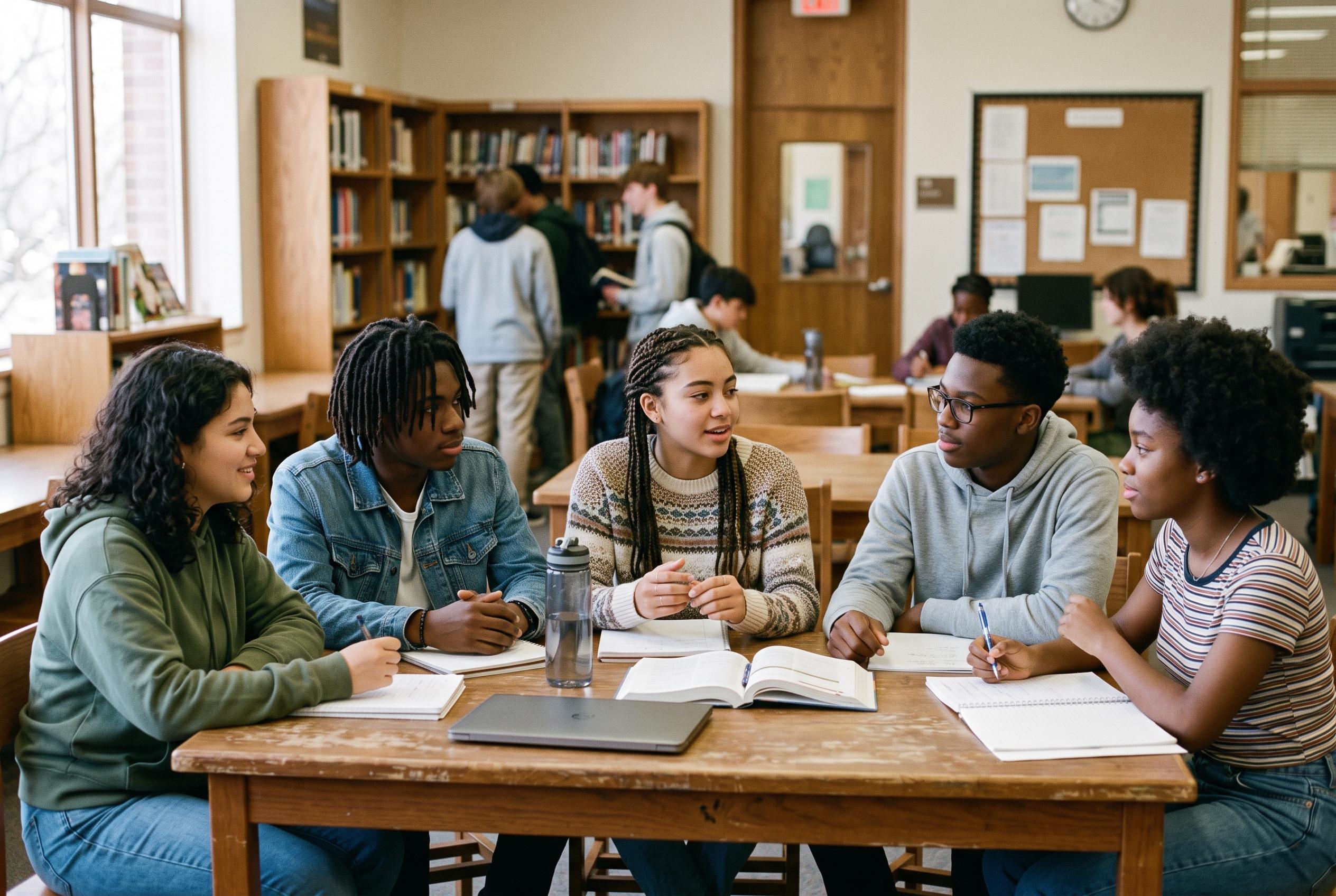

A study of Black, Latino and multiracial pupils finds that effective social and emotional learning must be shaped with adolescents, reflect their identities and address the realities they face at school.
A new paper in Frontiers in Education argues that schools cannot improve adolescent social and emotional learning unless they first listen to the young people most often left out of the conversation. Drawing on focus groups with 15 middle school students who identified as Black, Latino or multiracial, the authors say too many SEL programmes still treat teenagers as if they were younger children, while overlooking the experiences of Black, Indigenous and other students of colour, LGBTQ2SIA+ young people and pupils with disabilities.
The paper lands against a grim backdrop. The Centres for Disease Control and Prevention says adolescent mental health worsened in 2023, with 40% of high school students reporting persistent sadness or hopelessness, 20% seriously considering suicide and 9% attempting it. The National Survey of Children’s Health also found that more than 5.3 million adolescents aged 12 to 17 had a diagnosed mental or behavioural health condition in 2023, up 35% from 2016. A separate KFF review found that 15% of adolescents reported a major depressive episode in 2024 and 19% had moderate to severe anxiety symptoms.
Against that context, the students in the study described a version of schooling built around trust, recognition and care. They said teachers should take time to learn their names, pronouns, interests and backgrounds, and not confine relationship-building to the first week of term. The children also valued humour, emotional support and teachers who shared something of themselves, whether that meant talking about music, video games or a similar family history. In their view, connection was not a soft extra; it was the basis for learning.
The students were equally clear that a safe classroom is more than a tidy room with rules on the wall. They wanted educators to greet them warmly, check in regularly, challenge racist or anti-LGBTQ language and ask pupils what support they actually need. Several also spoke about the constant background worry created by school shootings and lockdown drills, a reminder that many children now think about physical safety alongside homework and grades. The paper’s authors say these concerns show why SEL cannot be neutral or one-size-fits-all if it is meant to work for adolescents.
Their broader message was that education should be humanising, not merely efficient. Students said they wanted lessons that reflect their identities and communities, including honest teaching about race, oppression and current events, rather than a sanitised account of history. They also called for more support with anxiety, more flexibility around academic pressure and more adult advocacy when school policies are unfair. The authors say those ideas should shape both SEL programmes and everyday classroom practice. Research published in Psychiatric Services last year found that, while SEL is widely promoted, evidence of its effectiveness for older students remains less established, reinforcing the need for approaches that are designed with adolescents, not just for them.
Disclaimer: This content is for informational purposes only and is not intended to be a substitute for professional medical judgment, advice, diagnosis, or treatment.



