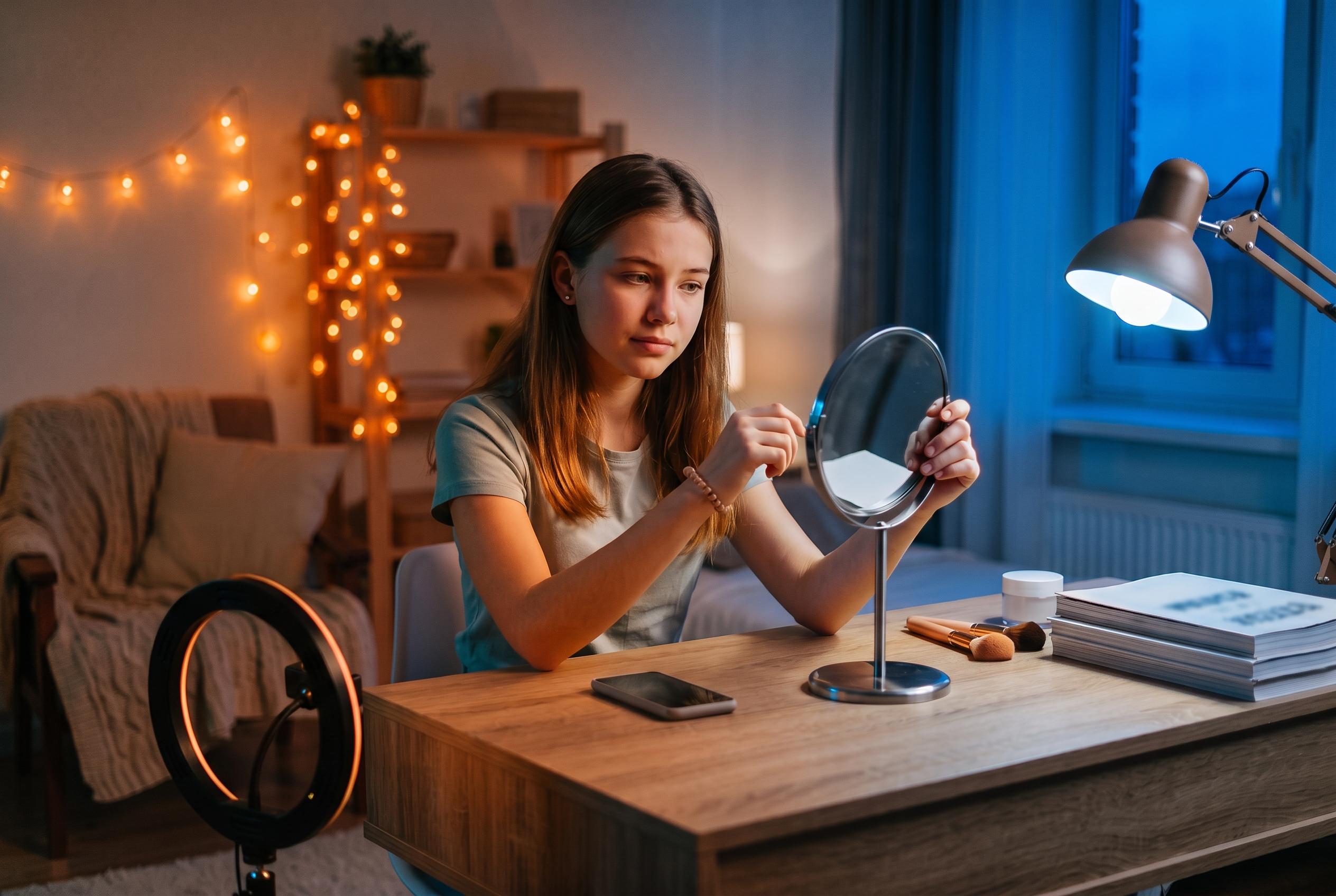

Exploring how adolescent aesthetic choices mirror broader struggles with identity and mental health, experts warn of the influence of social media on teenage self-image and wellbeing.
For many children and teenagers, choosing an outfit, a hairstyle or even a bedroom theme is about much more than appearance. It is part of a broader search for identity: how they want to be seen, where they think they belong and what kind of life they want to project. Online, that search has become more visible than ever through aesthetic trends such as cottagecore, clean girl, gothic and anime-inspired styles, each offering a ready-made visual language for self-expression.
Experts say that attraction to a particular look can be a normal part of growing up. But according to clinical psychologist Aybeniz Yıldırım, the line between self-discovery and conformity can blur quickly when social media and peer pressure become part of the equation. As young people compare themselves with peers and influencers, a style choice can begin to feel less like a preference and more like a test of whether they will be accepted.
Research supports that concern. Studies on adolescents have linked heavier social media use with greater body dissatisfaction, lower life satisfaction and higher levels of anxiety, depression and psychological distress. A review published in the medical literature found a measurable association between problematic social media use and poorer mental health, while another study reported that 9.4% of adolescents in its sample showed problematic use patterns. The World Health Organisation’s 2021-22 survey, covering about 280,000 adolescents in 44 countries, found that roughly one in 10 teens met the threshold for problematic use, with girls more affected than boys.
At the same time, researchers and clinicians caution against treating social media as purely harmful. Johns Hopkins Medicine has noted that online platforms can also help teenagers express themselves and connect with people who share their interests. A separate study of 10,092 adolescents aged 11 to 15 found that most had at least one social media account, with TikTok, YouTube and Instagram among the most popular. The same research suggested that underage use is common, which helps explain why these platforms play such a powerful role in shaping taste, belonging and self-image.
That power matters because a trend is not only about clothes. A teenager drawn to one aesthetic may also reshape their room, make-up, account settings and even their friendships around it. Yıldırım says parents should pay less attention to the style itself and more to the feelings behind it. If a young person feels they must look a certain way to be valued, or if they begin to reject their own body to fit an online ideal, the issue may be moving beyond fashion and into mental health territory.
Disclaimer: This content is for informational purposes only and is not intended to be a substitute for professional medical judgment, advice, diagnosis, or treatment.