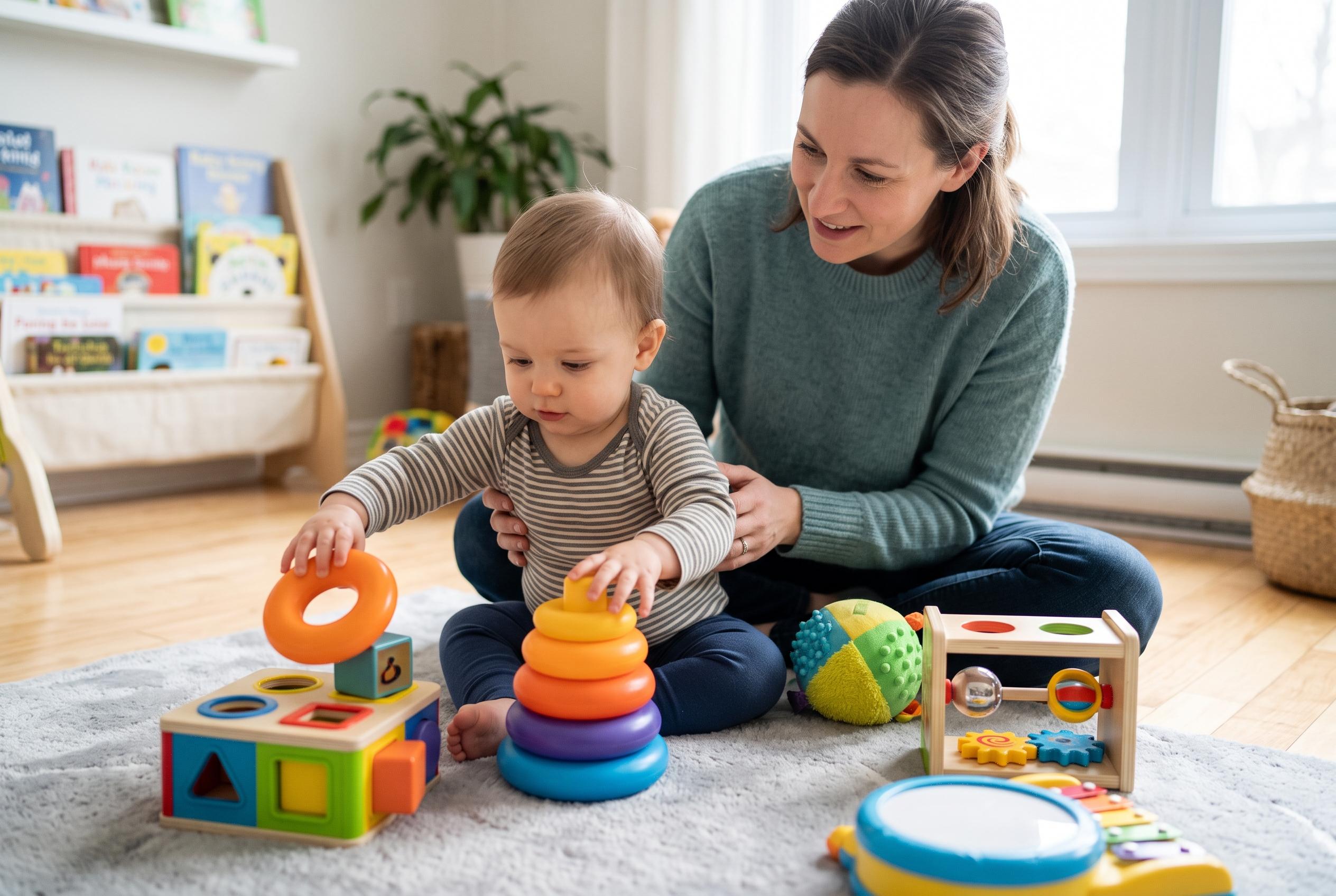

Selecting age-appropriate toys that promote movement, problem-solving, language, and sensory exploration can significantly enhance a one-year-old’s growth, emphasising simple, safe, and action-inviting options over elaborate gadgets.
Choosing toys for a 1-year-old is less about entertainment than about matching the rapid changes happening in a child’s first year of toddlerhood. At around 12 months, many children are pulling to stand, cruising along furniture, experimenting with first steps and testing how objects work by banging, dropping and mouthing them. The best toys at this stage support movement, language, problem-solving and sensory exploration, while staying simple, sturdy and safe enough for small hands and busy mouths. Consumer Reports and other parenting guides agree that push toys, stacking pieces, books and interactive playthings can all help toddlers practise new skills without overwhelming them.
A good first rule is to choose toys that invite action rather than passive watching. Developmental experts say 1-year-olds benefit most from items that challenge them just enough to keep them curious, but not so much that they become frustrated. That means toys that encourage grasping, sorting, pushing, opening, fitting and repeating. Simple play often teaches more than elaborate gadgets because it gives children room to experiment, and it usually sparks more conversation between adults and toddlers as they play together.
Several of the strongest options combine movement with early learning. A wooden push cart or similar walker-style toy helps new walkers practise balance while also supporting shape sorting and pretend play. Stacking blocks and large building pieces strengthen fine motor control and hand-eye coordination, while musical toys introduce rhythm, listening and cause-and-effect. Interactive books remain one of the most valuable purchases because they support vocabulary, attention and bonding at the same time. Guides from Consumer Reports, Babylist and Good Housekeeping consistently highlight those categories because they align closely with the developmental stage of a 1-year-old.
For children who love to move, toys that support crawling, cruising and early walking are especially useful. Push toys, rolling balls, soft climbing pieces and low activity tables can encourage a toddler to reach, stand and take a few extra steps. For children who are more curious and tactile, shape sorters, busy boards and toys with lids, knobs and sliders help develop problem-solving and dexterity. CradleCheck notes that the best toys for this age are the ones that match a child’s abilities closely enough to build confidence while still leaving room to stretch those new skills.
Sound and music also have an outsized appeal at this age. Instruments sized for toddlers, shakers, pianos and song-based toys help children learn that their actions can create an immediate result. That cause-and-effect lesson is a major milestone, and it often leads to repetition, which is exactly how young children learn. At the same time, familiar songs and repeated phrases can support early language growth, especially when parents sing or speak alongside the toy rather than letting the toy do all the talking.
Comfort toys matter too. A soft plush animal or similar cuddle toy can help a toddler with transitions, naps and pretend play. These toys are not just about soothing; they also open the door to imitation and early imagination, as children feed, tuck in or hug a favourite character. Books fit into this category as well. Thick board books are durable enough for chewing and page-turning, and they encourage daily reading routines that build vocabulary and closeness.
Safety, however, should lead every buying decision. Toy guides for toddlers consistently warn against small parts, loose magnets, button batteries, sharp edges and long cords. It is also important to check the age label, inspect construction quality and look for non-toxic finishes, especially because children this age still put many objects in their mouths. Water play can be especially appealing, but it requires close supervision because drowning can happen in very shallow water.
Price does not necessarily predict value. Less expensive items such as board books, soft balls, stacking cups and simple musical toys can provide months of engagement, while larger toys such as carts, water tables and interactive farms may offer more varied play but take up more room. Many families find that a small rotation of toys works better than leaving everything out at once. Keeping only a handful available at a time can make play feel fresh, reduce clutter and help toddlers focus more deeply.
Ultimately, the best toy for a 1-year-old is one that helps the child do something, not just look at something. Whether it is a push toy, a set of blocks, a book or a soft animal, the right choice encourages a toddler to explore, repeat and connect. That is why the most useful purchase is often the simplest one, especially when an adult is nearby to narrate, sing, imitate and play along.
Disclaimer: This content is for informational purposes only and is not intended to be a substitute for professional medical judgment, advice, diagnosis, or treatment.