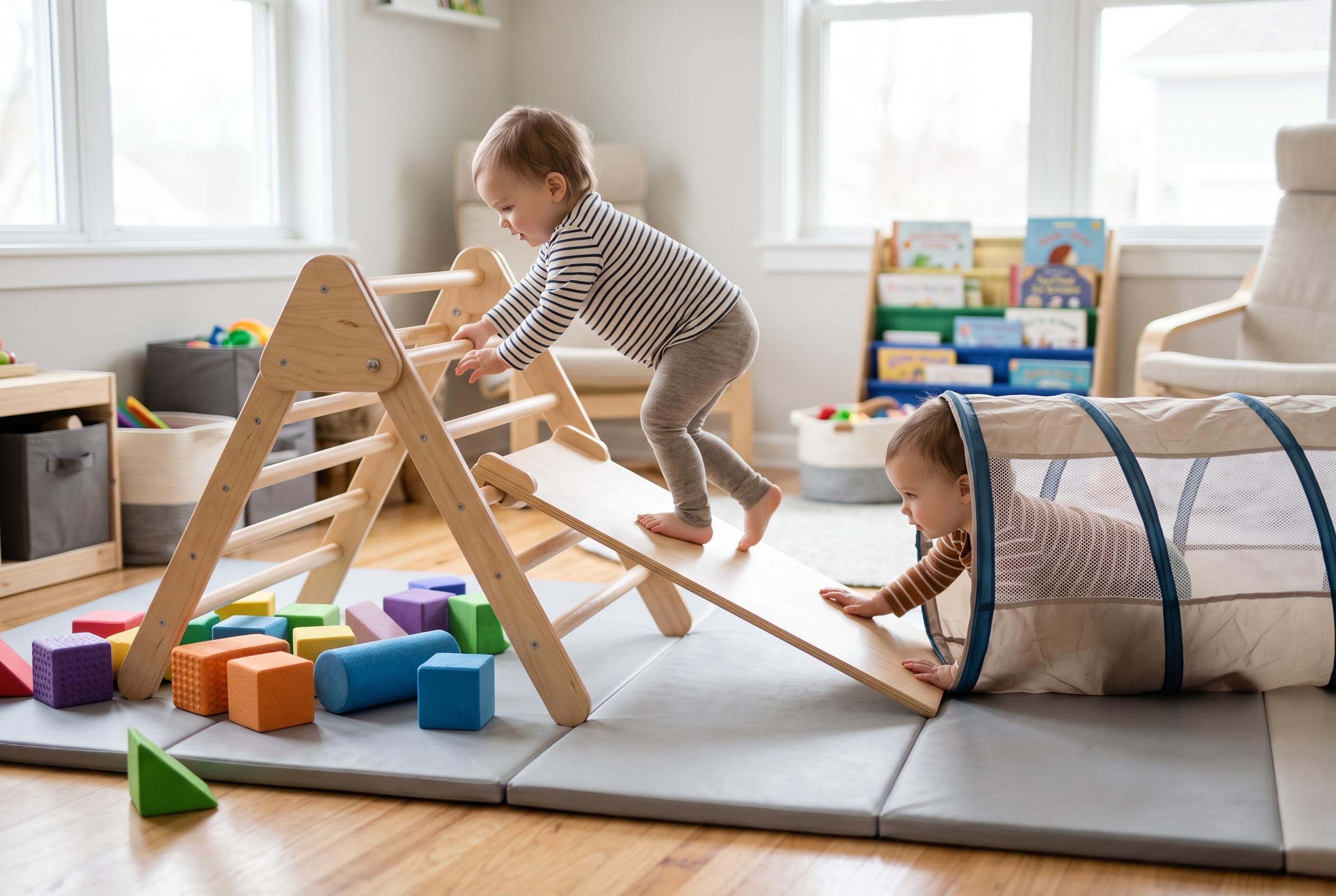

Research shows that basic toys like climbing structures, foam blocks, and textured tunnels are more effective for toddlers’ physical, cognitive, and sensory growth than complex toys, emphasising open-ended play that encourages movement, exploration, and problem-solving.
Toddlers learn through movement, repetition and touch, and that means the simplest toys can do more developmental work than they first appear to. As parents and child-development experts often note, play is not a break from learning in the toddler years; it is the way young children build it. Reaching, stacking, climbing, crawling and squeezing all help children practise control over their bodies while also giving them information about the world around them.
The distinction between fine and gross motor skills helps explain why. Gross motor skills involve larger movements such as crawling, walking, balancing, climbing and jumping, while fine motor skills depend on smaller hand and finger actions such as grasping, fitting shapes together and turning pages. According to Forbes Advisor, climbing toys are especially useful because they encourage children to pull up, balance and strengthen the muscles they will later use for standing and walking. Healthline and Cleveland Clinic both note that sensory play also supports language, motor and cognitive development by engaging sight, touch and hearing.
That is why climbing toys, foam blocks, ramps and tunnels are often more valuable than toys with lots of flashing features. A low climbing structure or soft modular set invites a toddler to keep experimenting, whether that means crawling over a cushion, sliding down a ramp or finding a new way to get from one side of a tunnel to the other. Forbes Advisor says indoor climbing toys can build coordination, problem-solving and spatial awareness, while Babylist points out that they also help children develop strength, endurance and balance.
Sensory exploration matters just as much. A soft mat, a squishy block or a textured tunnel gives toddlers clear feedback through touch and movement, helping them understand pressure, shape, distance and body position. The American Academy of Pediatrics says play is how toddlers learn about the world, and it also helps them practise social skills, including turn-taking and cooperation, when they play alongside siblings or carers. Creative play adds another layer, as a block tower can become a bridge, a house or a pretend vehicle in a child’s imagination.
Parents choosing toys with development in mind do not need an elaborate checklist, but a few practical questions help. Does the toy invite the child to move, manipulate, build or explore? Is it suited to the child’s current stage? Can it be used safely in the space available? Forbes Advisor advises families to think about age, room size and supervision when selecting climbing equipment, while the broader guidance from child-health specialists is to keep play open-ended rather than crowded with too many options. In the end, the most useful toys are often the ones that encourage a toddler to keep trying, keep moving and keep discovering.
Disclaimer: This content is for informational purposes only and is not intended to be a substitute for professional medical judgment, advice, diagnosis, or treatment.