
A comprehensive guide highlights the importance of simple, developmentally appropriate toys for babies under 1, emphasising sensory and movement growth through stages from visual tracking to problem-solving and walking preparation.
Choosing toys for babies under 1 can feel overwhelming, but the best options are often the simplest. A newborn does not need a room full of gadgets; what matters most is finding toys that match a child’s stage of development and invite looking, reaching, grasping and exploring. The guide argues that play is not just for entertainment, but also for building hand-eye coordination, fine motor skills, sensory awareness, early language and problem-solving.
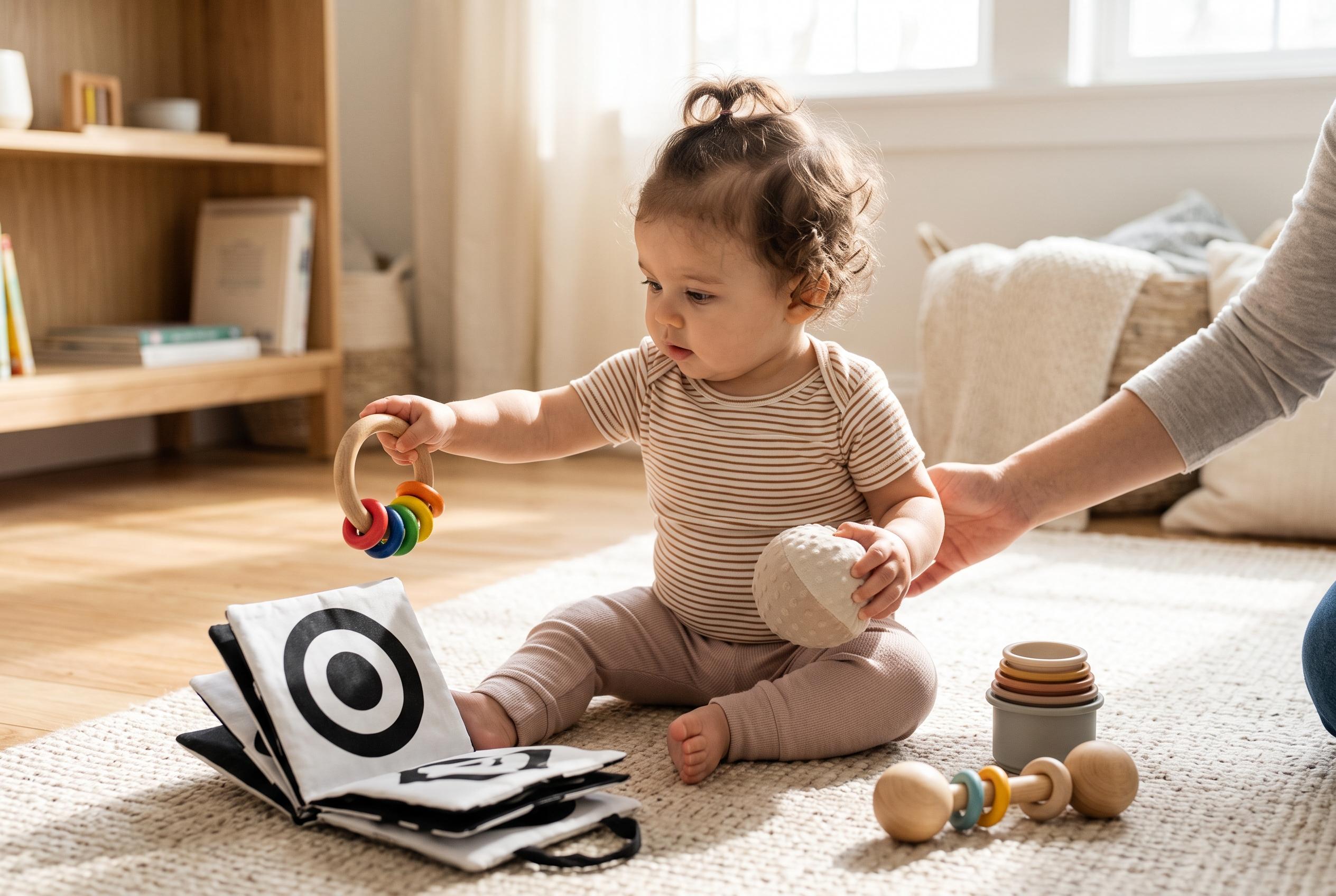
For the first months of life, the focus is on sight, sound and movement. High-contrast black-and-white cards or books can help with visual tracking, while a soft play gym creates a safe space for tummy time and reaching. Small, lightweight rattles are also useful because they introduce cause and effect in a way that is easy for tiny hands to manage. Related baby toy round-ups make the same case for simple, age-appropriate items such as soft rattles, grasping toys and black-and-white books.
From around 3 to 6 months, babies become more interested in touching, mouthing and investigating objects. Soft fabric books, teething toys that are easy to hold and musical toys that respond to touch are all useful at this stage. Other guides point to sensory toys that combine texture, sound and bright colour as a strong choice for supporting early motor development and keeping babies engaged without overwhelming them.
By 6 to 9 months, many babies are sitting up, rolling and beginning to crawl, so toys that encourage movement start to matter more. Stacking cups, soft textured balls, simple instruments and age-appropriate jumpers can all support balance, reaching and coordination. The guide also highlights that older infants often enjoy repetition, which is why toys that let them stack, drop, press or bounce can stay interesting longer than more elaborate products.
For the 9 to 12 month stage, the emphasis shifts towards problem-solving and preparation for walking. Shape sorters, push toys, soft blocks and very simple wooden puzzles all help babies practise persistence, fine motor control and spatial awareness. The guide also suggests that bath toys should be kept basic and checked regularly for mould, particularly toys that trap water. Rather than buying many items, it recommends a small rotating set: a few sensory toys, teething toys, books, a musical toy, a stacking toy and one larger activity toy such as a play gym, jumper or push walker. That approach, other baby development guides suggest, often keeps infants more interested while reducing clutter.
Disclaimer: This content is for informational purposes only and is not intended to be a substitute for professional medical judgment, advice, diagnosis, or treatment.