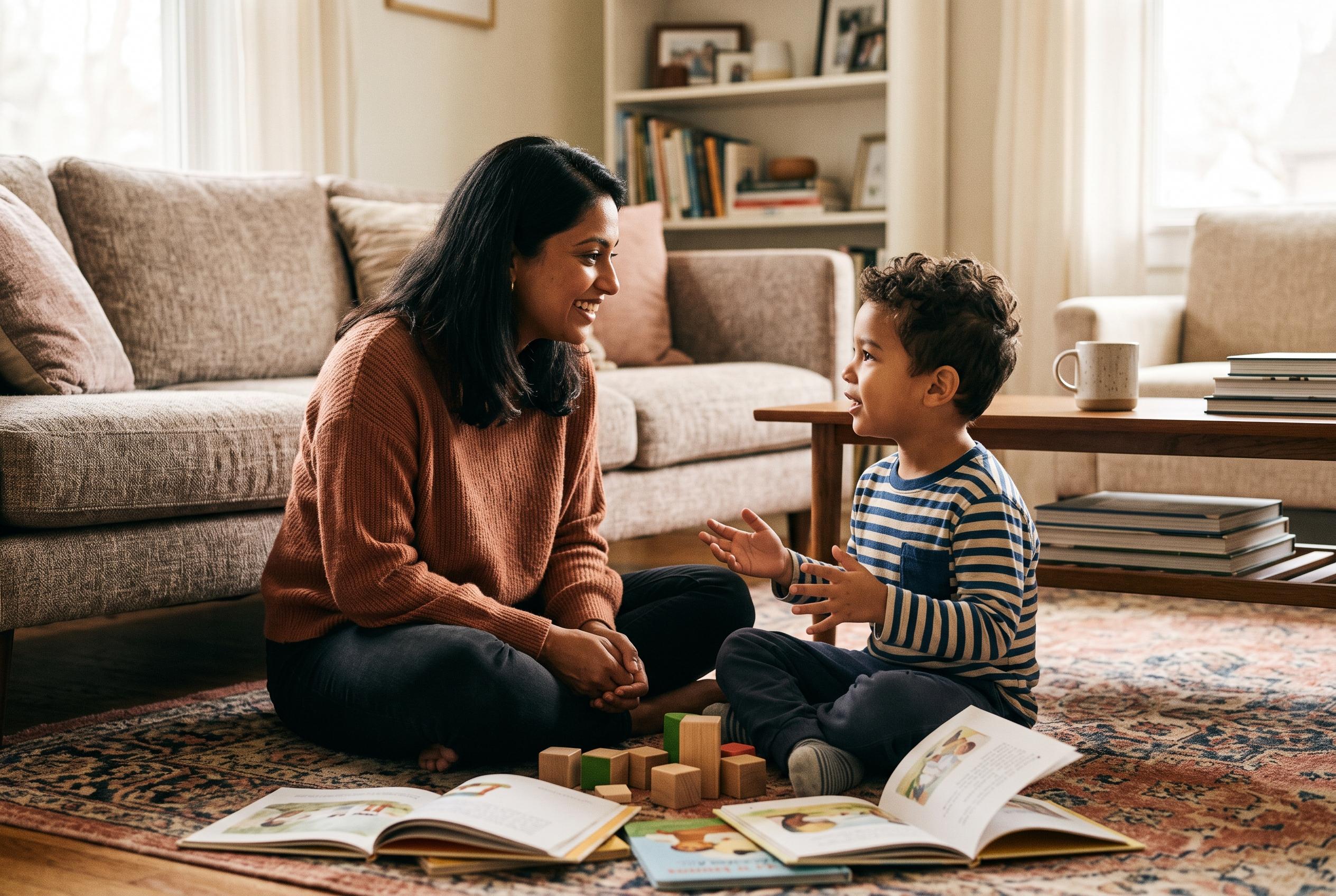

Child psychologist Ekaterina Kes highlights how increased screen exposure and busy parental lives are contributing to children speaking later than expected, raising questions about modern parenting practices and early language support.
Parents who notice that their child is speaking later than expected are not imagining a new trend, according to child psychologist Ekaterina Kes, who said one of the biggest factors is the modern household’s constant pull towards screens. In comments to the Fifth Channel, Kes said language grows through live back-and-forth exchange, not through passive exposure to cartoons or a phone, because children need eye contact, emotional response and immediate feedback to practise speech.
Kes also pointed to a second change in family life: many parents are simply too busy to stay fully engaged in conversation with small children. Even when adults are physically present, she said, they are often mentally elsewhere, so the child hears speech as background noise rather than as a real invitation to respond. A third issue, she argued, is that today’s parents often anticipate a child’s needs too quickly, whether through gestures or by guessing what they want, which can reduce the child’s need to use words at all.
That view fits with research from Harvard psychologist Elika Bergelson, whose team studied children across 12 countries and 43 languages. The work found that the strongest predictors of early language development were age, clinical factors such as prematurity or dyslexia, and how much speech children hear around them. It found no meaningful link with gender, multilingualism or socioeconomic status, suggesting that the amount and quality of spoken interaction matter more than many parents assume.
Other research has also warned that late talking is not always the same thing as simply being a bit slow to start. Frontiers for Young Minds noted that hearing problems, family history and reduced interaction time can all play a part, while other studies have found that as many as one in 10 children have not started using meaningful words by their second birthday. Experts say that is why early screening matters: some children are late bloomers who catch up, while others need support sooner rather than later.
Disclaimer: This content is for informational purposes only and is not intended to be a substitute for professional medical judgment, advice, diagnosis, or treatment.