

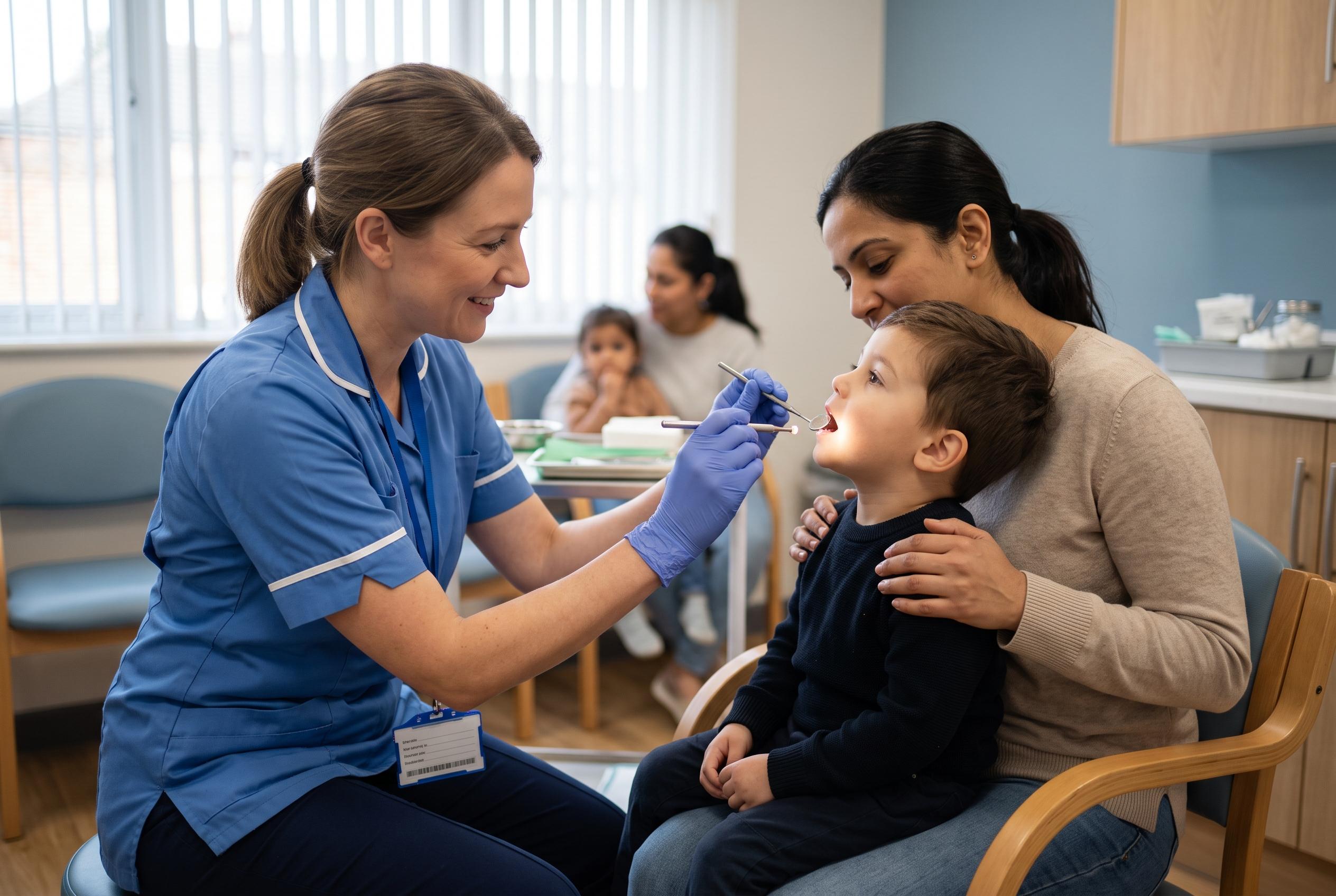

The Royal College of Paediatrics and Child Health introduces a new oral health implementation toolkit aimed at empowering frontline healthcare professionals to better identify and prevent dental issues in children, with a focus on vulnerable communities.
The Royal College of Paediatrics and Child Health has added fresh support for doctors, nurses, health visitors and allied health professionals who want to do more to protect children’s teeth. Its new oral health implementation toolkit brings together practical guidance, age-specific advice, signposting to dental services and advice on when concerns should be escalated, with the aim of helping staff raise oral health issues confidently during routine care.
The materials are designed for use across child health settings and include information on safeguarding, dental neglect and how to spot problems early. They also offer case studies showing how oral health conversations can be folded into everyday practice, making it easier for clinicians to support families without turning each appointment into a specialist dental discussion.
The toolkit sits alongside the Mini Mouth Care Matters implementation guide, which is intended to help organisations and clinical teams embed oral health into standard care. According to the British Society of Paediatric Dentistry, the wider Mini Mouth Care Matters programme trains hospital staff to carry out oral health checks on children in hospital, encouraging them to “lift the lip” and identify common problems. The initiative also includes an oral health screening tool, training and patient resources, reflecting a broader push to make mouth care part of holistic paediatric care.
Dr Helen Stewart, the college’s officer for health improvement, said paediatricians understand how important oral health is, and described tooth decay in children as entirely preventable, while noting that it remains widespread and hits children in the most deprived areas hardest. She said growing evidence supports brief oral health interventions delivered by non-dental professionals, supervised toothbrushing programmes and integrated care models, adding that the new toolkit is meant to pull that evidence together in a form that is practical and accessible for frontline staff.
Disclaimer: This content is for informational purposes only and is not intended to be a substitute for professional medical judgment, advice, diagnosis, or treatment.



