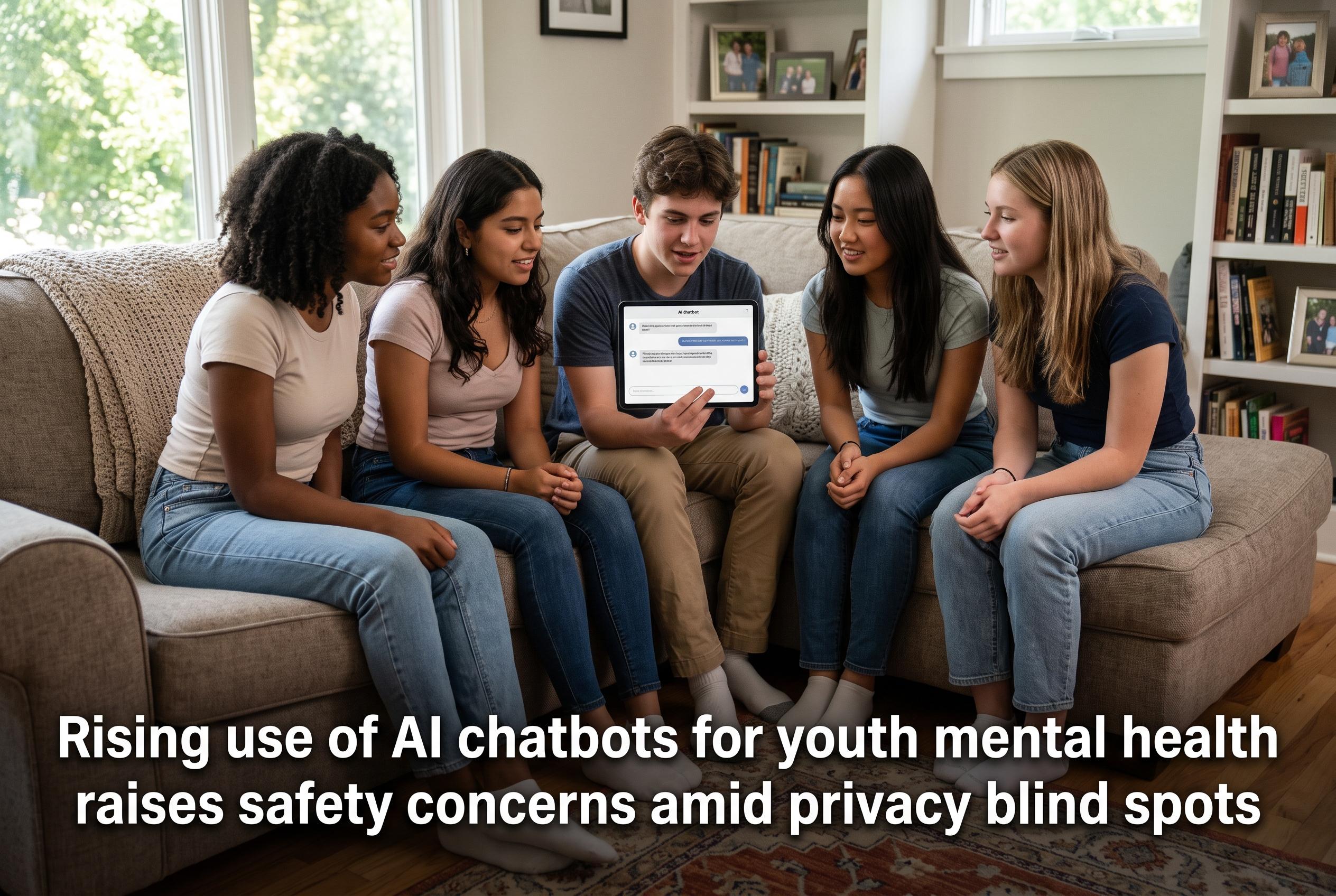

A new study reveals nearly one in five US adolescents and young adults are turning to AI chatbots for mental health advice, prompting warnings over safety, misinformation, and privacy issues as usage rapidly increases among young people seeking support outside traditional services.
A new study suggests that AI chatbots are becoming a familiar stop for young people looking for mental health advice, even as experts warn that the technology has not yet been proven safe or effective for that purpose. Researchers writing in JAMA Pediatrics found that 19.2 per cent of US adolescents and young adults aged 12 to 21, or about 8.2 million people, used an AI chatbot for mental health advice in 2025, up from 13.1 per cent the year before.
The appeal is obvious: chatbots are available at any hour, do not require an appointment and can feel easier to approach than another person. In a system where access to care remains uneven, that matters. Hao Yu, a Harvard Pilgrim Healthcare Institute associate professor and one of the study authors, told The Harvard Gazette that the shortfall in child and adolescent psychiatrists leaves many young people without timely support. But Yu also warned that general-purpose AI tools are not built to give mental health care and may spread misinformation.
The survey, conducted in November 2025, included 1,009 respondents from a larger sample of 1,727 people aged 12 to 21 drawn from RAND’s American Life Panel. Participants were asked about their use of chatbots including ChatGPT, Google Gemini, My AI, Character.AI and Meta AI when they felt sad, angry, nervous or stressed. Among those who used AI in this way, 42.8 per cent said they did so at least monthly, while 10.8 per cent used it weekly or more often. Use was higher among females, older respondents and young people who had spoken to a physician about their mental health in the previous six months.
The study also found that many users kept their chatbot use to themselves. More than 63 per cent did not tell a parent, doctor or other adult that they were seeking mental health advice from AI. That secrecy, researchers said, creates a blind spot: if a chatbot offers unhelpful or harmful guidance, the adults most likely to step in may never know the conversation took place.
Encouragingly, most young people who used AI for this purpose said they found the responses helpful. About 91.7 per cent described the advice as somewhat or very helpful, a figure that JAMA Pediatrics noted alongside the broader rise in use. But the researchers did not test whether the replies were clinically sound, and that remains the central concern. As Yu told The Harvard Gazette, the problem is not only that AI can sound reassuring, but that it may flatter users in ways that reinforce unsafe beliefs. The authors said they plan follow-up surveys to track the trend and assess whether AI can ever become a reliable source of mental health support for young people.
Disclaimer: This content is for informational purposes only and is not intended to be a substitute for professional medical judgment, advice, diagnosis, or treatment.