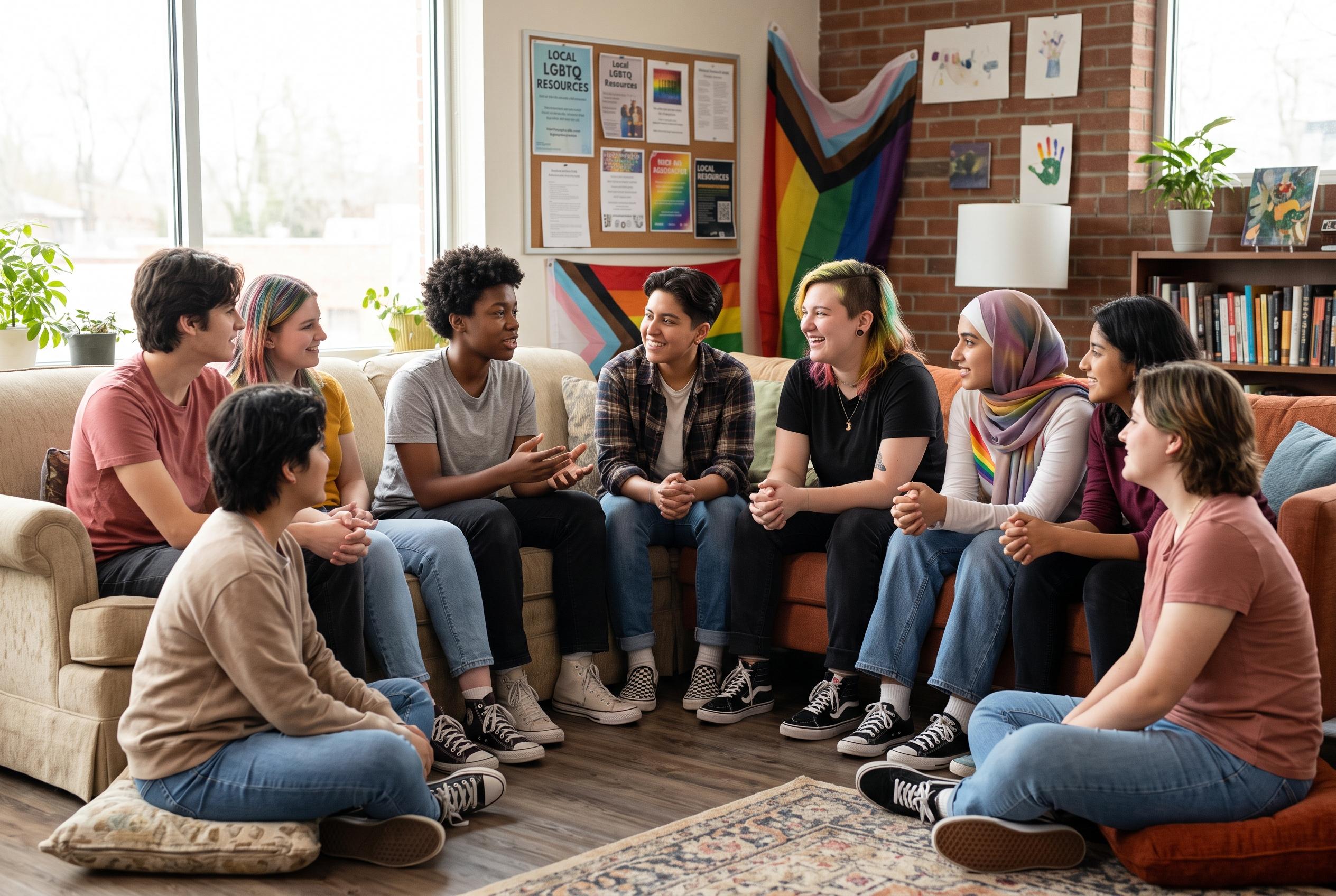

Despite legislative progress, LGBTQ young people in Canada and the US continue to face soaring mental health challenges driven by discrimination, political hostility, and systemic shortcomings in support and care.
LGBTQ young people are still facing a mental health emergency that policy wins alone have not solved. Across Canada and the US, the problem is less about a lack of formal recognition than a failure to translate inclusion into everyday safety, support and timely care. As the CDC has noted, LGBTQ youth face higher levels of bullying, violence, illicit drug use and suicidal thoughts than their cisgender and heterosexual peers, a pattern tied to stigma and discrimination rather than individual weakness.
The scale of the crisis is stark. The Trevor Project’s latest survey found that 42% of LGBTQ youth seriously considered suicide in the past year, with even higher figures among transgender and non-binary young people. It also said 94% believed recent politics had harmed their mental health, underlining how public debate and legislation can shape emotional well-being long before a young person ever reaches a clinic.
That dynamic is visible even in places often seen as relatively progressive. A study cited by Axios in California found that 35% of LGBTQ young people there, including 39% of transgender and non-binary respondents, seriously considered suicide in the past year. In Michigan, Axios reported that 68% of LGBTQ youth experienced anxiety and 52% reported depression, suggesting that social acceptance on paper does not prevent distress when discrimination, uncertainty and political hostility remain part of daily life.
Canada’s experience points in the same direction. A preprint study on medRxiv analysing data from 96,683 young people aged 15 to 24 found that the share reporting poor or fair self-rated mental health rose from 4.3% in 2007-08 to 20.1% in 2021-22. The researchers said the burden was not evenly shared, with sharper disadvantages among sexually diverse and racialised young people, a finding that reinforces how race, sexuality and other identities can compound one another.
That is especially relevant for Afro- and Indo-Caribbean families, where questions of faith, migration, respectability and family duty may make it harder for young people to speak openly about sexuality or gender identity. When those pressures are layered on top of bullying at school, rejection at home or long waits for care, the result can be isolation that is hard for institutions to see and even harder for young people to name.
The larger failure is structural. The Trevor Project has repeatedly warned that anti-LGBTQ politics and hostile rhetoric worsen mental health outcomes, while the CDC says targeted interventions are needed to address the disparities. Yet if schools are uneven, therapists are overbooked and culturally competent services are scarce, then the burden still falls on young people to absorb the cost of a system that congratulates itself for progress while leaving them unsafe.
Disclaimer: This content is for informational purposes only and is not intended to be a substitute for professional medical judgment, advice, diagnosis, or treatment.