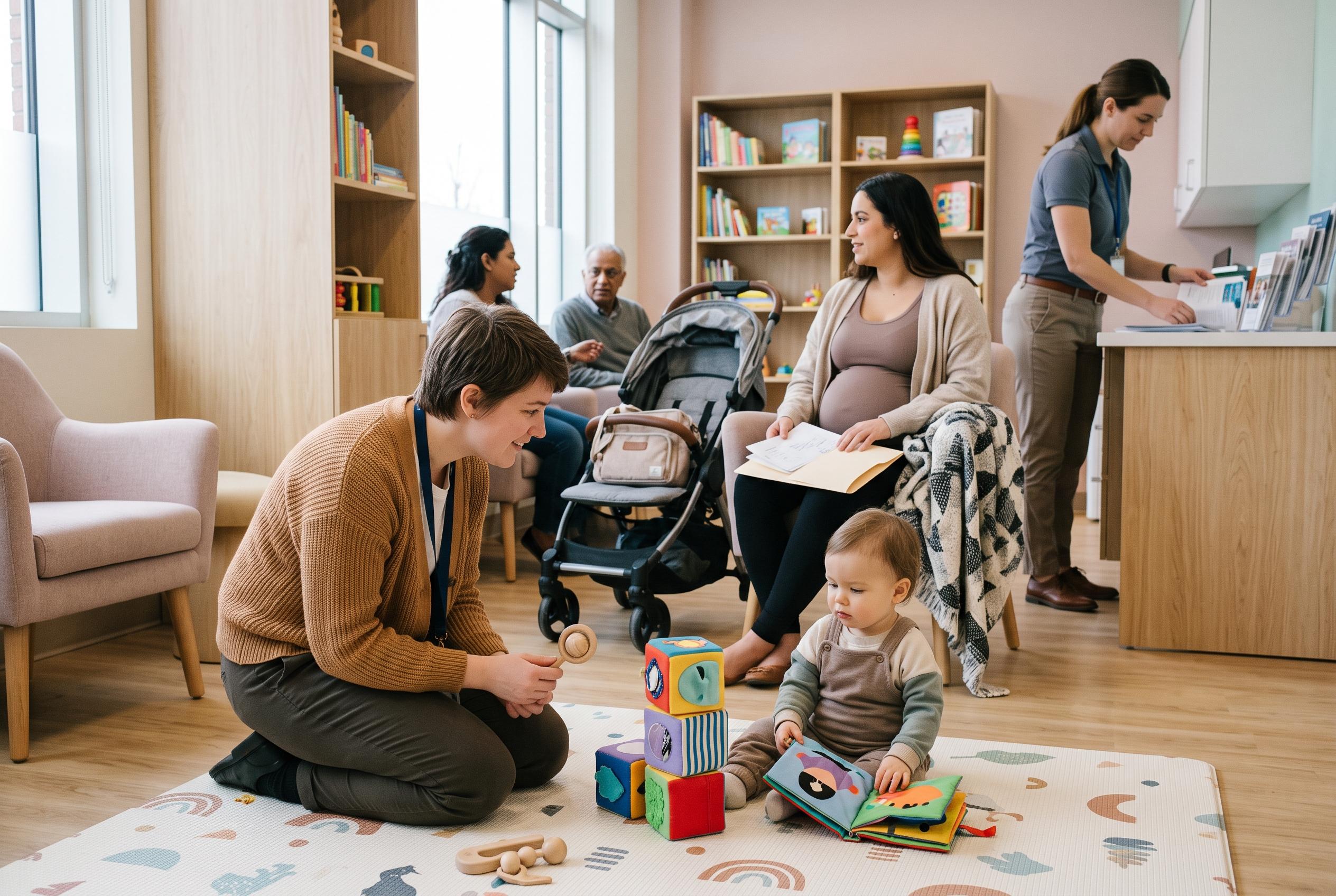

A new Quebec report asserts that increased investment in support for pregnant women and young children can reduce future public expenses by improving health and educational outcomes, emphasising the importance of early intervention and resource equity.
A new Quebec report argues that spending more on pregnant women and children aged five and under can reduce larger public costs later by improving school readiness and health outcomes.
The study, published by the Observatoire des tout-petits, says early support can help prevent problems that often grow more expensive over time. It points to low birth weight as one example: the condition is not only a medical risk, but is also linked to weaker brain development and a greater chance of learning delays. The broader case for early childhood investment is echoed by research from institutions such as Brookings and the Economic Policy Institute, which have found that early support in health, nutrition and education can deliver long-term social and fiscal benefits.
The report also draws a direct line between early development and later educational costs. Data from Quebec’s statistics institute show the share of five-year-olds in kindergarten considered developmentally vulnerable rose from 25.6 per cent in 2012 to 28.7 per cent in 2022. The observatory says children who start school behind are more likely to repeat a grade or leave school without finishing, a pattern that can carry a heavy price for the public purse. Economist Frédéric Laurin of the Université du Québec à Trois-Rivières has estimated that school dropout costs about $29,050 per student each year, or $13.8 billion in 2024.
Julie Meloche, who chairs the observatory’s board, said delays in early childhood tend to compound rather than disappear. Speaking in the report’s release, she said children who struggle early may need more speech therapy, remedial education and other services later on. Quebec’s high school dropout rate remained 14.2 per cent in 2023-24, underlining the scale of the challenge the report is trying to address.
Meloche welcomed Quebec’s new strategy to better support vulnerable children, which was developed by Santé Québec and the province’s youth protection system. The plan promises earlier intervention, improved services for struggling families and programmes adapted to different cultural backgrounds. But she said the main test will be delivery, not ambition. The observatory also says that fair access to resources from the earliest years is essential if children are to have the same chance of success, and it is urging political parties to make early childhood a campaign issue.
Disclaimer: This content is for informational purposes only and is not intended to be a substitute for professional medical judgment, advice, diagnosis, or treatment.