

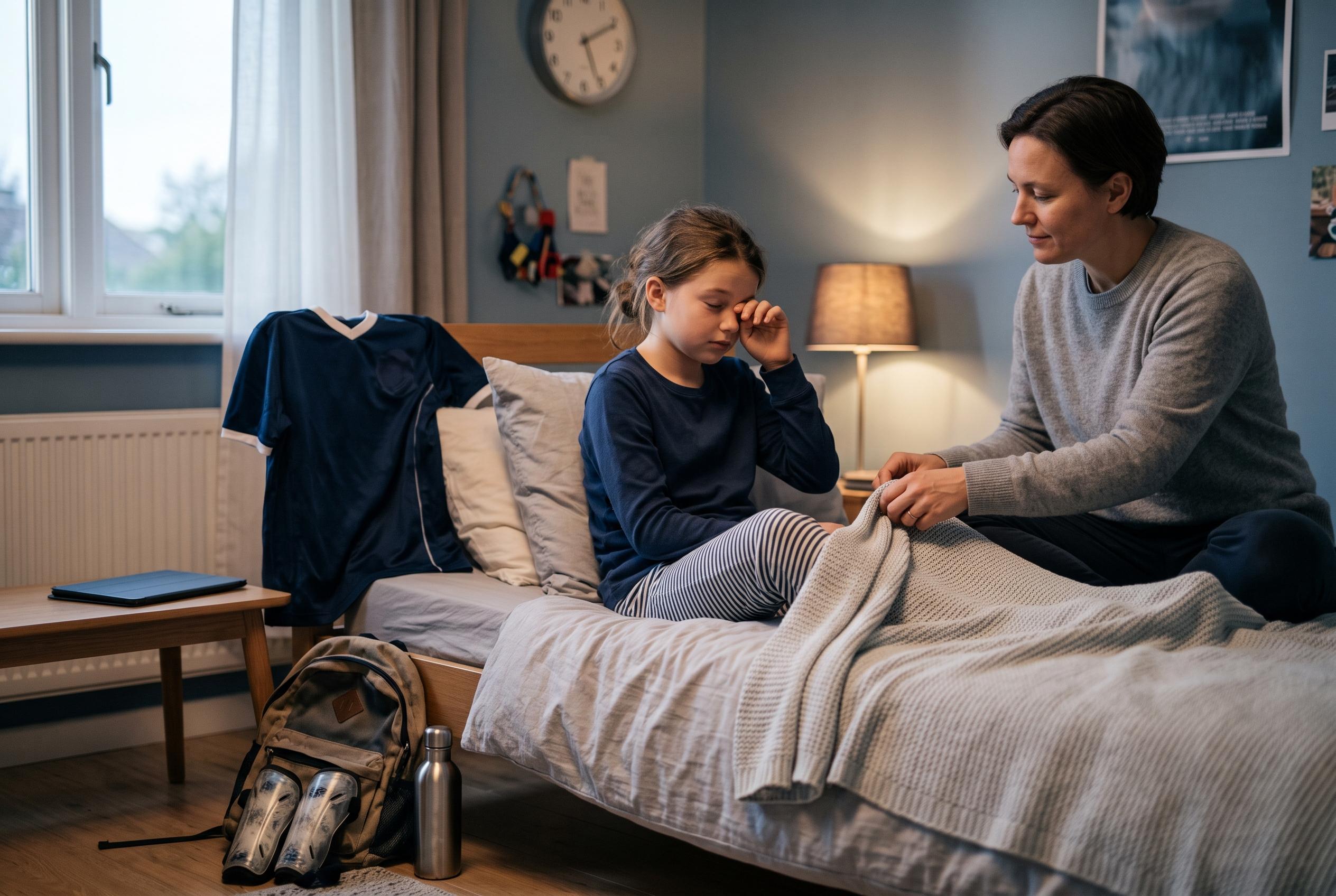

Ensuring adequate sleep is crucial for young footballers balancing school, sport, and family life. Experts emphasise simple routines, limit screen time before bed, and prioritise well-structured evenings to promote health, mood, and athletic performance.
Sleep can be the quiet foundation that helps young footballers cope with school, training and family life, but it is often the first thing squeezed out when an evening is packed. For parents trying to balance late practices, early kick-offs and the ordinary pressures of the week, the most useful approach is usually the simplest: protect sleep as carefully as any other part of a child’s routine.
The Centres for Disease Control and Prevention says sleep needs change with age. Children aged six to 12 generally need nine to 12 hours in every 24, while teenagers need eight to 10 hours. For younger children aged three to five, the CDC recommends 10 to 13 hours, including naps. That means a child who has to wake at 7.00 a.m. for school or sport may need to be settled well before 9.00 p.m., with enough time built in for washing, calming down and getting ready for the next day.
On practice nights, the most effective routine is one that reduces decisions once everyone is tired. Parents can sort out food, kit and school items before leaving for training, then return to a predictable sequence at home: bath or wash, clean clothes, teeth brushing and a quiet wind-down such as reading or talking. The point is not to make the evening elaborate, but to make it repeatable so the body and mind recognise that sleep is next.
The American Academy of Pediatrics advises that screens should be avoided for an hour before bed, with devices kept out of the bedroom overnight. That advice matters after an emotionally charged match, when children may want to replay clips, talk through every mistake or stay wired by the excitement of the day. A calmer final hour gives space for conversation, but it also draws a line under football and helps the child shift towards rest.
Parents should also resist reading too much into one tired session. A child who looks flat at training may have had a rough night, a disrupted evening or a school day that has already drained them. The better response is to describe what has been observed, ask how the child feels and look for patterns over time. If sleep problems or daytime tiredness keep returning, the CDC advises seeking medical guidance, since ongoing sleep loss can affect mood, attention, learning and health.
SoCal Youth Sports places that broader view at the centre of its message to families, arguing that sport should fit around a child’s week rather than take over it. For parents comparing youth football options in Pasadena and Glendale, the practical questions are as important as the sporting ones: how far is the travel, how late is training, and can the household still protect dinner, homework and bedtime? In the end, the best youth programme is one that helps children feel supported, not stretched too thin.
Disclaimer: This content is for informational purposes only and is not intended to be a substitute for professional medical judgment, advice, diagnosis, or treatment.



