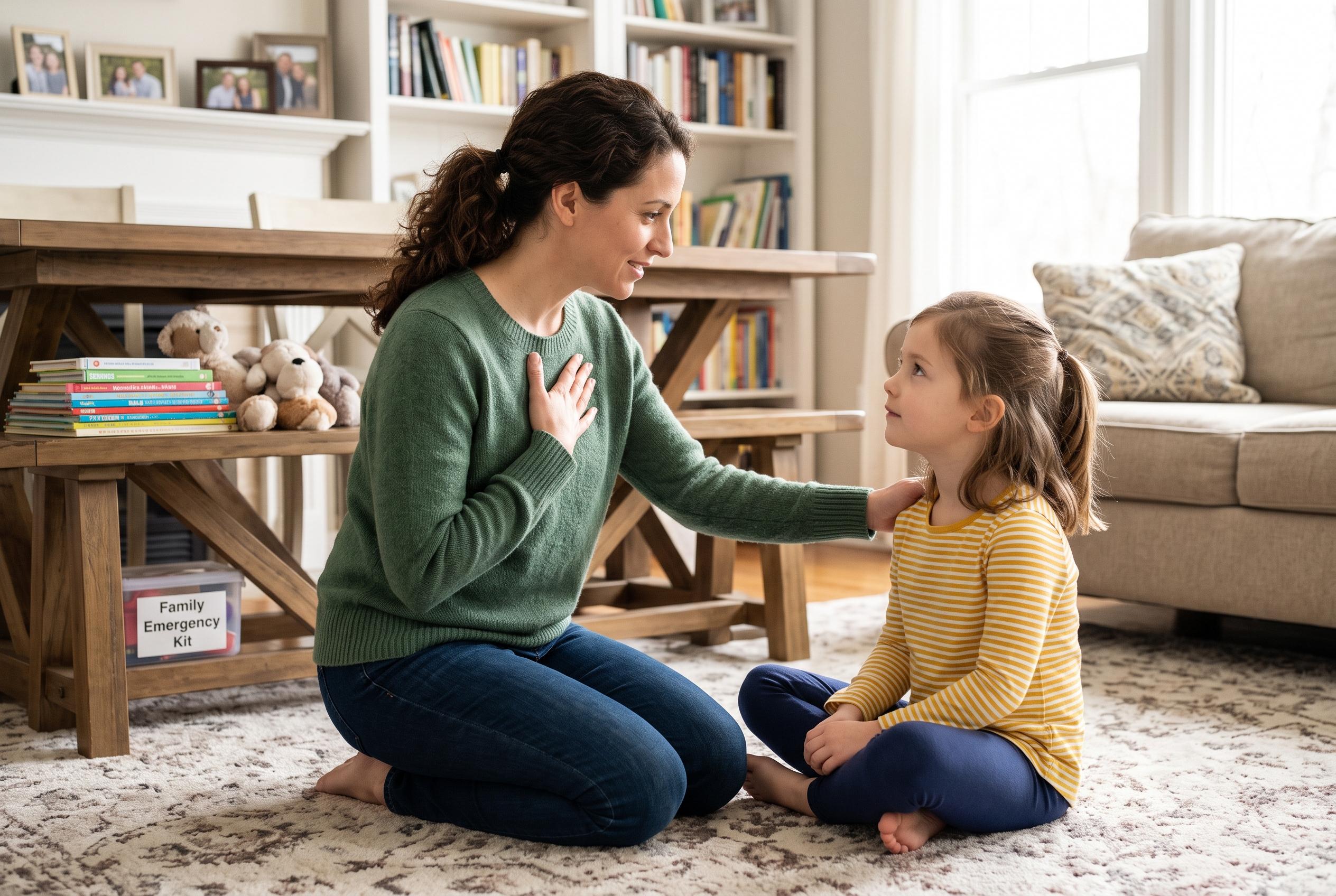

Earthquake readiness involves not only physical safety but also emotionally supporting children. Experts emphasise calm communication, simple routines, and trust to help children cope before, during, and after seismic events.
When the ground shakes, adults are often the first to lose their composure, if only for a moment. A lamp swings, windows rattle and the ordinary order of a room can seem to vanish in seconds. For a young child, that confusion is deeper: the floor is moving, voices have changed and the people meant to provide certainty are suddenly reacting to the same danger.
That is why earthquake preparation is not only about sheltering safely. It is also about helping children feel accompanied. UNICEF says families should speak to children about earthquakes in language suited to their age and agree on a simple emergency plan before anything happens. The point is not to frighten them, but to make the unfamiliar more manageable.
Preparation does not need to be heavy or dramatic. It can happen through stories, games and brief rehearsals that teach children where to go and whom to follow. What matters most is that they know the basics and can trust that an adult will be there with them. A plan, explained calmly in advance, can become something a child remembers when fear takes over.
During the quake itself, a child’s strongest protection may be the adult beside them. UNICEF and child-health organisations advise using short, clear phrases, keeping the voice steady and following official safety guidance for the place where the family is. Children may cry, freeze or cling tightly to an adult. In that moment, reassurance is not about pretending nothing is happening. It is about being a stable presence while the danger passes.
Afterwards, the worry may continue even when the shaking has stopped. The Centres for Disease Control and Prevention says children can show distress later through anxiety, sleep problems or changes in behaviour, while the American Psychiatric Association and the National Institute of Mental Health note that irritability, fear and repeated questions are common after traumatic events. Experts recommend listening, answering honestly and keeping familiar routines as much as possible. UNICEF España also warns that children benefit from time, space and limited exposure to distressing images.
The larger lesson is simple. Children do not need adults who never feel fear. They need adults who can recognise it, stay present and guide them through it. Earthquakes cannot be prevented, but preparation, conversation and calm can help children understand that even when the world feels unstable, someone they trust is still near.
Disclaimer: This content is for informational purposes only and is not intended to be a substitute for professional medical judgment, advice, diagnosis, or treatment.