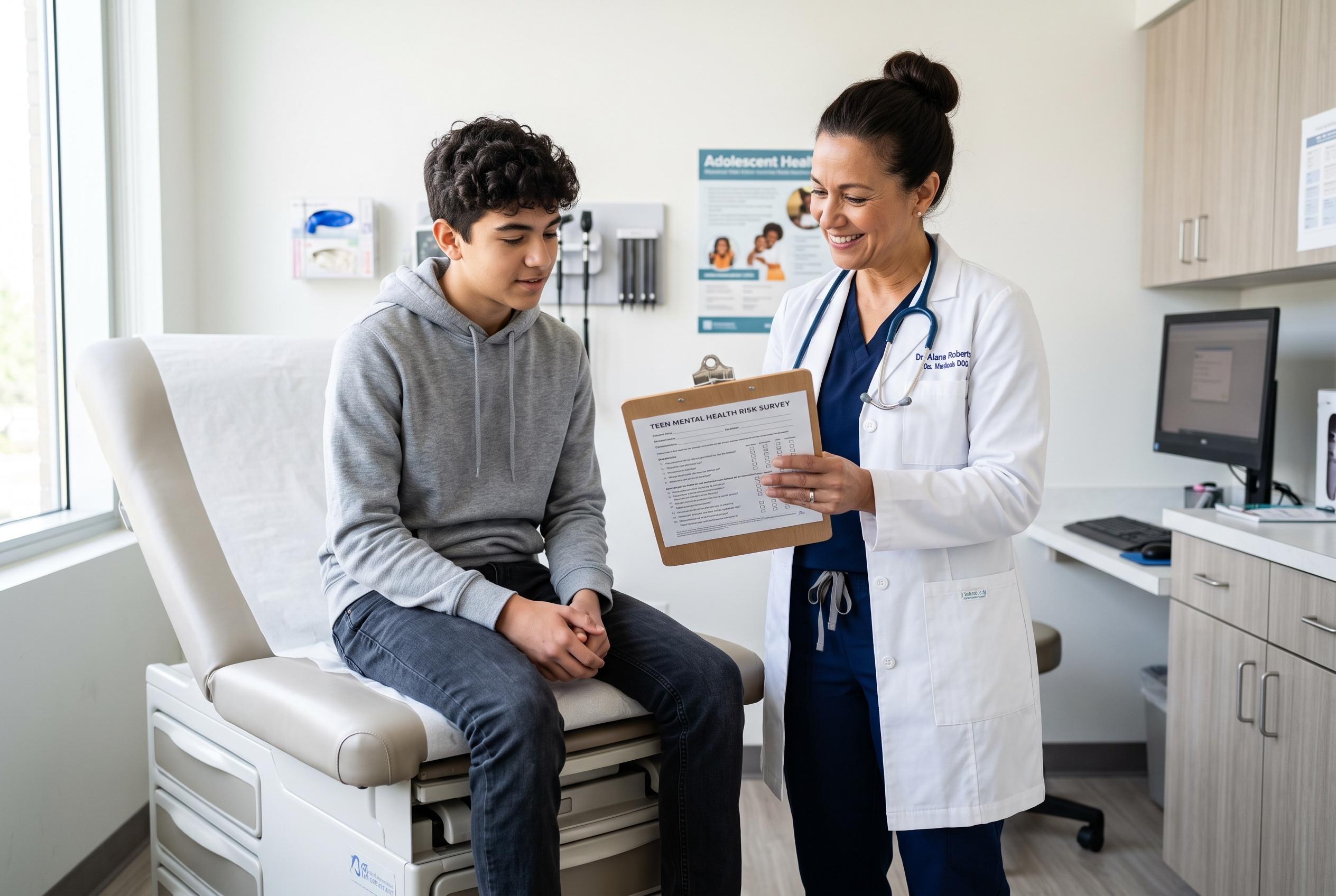

The Children’s Hospital of Philadelphia has implemented a routine behavioural health survey for teenagers visiting for non-psychiatric issues, revealing significant rates of depression and suicidal thoughts that might otherwise go unnoticed.
Teenagers arriving at the Children’s Hospital of Philadelphia emergency department for a sprained ankle, stomach pain or a panic attack may now be asked the same short set of questions about depression, anxiety and self-harm. The hospital’s optional behavioural health survey, introduced in 2023, is intended to catch mental health problems that might otherwise be missed when young people come in for unrelated physical complaints.
Polina Krass, a paediatric emergency medicine doctor at CHOP, said the instinct not to ask younger patients about suicide can be part of the problem, because it delays help until a crisis point. CHOP says about one in three completed screenings turns up signs of depression or suicidal thoughts, and the hospital now uses the tool with some 600 patients a month at its Philadelphia and King of Prussia emergency departments. The screening is completed on a phone or tablet, and positive answers trigger follow-up from a behavioural health specialist or social worker.
The approach reflects a broader concern identified by ECRI, the Fort Washington patient safety organisation, which said emergency departments account for the vast majority of suicide-related incidents recorded in non-acute care settings. In its review of 406 incidents reported between 2021 and June 2025, nearly three-quarters occurred in emergency departments. ECRI said the more common events were attempts or expressions of suicidal intent, rather than deaths, which suggests hospitals have an opportunity to intervene earlier if warning signs are recognised quickly.
Shannon Kooker, ECRI’s vice president of clinical excellence and patient safety, said suicide prevention should be treated as a hospital-wide safety issue, not a narrow behavioural health problem. She called for standardised training so staff can spot warning signs such as agitation, withdrawal or comments about being a burden, and for practical changes to the emergency room environment, including breakaway doors and paper scrubs that cannot be tied into ropes. CHOP’s own research also suggests the screen can uncover risk even when adolescents arrive for physical problems: the hospital has said 2.4% of patients aged 12 to 21 screened positive for recent suicidal thoughts, plans or attempts during visits for non-psychiatric complaints.
Disclaimer: This content is for informational purposes only and is not intended to be a substitute for professional medical judgment, advice, diagnosis, or treatment.