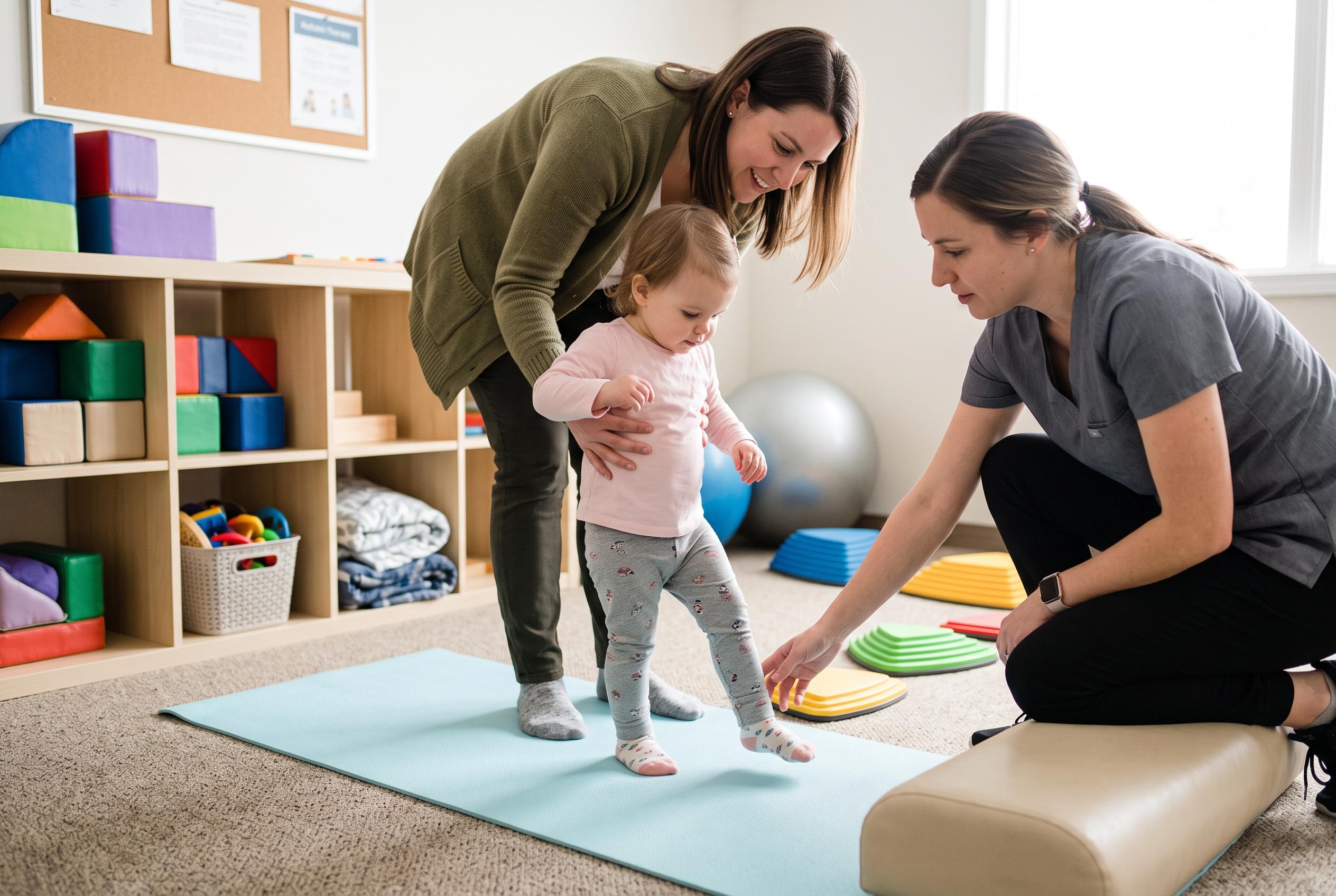

While toe walking is common in toddlers and often resolves naturally, ongoing patterns after age two could indicate health concerns such as neurological or developmental conditions. Early assessment and physiotherapy can improve outcomes.
Toe walking is common in toddlers, especially while they are still learning to move with confidence. According to Mayo Clinic, many children outgrow the habit on their own, but persistent tiptoe walking beyond the toddler years can point to an underlying problem and should be discussed with a healthcare professional. Cleveland Clinic adds that heel-free walking after the age of 2 may be a sign of a shortened Achilles tendon or a neurological or developmental condition.
Parents often notice the pattern most clearly when a child is excited, hurried or overstimulated. In those moments, a brief rise on to the toes can be part of normal development rather than a cause for alarm, particularly if the child can still stand flat-footed and walk normally at other times. Johns Hopkins Medicine says most children stop toe walking without intervention, while WebMD notes that the pattern is often seen in children learning to walk and usually resolves.
The concern is persistence. Mayo Clinic, Cleveland Clinic and WebMD all advise seeking medical advice if toe walking continues beyond about age 2, because it can sometimes be linked to cerebral palsy, muscular dystrophy or autism spectrum disorder. If the habit becomes constant, it may also tighten the calf muscles and Achilles tendon, making a flat-footed gait harder to maintain.
That is why physiotherapy can play an important role. Johns Hopkins Medicine says treatment may include physical therapy, bracing and casting, with surgery considered in more severe cases. Physio.co.uk says paediatric physiotherapy can help by improving gait, stretching tight muscles, restoring joint movement and strengthening weaker areas before the pattern becomes more fixed. In practice, that means early assessment matters most when a child toe walks most of the day, cannot squat with heels down or seems unable to place the whole foot on the floor.
For many families, the key question is not whether a child has ever walked on tiptoes, but whether the behaviour is occasional or entrenched. A short burst of toe walking during excitement is often harmless. A pattern that persists, stiffens or interferes with balance deserves closer attention, because early help is usually simpler than correcting a fixed gait later on.
Disclaimer: This content is for informational purposes only and is not intended to be a substitute for professional medical judgment, advice, diagnosis, or treatment.