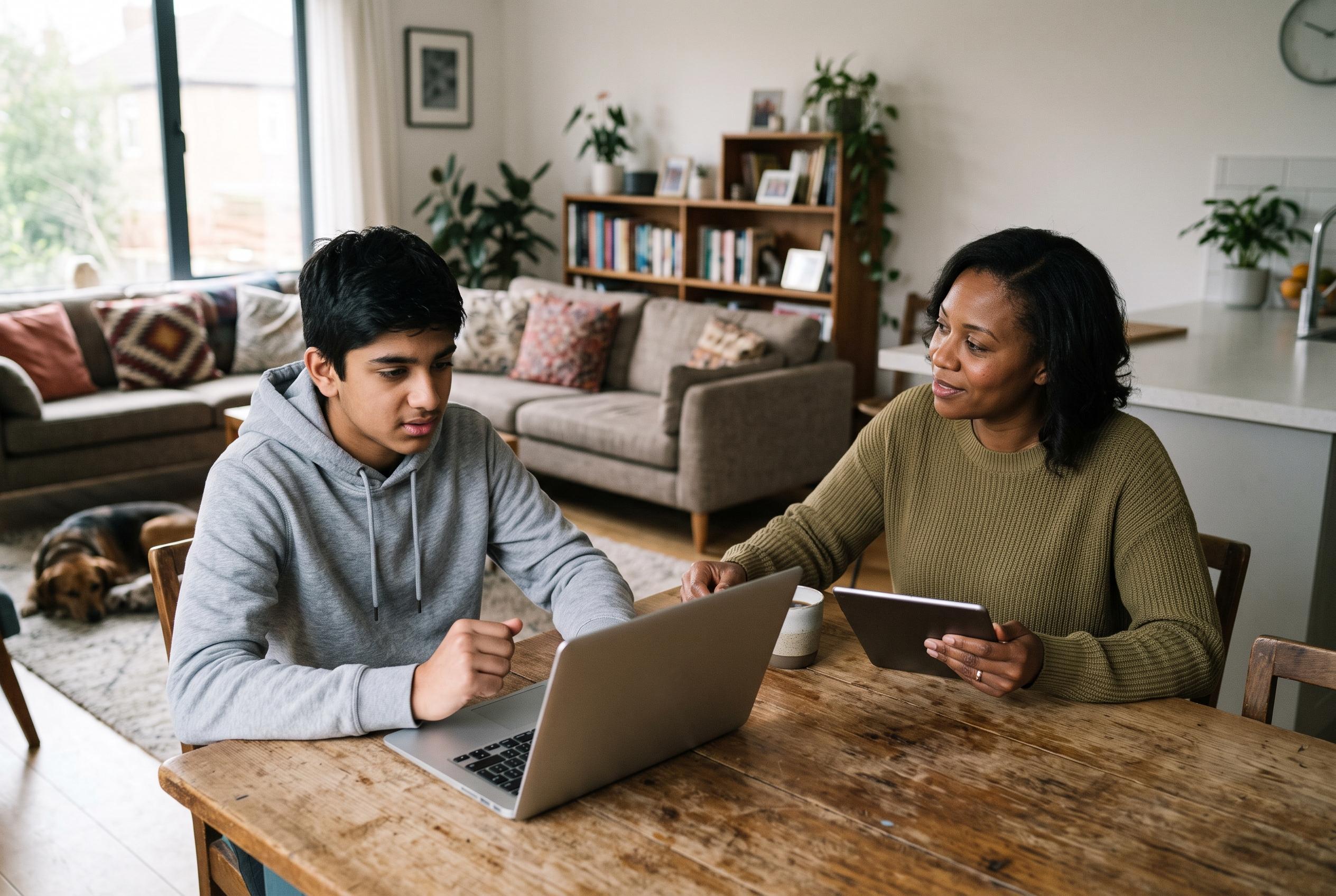

New research reveals parents often miss critical signs of emotional struggles, absenteeism, and AI use among teenagers, highlighting the need for greater awareness and responsive strategies in education and home life.
As a new school year gets under way, parents may be missing three important realities about their teenagers: how often they are struggling emotionally, how much school they are actually missing, and how widely artificial intelligence is already being used for homework.
Researchers writing for EdSource said the gap starts with mental health. The Centres for Disease Control and Prevention’s 2023 Youth Risk Behaviour Survey found that 40% of high school students experienced persistent sadness or hopelessness, while 27% seriously considered suicide and 10% attempted it. The survey also showed that girls and LGBTQ+ students were affected at particularly high rates. In the same commentary, the authors said their own national survey found 30% of teens reported struggling “often” or “almost always” with mental health over the past year, compared with only 18% of parents who said they were concerned or very concerned.
The mismatch extends to attendance. The EdSource authors said more than four-fifths of parents do not believe their child misses too much school, even though chronic absenteeism remains a national problem. They also said parents were comfortable with about nine absences a year, while teens reported an average of 13 days missed. That matters, the authors argued, because research links frequent absences to lower achievement, higher dropout risk and weaker mental health, while the CDC’s long-term trend data show adolescent well-being remains a serious concern.
Artificial intelligence is the third blind spot. According to the authors’ polling, roughly two-thirds of teens now use AI for schoolwork, but only about one-third of parents realise it. The piece urged families to learn how the tools work, set clear expectations at home and push schools to publish their own rules. The authors said the aim should not be a blanket ban, but a practical approach that recognises AI can be helpful in some settings, such as explaining a concept or exploring a maths problem, while still carrying risks including bias, misinformation and over-reliance.
Disclaimer: This content is for informational purposes only and is not intended to be a substitute for professional medical judgment, advice, diagnosis, or treatment.