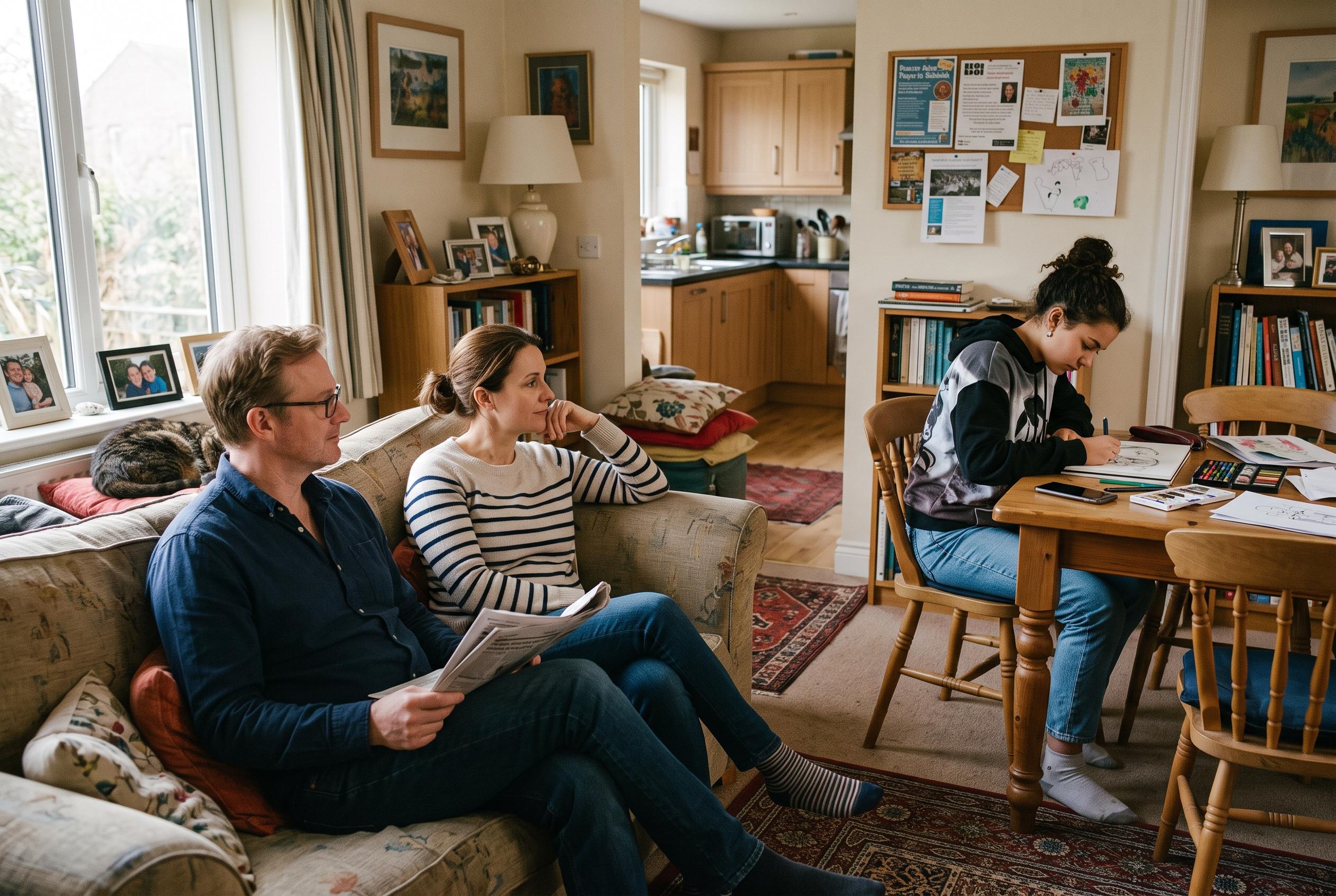

While teens believe they are hiding their private lives behind screens and closed doors, parents are often attuned to subtle shifts in mood, routines, and habits that reveal more than they admit. Experts highlight how parental awareness extends beyond snooping, capturing the nuances of adolescent development and stress.
Teenagers often believe their private lives are hidden behind a locked screen and a closed bedroom door. In reality, parents tend to spot far more than they admit, not because they are snooping every minute, but because they know the rhythm of their child’s behaviour and notice when it changes.
Digital habits are among the easiest tells. Pew Research Centre has found that many parents worry about screen time, and that phone use is a frequent source of argument in families. A separate Pew survey showed that about half of parents say they look through their teenager’s phone, while a sizeable share of teens believe they do. For many families, the issue is less about secret messages than about the visible shift in mood, routine and attention that comes with constant connectivity.
That is why a teenager suddenly guarding a handset, answering messages faster than usual or smiling at the screen long after lights-out rarely goes unnoticed. Parents may not always confront the behaviour, but they often register it immediately. Pew’s earlier research also found that texting is central to teenage communication, which helps explain why changes in who a teenager is messaging, and how often, can be so obvious to adults in the same house.
Sleep, appetite and school stress are also hard to disguise. Parents tend to notice when a teenager starts skipping meals, staying up later or looking exhausted in the morning. Child and adolescent specialists have long said that these shifts can reflect both normal development and emotional strain. Surveys by the American Psychological Association have repeatedly shown that academic pressure remains a major stressor for young people, which means a drop in motivation or avoidance of certain subjects is often more than a passing mood.
Changes in tone matter too. A teen who goes quiet after mentioning a particular friend, teacher or ex-partner may think they are concealing it well, but parents frequently pick up the pattern. The same is true of new slang, inside jokes, shifts in clothing, grooming or hobbies. Psychologists generally regard this as a normal part of identity formation in adolescence, while many parents see it as a sign that their child is testing out who they want to become.
None of this means every change is a red flag. A teenager pulling back from family evenings, tidying a room before asking for a favour or copying the habits of an admired older sibling may simply be behaving exactly as teenagers do. The deeper point is that most parents are watching, even when they seem not to be. Teenagers may feel invisible, but much of what they think they are hiding is simply being observed quietly, and stored away for later.
Disclaimer: This content is for informational purposes only and is not intended to be a substitute for professional medical judgment, advice, diagnosis, or treatment.