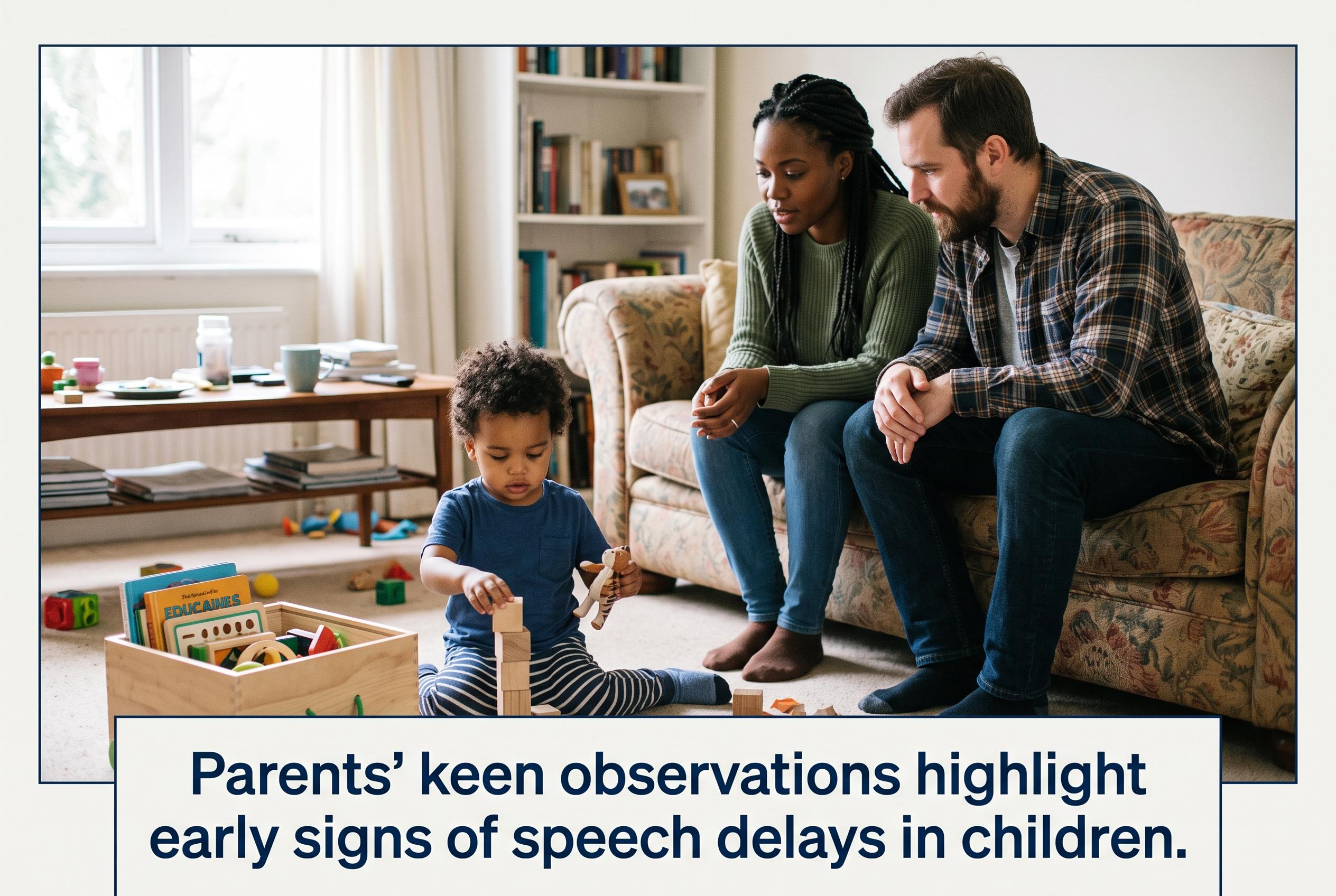

Parents’ everyday observations can reveal subtle signs of speech and language delays in children, underscoring the importance of early assessment and support to optimise development.
Parents are often the first to sense when a child’s communication is not unfolding as expected. That is not overreaction, but the result of repeated, everyday observation. A parent sees the child at breakfast, in the bath, on the school run and at bedtime, and those ordinary moments can reveal gaps that a brief appointment may miss. Speech and language specialists say that early concerns are worth taking seriously because patterns tend to matter more than a single difficult day.
Among the signs that deserve attention are a vocabulary that seems much smaller than that of peers, sentences that remain very short well past the stage when fuller phrases would usually be expected, and repeated frustration when a child tries to make themselves understood. Kaiser Permanente says missing early milestones such as babbling, first words or two-word combinations can point to a speech or language delay, while UChicago Medicine notes that limited vocabulary and difficulty following instructions can also be warning signs. Speech and language delays may affect understanding, expression or both.
A child who seems to rely heavily on pointing, pulling or other gestures rather than words may also need assessment, especially if that pattern continues. SpeechTherapy.org distinguishes between late talkers, who may understand well and remain socially engaged, and children with broader speech delays, who can struggle both to understand and to speak. That distinction matters, because the right support depends on whether the issue is mainly expressive language, receptive language or a wider communication difficulty.
Parents are also often reassured too quickly when a child’s struggles look small in isolation. One missed instruction, a short response or a difficult morning may not mean very much on its own. But when these moments repeat over weeks or months, they can form a clearer picture. Children’s hospitals and therapy providers regularly advise families to seek evaluation when concerns persist, since early intervention can make support more effective and can rule out hearing problems, oral-motor issues or other underlying causes.
The most practical next step is usually a consultation, not an immediate commitment to therapy. A speech and language therapist can help determine whether a child is simply developing at their own pace or needs support. Writing down specific examples, rather than relying on a general sense that something is wrong, can make that conversation more useful. For many families, the value of checking lies in clarity: either reassurance that development is on track, or an earlier start to help if it is needed.
Disclaimer: This content is for informational purposes only and is not intended to be a substitute for professional medical judgment, advice, diagnosis, or treatment.