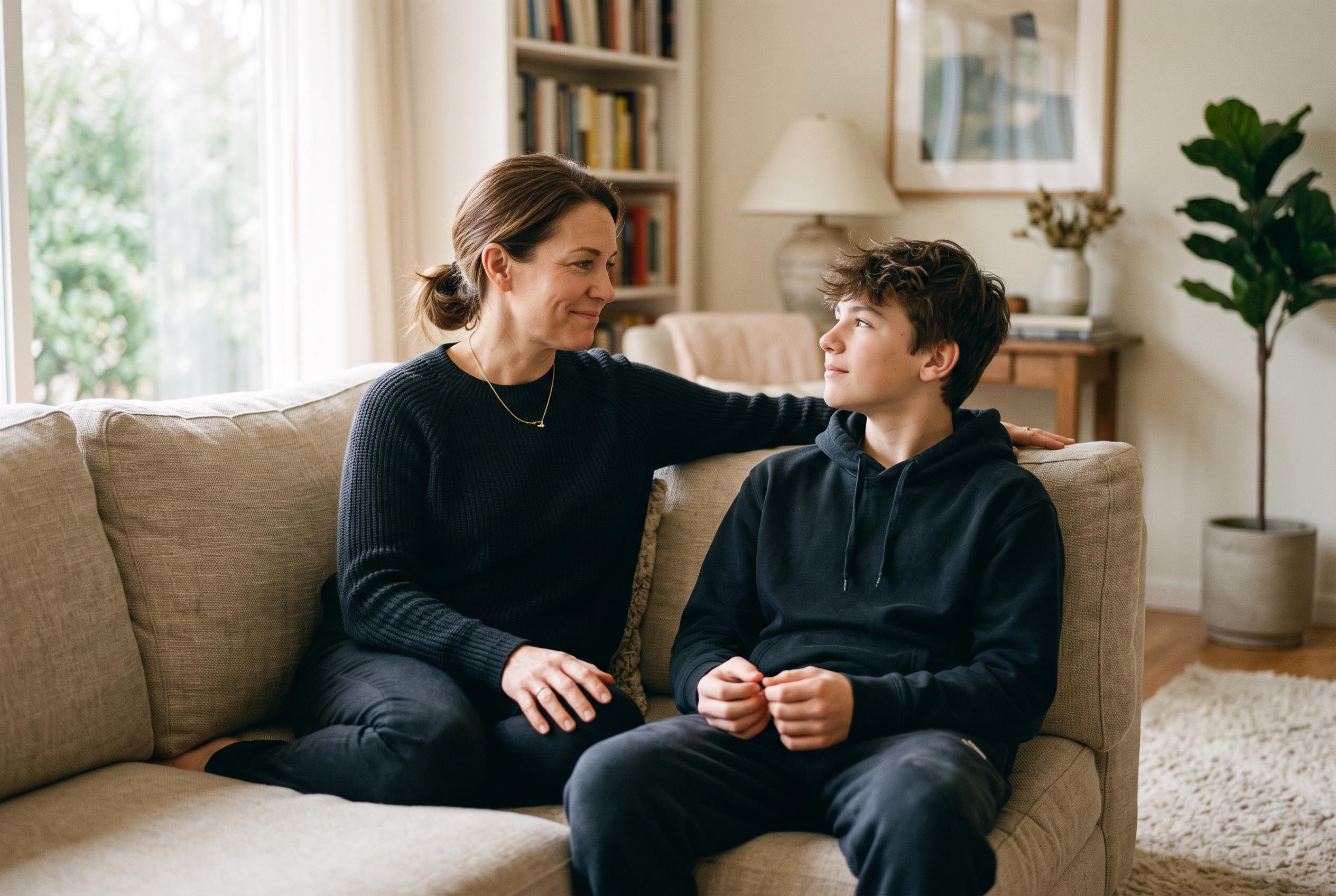

Psychologists and family experts emphasise that teenagers respond better to brief, genuine affirmations, fostering trust and understanding in parental relationships during adolescence.
Parents trying to reach teenagers may do better with brief assurances than with long speeches. Across family-advice coverage in Ukrainian and Russian-language media, psychologists and parenting specialists describe adolescence as a period when young people may sound distant, push adults away and still listen closely for signs that home remains a safe place. The common thread is that teenagers are more likely to talk when adults show respect for their feelings, take them seriously and make clear that support will not disappear after an argument.
That is the centre of advice given by psychotherapist Nataliia Haryna in an interview published by RBC-Ukraine Styler on 2 February 2025. Haryna described adolescence as a balancing act between trust and control, support and freedom, arguing that children who appear withdrawn “как никогда нуждаются в ваших словах”. Her suggested phrases were plain but deliberate: “Я тебя понимаю”, “Я тебе доверяю” and “Ты имеешь право на ошибки”. As Styler set it out, those words matter because teenagers need their emotions recognised, their growing independence respected and their failures treated as part of learning rather than proof that they cannot be trusted.
Other specialists argue that such phrases work because adolescence is not simply defiance with a new hairstyle, but a deeper reordering of a young person’s life. In a blog published by NV, the author said teenagers are coping simultaneously with physical change, strong hormonal shifts and what was described as a “страшный кризис самоидентификации” as they try to work out who they are. At the same time, the old childhood attachment to adult authority is loosening. Parents who keep speaking only from the position of all-knowing expert, the blog argued, risk turning themselves from helpers into obstacles, which helps explain why calm reassurance often lands better than instruction.
Psychologist Pavel Beschastnov made a similar case in Psychologies, saying that by about 12 or 13 many young people already feel adult, even while their parents still see a child. Teenagers may stay silent, he said, because they expect blame, misunderstanding or a barrage of questions rather than support. If they have already met rejection, criticism or devaluation at home, Beschastnov argued, they are unlikely to return with the next difficulty. His advice was to move beyond the automatic “Как дела?”, to stop asking questions when there is no real interest behind them, and to lead by example by talking honestly about one’s own day and feelings.
Lifehacker pushed the discussion from theory towards tactics. Instead of offering a simple list of comforting phrases, it presented lines designed to lower a teenager’s defensiveness before a conversation hardens into a lecture. One example was “Я ценю твоё мнение, и мне хотелось бы узнать, что ты думаешь”, especially when parent and child see a conflict differently, such as a disagreement at school. Another was “Возможно, я не соглашусь с тобой, но точно не буду тебя осуждать”. The message was not that adults should abandon judgement altogether, but that disagreement need not arrive wrapped in shame. According to the article, teenagers open up more readily when they sense they are being heard, not cornered.
A separate piece on Mel, published by the BF Shalash foundation, adds an important qualification to the softer language. Teenagers, it argued, also need what it called a “безопасный взрослый” – a safe adult who creates a clear environment, sets rules, explains what is and is not allowed, and applies those rules consistently. The article captured that role in one line: “Я за тебя, я тебя вижу, я здесь главный и устанавливаю правила… и я буду так делать всегда, ты можешь на меня рассчитывать”. It then broke the task into four parts: show that you are the leader, remain steady, take responsibility instead of loading it on to the child, and stay available when help is needed.
Older coverage suggests that this emphasis on dependable language has been building for years. A 24TV article published on 8 October 2020, citing psychologist Kateryna Khokhlova and material from the journal “Практический психолог Детский сад” via learning.ua, argued that children should hear words of love, faith and support repeatedly, not only after obvious success. Among the phrases it highlighted were “Я тебя люблю”, “Я в тебя верю”, “У тебя получится” and “Я тобой горжусь”. That report also stressed that questions about a child’s day must be sincere rather than asked “for галочки”, that parents should praise effort instead of comparing children with others, and that physical affection can ease stress, echoing the work of family therapist Virginia Satir.
Taken together, the advice amounts to more than a script for awkward dinner-table conversations. Haryna’s final point in Styler was that the phrases work only when they are meant: “Говорите эти фразы искренне, и ваши отношения с подростком станут крепче, даже в период его внутренних бурь”. The wider reporting points in the same direction. Teenagers are more likely to trust parents who treat them as developing people rather than problems to be managed, who ask questions without turning them into an interrogation, and who balance affection with firm, reliable boundaries. The words matter, but mainly because they reveal something larger: whether a young person believes that home is still the place where conflict can happen without love being withdrawn.
Disclaimer: This content is for informational purposes only and is not intended to be a substitute for professional medical judgment, advice, diagnosis, or treatment.