

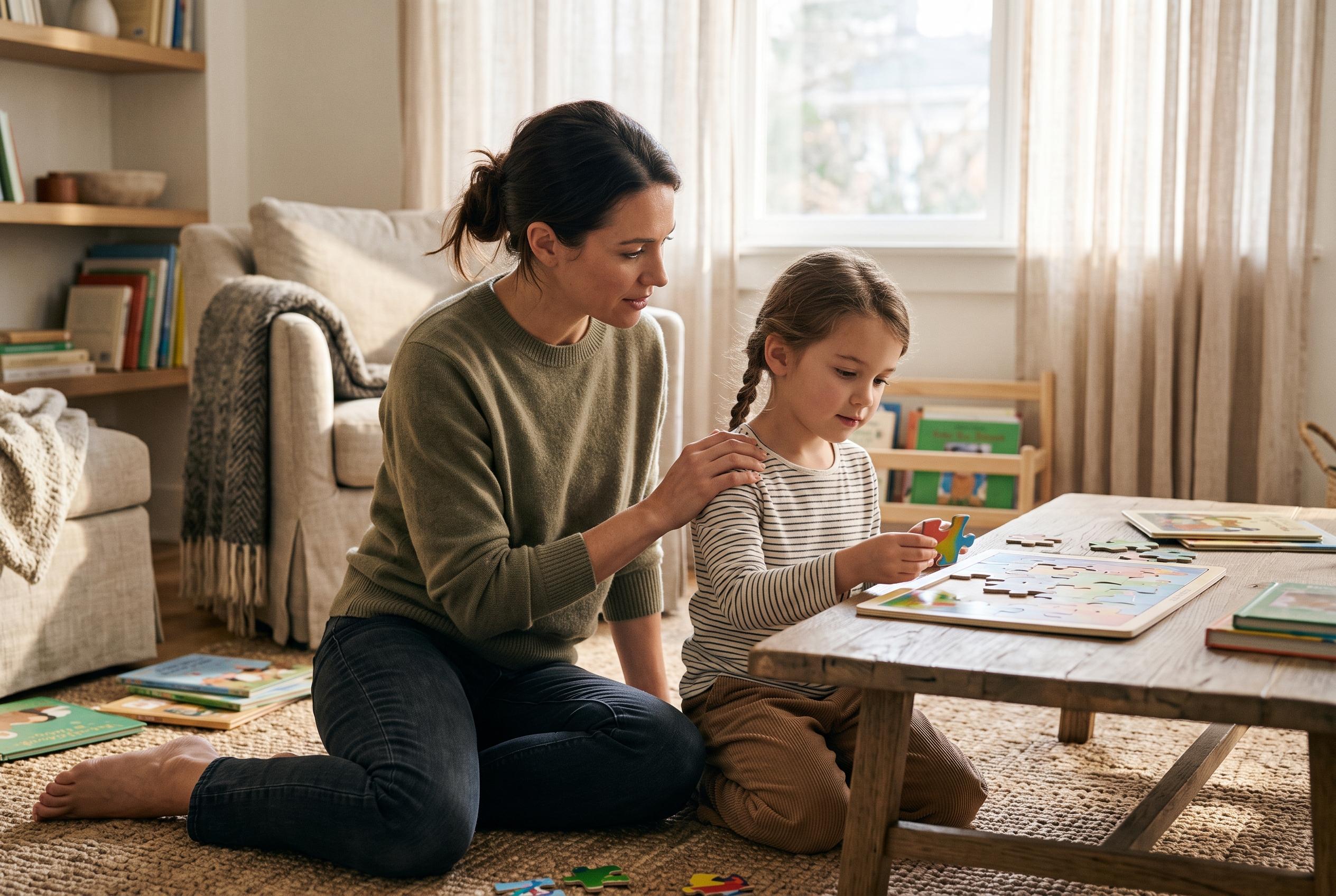

New insights highlight that children thrive when parenting mixes warmth with discipline, adapting to cultural and individual differences, with balanced approaches leading to better emotional and academic outcomes.
Parenting style can shape far more than day-to-day behaviour. It can influence a child’s emotional security, academic progress and long-term mental health, according to the article in Kashmir Reader and several psychology sources that examine how family dynamics affect development. The broad message is consistent: children tend to do best when care is warm, expectations are clear and discipline is predictable.
The framework most often used to explain these differences comes from Diana Baumrind’s work on parenting. Researchers typically describe four main styles: authoritative, authoritarian, permissive and neglectful, also called uninvolved. Authoritative parenting combines warmth with firm boundaries. Authoritarian parenting relies on strict control but less emotional responsiveness. Permissive parents are affectionate but offer little structure, while uninvolved parents provide neither much warmth nor much guidance, according to summaries from Nature, the U.S. National Library of Medicine and other psychology references.
Among these, authoritative parenting is most consistently linked with healthier outcomes. Children raised in this environment are often described as more confident, self-controlled and socially capable, with stronger school performance and fewer behaviour problems. By contrast, authoritarian households are more often associated with anxiety, lower self-esteem and weaker communication. Permissive parenting can leave children struggling with impulse control and rules, while neglectful parenting is linked with the poorest outcomes overall, including stress, poor academic performance and more mental health difficulties.
The picture is not entirely fixed, however. Research highlighted by Frontiers in Psychology and a separate study in the National Library of Medicine shows that parenting does not operate in a vacuum. A child’s temperament, the wider family environment, parental stress and socioeconomic pressures can all shape outcomes. Cultural expectations also matter, which means a style that works well in one setting may look different in another. That is why experts caution against treating any single model as a universal formula.
Even so, the practical lesson is clear. Children generally benefit from consistent limits delivered with empathy, open communication and steady support. Positive reinforcement can help reinforce good habits, while reasonable rules give children a sense of safety and predictability. In that sense, the most effective parenting is often not about perfection, but about balance: warmth without indulgence, discipline without harshness, and guidance that leaves room for a child to grow.
Disclaimer: This content is for informational purposes only and is not intended to be a substitute for professional medical judgment, advice, diagnosis, or treatment.



