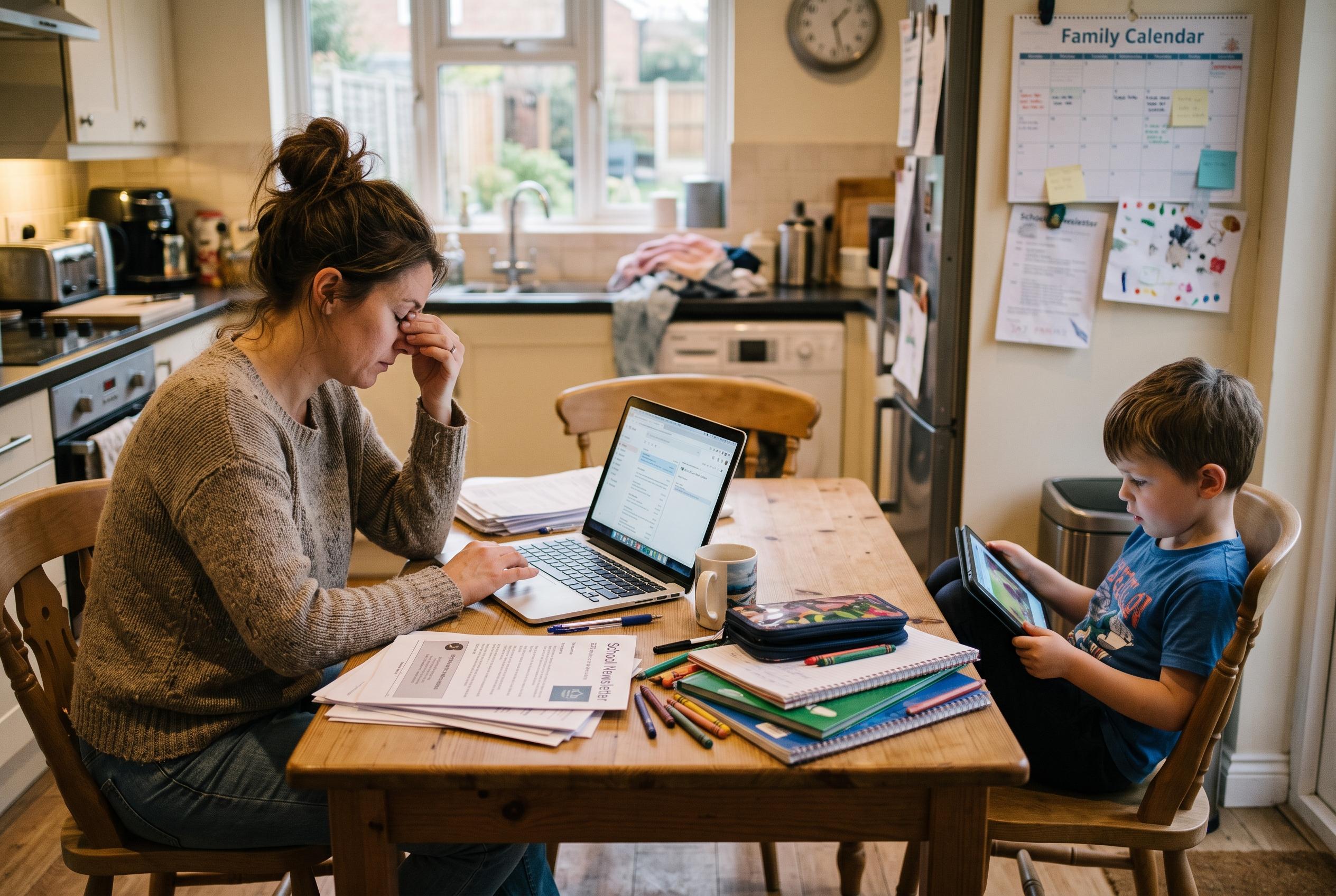

A study from Florida International University reveals that parental stress significantly influences children’s screen habits, prompting calls for renewed family media routines ahead of the new school year.
As the new school year approaches, a study from Florida International University suggests that parental stress is not just a private burden but a force that can shape how often children reach for screens. The research found that caregivers under pressure were more likely to use tablets, phones and other devices to keep young children occupied or soothed, while also being less consistent about limits. That pattern mattered even when a child’s behaviour was not the main issue, the researchers said.
The study surveyed 822 caregivers of children aged 4 to 8 and linked screen use to parenting strain and household routines. Shayl Griffith, the senior author and an assistant professor at Florida International University, said in a news release that families should not hesitate to seek support and should focus on digital media that is meaningful, engaging and appropriate for the child’s age. The findings fit a broader body of evidence from the American Academy of Pediatrics showing that children’s viewing habits often mirror those of their parents, making adult behaviour an important part of any media plan.
Earlier Pediatrics research also found that parents’ own screen habits and daily routines can make it difficult to cut back on children’s viewing, even when they want to. Other studies published by the academy have linked weaker self-regulation in infancy with heavier media exposure later in early childhood, suggesting that screen time and behaviour can reinforce each other over time rather than moving in a simple one-way direction.
The American Academy of Pediatrics has also said that high-quality, educational media can have benefits when it is used in moderation and with adult interaction, particularly for younger children. But it warns that excessive use can affect sleep, attention, language development and school performance, and that some apps and games add extra risks by encouraging purchases or offering distracting content. In guidance for parents, the academy recommends a family media plan that sets boundaries around approved content, screen-free time and device use at home.
Experts say the back-to-school period can be a useful moment to reset those habits. Jeff Temple, a psychologist at UTHealth Houston, told CNET that screens can be one of several tools families use to get through the day, but that the challenge is moving from summer’s looser structure back to the school year. Tiffany Munzer, a paediatrician at the University of Michigan, said school can provide relief for families who relied on screens during the summer and can be a prompt to rebuild digital habits around the new routine. Jason Nagata, a paediatrician at the University of California, San Francisco, said families should adapt rules to a child’s age, school schedule and need for devices for homework or communication, rather than simply returning to old limits. He urged parents to watch for warning signs such as conflict over screen use, difficulty cutting back and interference with sleep or relationships.
Disclaimer: This content is for informational purposes only and is not intended to be a substitute for professional medical judgment, advice, diagnosis, or treatment.