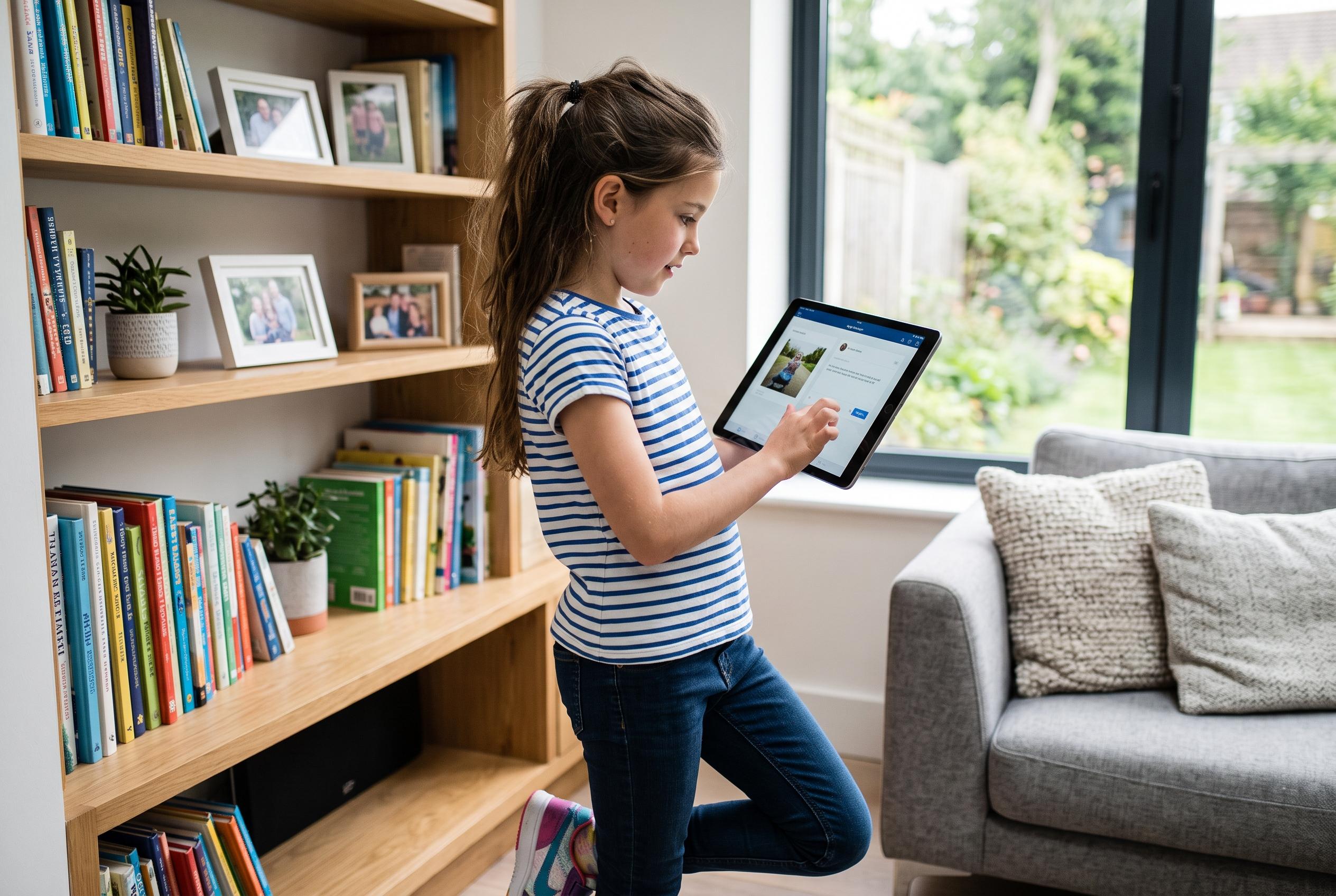

A Norwegian study finds that children who post their own content on social media are less likely to experience declines in appearance self-esteem than those who mainly like and comment on others’ posts, highlighting the impact of usage patterns on young people’s self-image.
Norway’s highly digital culture makes it a useful place to ask a simple question: which parts of smartphone and social media use actually leave young people feeling worse about themselves? The answer, according to a Norwegian study, is less about how long children spend online than about what they do once they are there.
Researchers led by Silje Steinsbekk at the Norwegian University of Science and Technology followed 725 children in Trondheim from age 10 to 14 as part of the Trondheim Early Secure Study. Published in Computers in Human Behavior, the work separated self-oriented activity, such as posting photos or updates, from other-oriented activity, such as liking, commenting and browsing other people’s posts. The pattern was clear enough to matter: children who mostly consumed and reacted to others’ material were more likely to show lower appearance self-esteem over time, while those who mainly posted their own content did not show the same decline.
The effect was stronger for girls than for boys, which fits with a broader body of research suggesting that appearance-related comparison can hit girls harder. A separate report from Norwegian SciTech News said the same study found a drop in physical self-esteem among girls who frequently liked and commented on other people’s posts, while posting on their own profiles did not produce that result. Another three-wave study in ScienceDirect reached a similar conclusion, finding that liking and commenting predicted weaker appearance self-esteem, especially among girls.
The distinction also helps explain why some phone habits feel more corrosive than others. Passive use often means watching other people’s lives unfold without contributing anything yourself, which can intensify social comparison. Active use, by contrast, is more expressive and reciprocal, whether that means sharing something you have made or sending a message that actually says what you mean. The same device can therefore support connection or self-doubt, depending on which direction attention is moving.
Not every study finds a direct line from these behaviours to broader mental health problems. A more recent PubMed-listed study of adolescents aged 10 to 16 reported no meaningful link between changes in self-oriented or other-oriented social media use and changes in symptoms of depression or anxiety. That suggests the impact may be narrower than the worst warnings imply, affecting self-image more than overall mental health in some groups.
The broader message is not that phones are uniquely harmful, but that certain modes of use seem to carry more emotional cost than others. That includes the anxious habit of waiting for replies, refreshing messages and reading too much into silence, as well as the familiar practice of looking at others’ posts without ever really participating. In that sense, the useful question is not how much screen time young people have, but whether they are using their phones to create, connect and respond, or simply to compare themselves with everyone else.
Disclaimer: This content is for informational purposes only and is not intended to be a substitute for professional medical judgment, advice, diagnosis, or treatment.